

Which multivitamin is best for you, and what evidence would show that you need one at all? That question matters more than the familiar search for the “best daily multivitamin,” because a product can have an impressive label and still be a poor match for your diet, medications, life stage, or deficiency risk.
Multivitamins are mainstream, not fringe products. In the 2017–2018 National Health and Nutrition Examination Survey, 57.6% of U.S. adults aged 20 and older reported taking at least one dietary supplement during the previous 30 days. Multivitamin-mineral products were the most commonly used category, reported by 24.0% of adults aged 20–39, 29.8% of adults aged 40–59, and 39.4% of adults aged 60 and older (National Institutes of Health data on multivitamin use).
The practical answer isn't a universal winner. It's a formula that provides sensible nutritional coverage, fits your circumstances, avoids unnecessary excess, and comes from a manufacturer willing to show how quality is controlled.
Table of Contents
- Why the Search for the Best Daily Multivitamin Feels Overwhelming
- What Actually Makes a Daily Multivitamin Effective
- Comparing Multivitamins by Age, Sex, and Activity Level
- How to Read Supplement Labels Like a Pro
- Safety Signals and When to Consult a Professional
- How to Choose Your Best Daily Multivitamin
Why the Search for the Best Daily Multivitamin Feels Overwhelming
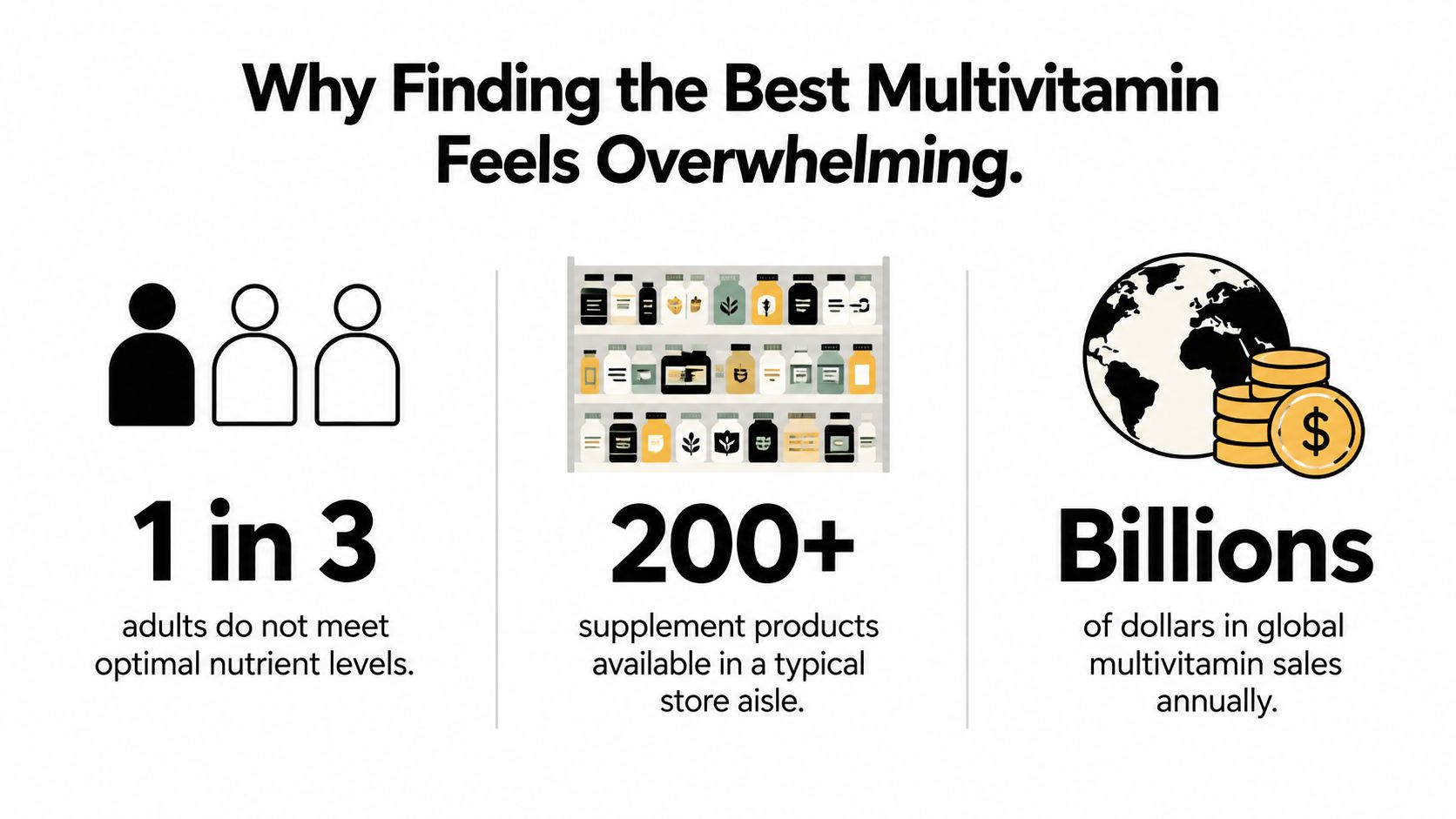
Which daily multivitamin fits your needs, and what evidence shows that you need one at all? A pharmacy shelf offers bottles marketed for energy, immunity, active aging, and general wellness. Online listings add gummies, powders, gender-specific formulas, high-potency products, and blends with plant compounds. The number of choices makes product rankings feel more useful than they are.
The better question is which person the formula was designed to serve, and whether that description fits you. A long ingredient list cannot show that a product suits your diet, medications, life stage, or deficiency risk.
A younger adult eating a varied diet may need only modest nutritional coverage. Someone following a restricted diet, living with a gastrointestinal condition, or managing a diagnosed deficiency may need targeted care instead of a general multivitamin. Older adults, athletes, and people taking prescription medicines also have different factors to review before choosing a formula.
Popularity doesn't prove universal need
Multivitamin-mineral use rose with age, from 24.0% of adults aged 20–39 to 39.4% of those 60 and older (National Institutes of Health population-use data). That pattern helps explain why age belongs in the decision, but it does not identify a suitable product or establish that supplementation is necessary for every older adult.
Supplement popularity also does not justify high-potency formulas. More people choosing a multivitamin can reflect convenience, marketing, or concern about dietary gaps. It cannot replace an assessment of food intake, health conditions, medicines, and any documented deficiency.
Practical rule: Treat a multivitamin as a coverage tool, not as a shortcut to better eating or a guarantee of protection from disease.
Start with your circumstances, then assess the product:
| Your situation | What to prioritize | What to question |
|---|---|---|
| Generally healthy adult with a varied diet | Moderate amounts and clear labeling | Megadoses and disease-prevention claims |
| Restricted or plant-based diet | Nutrients limited by the eating pattern | Whether a general formula addresses the actual gap |
| Older adult | Life-stage fit and practical dosing | Excessive iron or duplicated nutrients |
| Active adult | Overall intake, recovery habits, and diet quality | Claims that a multivitamin replaces food or hydration |
| Pregnancy, medication use, or diagnosed deficiency | Clinician-guided selection | Self-prescribing a high-potency product |
Quality verification should also affect the choice. Look for clear ingredient amounts, identifiable nutrient forms, and evidence that the manufacturer tests its formula and controls production. This guide to clinically tested supplement formulas provides a useful framework for examining those claims rather than accepting marketing language.
The best daily multivitamin is conditional. It depends on what you eat, what you take, and what your body needs.
What Actually Makes a Daily Multivitamin Effective
A strong formula starts with appropriate nutrient amounts, not the largest numbers on the label. High percentages can look persuasive, but they may create duplication when you also eat fortified foods, drink enriched beverages, or take separate supplements.
The NIH defines a tolerable upper intake level as the highest average daily intake unlikely to cause adverse effects. Recognized upper limits apply to nutrients including vitamin B6, vitamin C, vitamin D, zinc, selenium, iodine, iron, and calcium. For adults, the zinc upper limit is 40 mg per day, while the iodine upper limit is 1,100 mcg per day (NIH guidance on supplement safety and upper limits).
That doesn't mean every product approaching a limit is automatically unsafe. It means you should consider the total intake from every source and ask whether the additional amount serves a clear purpose.
Form matters, but context matters more
Nutrient form can affect how a formula is used and understood. Folate may appear as folic acid or L-5-MTHF, while vitamin B12 may appear in forms such as cyanocobalamin or methylcobalamin. A form listed in a label isn't proof that the product is superior for every person, so avoid turning one ingredient form into a universal ranking rule.
More useful questions include:
- Is the active form clearly identified? A transparent label should state the specific nutrient form where that distinction is relevant.
- Are quantities disclosed? Avoid relying on a proprietary blend that hides the amount of individual ingredients.
- Does the dose suit daily use? A once-daily product should be practical without pushing several nutrients toward unnecessary excess.
- Does the serving instruction make sense? Fat-soluble vitamins are often best considered alongside meal timing and the rest of your diet.
- Does the formula match your restriction? Vegetarian capsules, allergen information, and ingredient sources can matter as much as the nutrient list.
| Nutrient | Preferred form | Why it matters |
|---|---|---|
| Folate | A clearly identified folate form, such as folic acid or L-5-MTHF | The label should make the form and quantity easy to assess |
| Vitamin B12 | A clearly identified B12 form | Transparency helps compare formulas and avoid guessing |
| Vitamin D | A stated vitamin D form and amount | Total intake matters when other products also contain vitamin D |
| Zinc | A disclosed zinc compound and amount | The adult upper limit is 40 mg per day, so duplication deserves attention |
| Iodine | A disclosed iodine source and amount | The adult upper limit is 1,100 mcg per day, making high-dose stacking unsuitable |
| Iron | A clearly stated amount matched to personal need | Many men and postmenopausal adults may prefer iron-free formulas unless a clinician identifies a need |
The benefits of daily multivitamin use should therefore be framed as nutritional support, not a promise of better health outcomes for everyone.
One example of a broad, once-daily format is Vita Mix NexiHerb Multivitamin & Mineral Dietary Supplement. Its snapshot describes a vegetarian capsule intended for adults as part of a balanced lifestyle, with vitamins A, C, D, E, B-complex vitamins, folate as L-5-MTHF, minerals including zinc and selenium, and selected compounds such as lutein and zeaxanthin. The listed serving size is one capsule, and the suggested use is to take it with water, preferably with a meal. Those details describe the product, but they don't establish that it is appropriate for a particular deficiency, medication, or medical condition.
Comparing Multivitamins by Age, Sex, and Activity Level
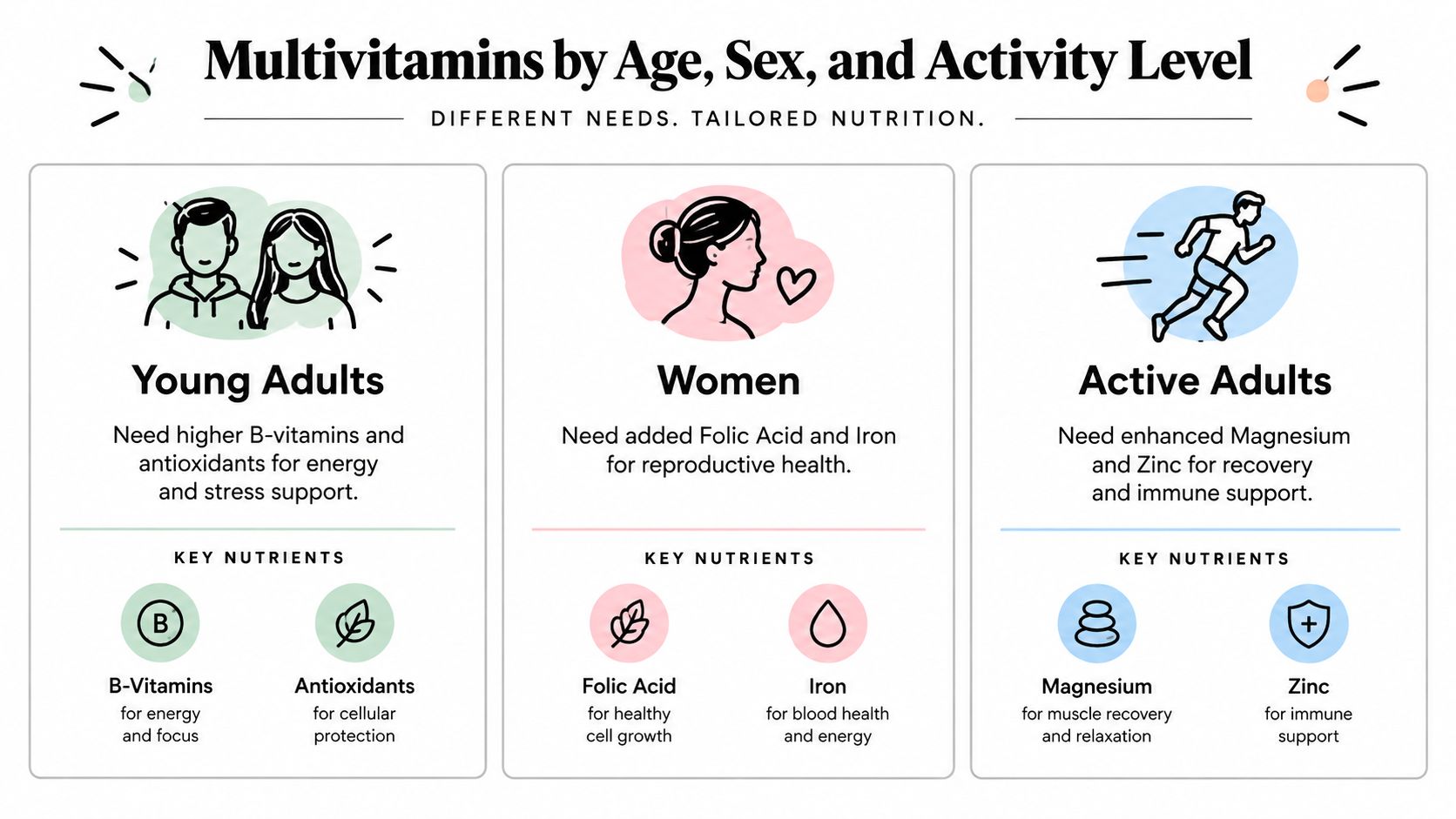
A generic adult formula can be convenient, but convenience shouldn't erase meaningful differences between users. Age, reproductive status, dietary pattern, and training load can all change which nutrients deserve closer attention.
Younger adults
For younger adults, the best fit is usually a moderate, uncomplicated formula that supports gaps in an inconsistent diet without treating a multivitamin as an energy stimulant. B vitamins are involved in normal energy metabolism, but taking more doesn't automatically create more energy when fatigue comes from inadequate sleep, low calorie intake, stress, illness, or another cause.
Look for:
- Clear amounts for B vitamins and folate.
- Sensible vitamin D and mineral amounts.
- Minimal duplication with energy drinks or separate B-complex products.
- A serving size you can follow consistently.
A long antioxidant list may sound impressive, but it shouldn't distract from basic nutritional coverage and a transparent Supplement Facts panel.
Women and reproductive considerations
Women need a more careful conversation about iron and folate, particularly during reproductive years and pregnancy. Iron isn't automatically appropriate for every woman, and a general multivitamin shouldn't replace prenatal guidance or testing when pregnancy is possible or confirmed.
The right questions are practical:
- Does the formula contain iron, and is that amount appropriate?
- Does it provide folate in a clearly stated form?
- Are calcium and other minerals duplicated by separate products?
- Has a clinician advised a prenatal or targeted supplement instead?
The daily multivitamin guidance for women can help frame these considerations, but personal circumstances still determine the appropriate choice.
Older adults
Older adults often take more medicines and supplements, which makes duplication and interaction review especially important. A formula should be assessed for iron, vitamin D, zinc, iodine, and other nutrients alongside the person's diet and medical history.
The evidence doesn't support choosing a product because it promises longevity. The U.S. Preventive Services Task Force found insufficient evidence to determine whether multivitamins provide a favorable balance of benefits and harms for preventing cardiovascular disease or cancer. In a pooled analysis of 9 randomized trials involving 51,550 participants, there was no statistically clear association with all-cause mortality, with an odds ratio of 0.94 and a 95% confidence interval of 0.87–1.01 (U.S. Preventive Services Task Force recommendation).
For older adults, product selection should emphasize fit, tolerability, and safe total intake rather than dramatic claims.
Active adults
Training increases the importance of overall food intake, hydration, and recovery. A multivitamin may complement an inconsistent diet, but it won't replace adequate carbohydrate, protein, fluids, or sleep.
Active adults should be cautious with formulas marketed as recovery solutions. Check whether the product duplicates a separate mineral powder, electrolyte drink, protein product, or “immune” blend. Magnesium and zinc may be relevant to the total plan, but higher doses aren't automatically better and should be assessed against all other sources.
The embedded video offers additional context for evaluating daily supplementation:
A multivitamin can fill a gap in an active routine. It can't compensate for a routine built around inadequate food and recovery.
How to Read Supplement Labels Like a Pro
The front of a bottle is marketing. The Supplement Facts panel is where the buying decision happens.
Start at the serving size. A product that appears to require one capsule may define a serving as several capsules, so calculate the daily amount from the serving information rather than the front label.
A five-part label audit
- Find the complete Supplement Facts panel. Confirm the serving size, servings per container, nutrient names, forms, and quantities.
- Review Daily Values carefully. A high percentage isn't automatically a benefit. Compare it with your other supplements and fortified foods.
- Identify the active forms. Look for specific forms such as L-5-MTHF or a named B12 form when that distinction matters to your decision.
- Look for independent verification. A third-party mark can provide useful quality information, but verify what the program tests.
- Scan the other ingredients. Check capsule material, colors, sweeteners, fillers, allergens, and ingredients that conflict with your dietary preferences.
A proprietary blend deserves extra skepticism because it can make comparison difficult when individual quantities aren't disclosed. The absence of a proprietary blend doesn't prove quality, but full disclosure gives you more control over the decision.
For a broader explanation of how to compare purity and potency details, consult Yuve's guide to supplement labels. Use it as a label-reading resource, not as a substitute for checking the specific bottle in your hand.
Why quality verification matters
Ingredient names alone can't confirm manufacturing quality or label accuracy. USP's Dietary Supplement Verification Program evaluates the manufacturing facility, reviews quality-control and manufacturing documentation, tests product samples against USP specifications, and performs off-the-shelf testing to confirm continued conformance (details on USP verification and multivitamin evidence).
That process makes recognized third-party verification a meaningful differentiator. It doesn't prove that a product is right for you, but it can provide evidence that the product is being evaluated beyond its marketing copy.
Label-reading principle: Choose the product you can audit, not merely the one you can admire.
Safety Signals and When to Consult a Professional
A daily multivitamin deserves the same attention to interactions as any other supplement. The most common mistake is reviewing one bottle in isolation while ignoring fortified foods, drinks, powders, gummies, and condition-specific products used during the same day.
That stack can push total nutrient intake above tolerable upper limits. The risk is especially easy to miss when several products use different branding but repeat the same nutrients.
Medication timing and interaction checks
Vitamin K can interfere with warfarin. Calcium, magnesium, and zinc may reduce absorption of certain antibiotics, while calcium can interfere with levothyroxine absorption (NIH guidance on multivitamin interactions and precautions).
Don't guess about timing. Show a pharmacist or clinician every supplement label and prescription list, then follow the timing advice they provide. This is particularly important when a product includes minerals in amounts that overlap with separate bone, sleep, sports, or antacid products.
A practical review should ask:
- Are you taking warfarin? Review vitamin K consistency with your prescriber.
- Are you taking levothyroxine? Ask specifically about calcium timing.
- Are antibiotics part of your routine? Ask whether minerals should be separated from the medicine.
- Are you stacking products? Add up repeated nutrients rather than evaluating each label alone.
Situations that need individualized guidance
Pregnancy, planned surgery, thyroid conditions, diagnosed deficiencies, malabsorption, and post-bariatric surgery all justify professional input before choosing a general formula. Frailty and restricted diets may also make dietary assessment or laboratory testing more useful than shopping by ingredient count.
Smokers and possibly former smokers should avoid products containing large amounts of beta-carotene or vitamin A because of potential lung-cancer risk. A high-potency formula is therefore a poor default for anyone who hasn't checked the vitamin A form and total intake.
A guide such as this review of green tea capsules for weight loss illustrates why supplement stacks need product-by-product scrutiny. Adding a botanical capsule to a multivitamin plan can introduce another set of ingredients and interactions, so don't assume that “natural” means irrelevant to a medication review.
Safety checkpoint: If you have a prescription, a diagnosed condition, pregnancy-related needs, or symptoms suggesting deficiency, ask a clinician or pharmacist before you choose a high-potency product.
How to Choose Your Best Daily Multivitamin
Use a short decision process instead of a brand ranking.
First, define the reason for supplementation. If your diet is varied and you have no identified risk, a moderate formula may be all you consider, and you may decide not to use one. If your diet is restricted, your intake is inconsistent, or a clinician has identified a deficiency risk, select around that context rather than around a colorful front label.
Next, check the formulation:
- Match the life stage. Review iron, folate, vitamin D, and other nutrients against your age and reproductive circumstances.
- Audit the total stack. Include fortified foods, drinks, powders, gummies, and targeted supplements.
- Stay below unnecessary excess. Compare zinc, iodine, vitamin B6, vitamin D, selenium, iron, and calcium with established upper limits.
- Prioritize transparency. Choose a product that lists forms, quantities, serving size, and other ingredients clearly.
- Look for quality controls. Independent verification is useful when available, though it doesn't replace personal suitability.
- Plan for consistency. A tolerable once-daily capsule taken as directed is more practical than a complicated routine you won't follow.
The best daily multivitamin isn't the bottle with the longest formula. It's the one that fits your nutritional situation, avoids avoidable duplication, and supports a balanced lifestyle without making medical promises.
NexiHerb LLC offers science-inspired dietary supplements, including multivitamin, mineral, botanical, omega-3, antioxidant, and functional mushroom formulas, with product information designed to support practical everyday choices. Visit NexiHerb LLC to review its catalog and nutrition guides, then compare any product with your diet, medications, and professional advice.