

Have you ever wondered whether a label saying citrus bioflavonoid complex tells you what you're buying, or only gives a polished name to a mixture of different plant compounds? The distinction matters. Hesperidin, naringin, eriocitrin, rutin, and related flavonoids don't behave identically, and research on one compound shouldn't automatically be treated as proof for every blended capsule.
Citrus flavonoids have a long scientific history. A systematic review records the first identification of flavonoids in the Citrus genus in the late nineteenth century, when researchers discovered hesperidin. By 2020, the review described 44 naturally occurring citrus flavonoids, showing that this is a broad family rather than one “vitamin-like” ingredient (systematic review of citrus flavonoids). This guide separates the marketing umbrella from the compounds underneath it, so you can read a label with more confidence.
Table of Contents
- What a Citrus Bioflavonoid Complex Actually Is
- Key Compounds Inside a Citrus Bioflavonoid Complex
- How Citrus Bioflavonoids Work in the Body
- Natural Food Sources Worth Knowing
- Typical Dosages in Supplements and Research
- Safety, Interactions and Common Misconceptions
- Adding a Citrus Bioflavonoid Complex to Your Routine
What a Citrus Bioflavonoid Complex Actually Is
A citrus bioflavonoid complex is a blend of plant polyphenols extracted from citrus material, commonly including the peel, inner white pith, pulp, or membranes. The word “complex” doesn't name one molecule. It describes a mixture, much like a smoothie contains several fruits, each contributing its own color, flavor, and nutritional profile.
Citrus flavonoids belong to a larger polyphenol family. Within citrus, flavanones are especially prominent. Hesperidin, naringin, eriocitrin, and neohesperidin are examples. Other products may include flavonols such as rutin or quercetin, flavones, and citrus peel compounds such as nobiletin and tangeretin. These categories differ in chemical structure, food source, absorption, and biological activity.
Why brands use the word complex
Citrus plants naturally produce multiple flavonoids at the same time. A supplement maker may preserve some of that mixture instead of isolating one compound, or may combine selected extracts to create a broader profile. The reasoning is understandable: compounds that occur together in food may provide complementary properties. But “complex” doesn't prove that a particular formula is more effective than a single standardized flavonoid.
Composition can vary substantially with the citrus cultivar and the part of the plant used. One review of citrus peel and albedo reported flavonoids as 89.34% of the polyphenolic fraction, with eriocitrin representing 52.81% and hesperidin 31.31% of total flavonoids in the cited profile (review of citrus peel flavonoids). That profile shouldn't be treated as a universal specification for every capsule.
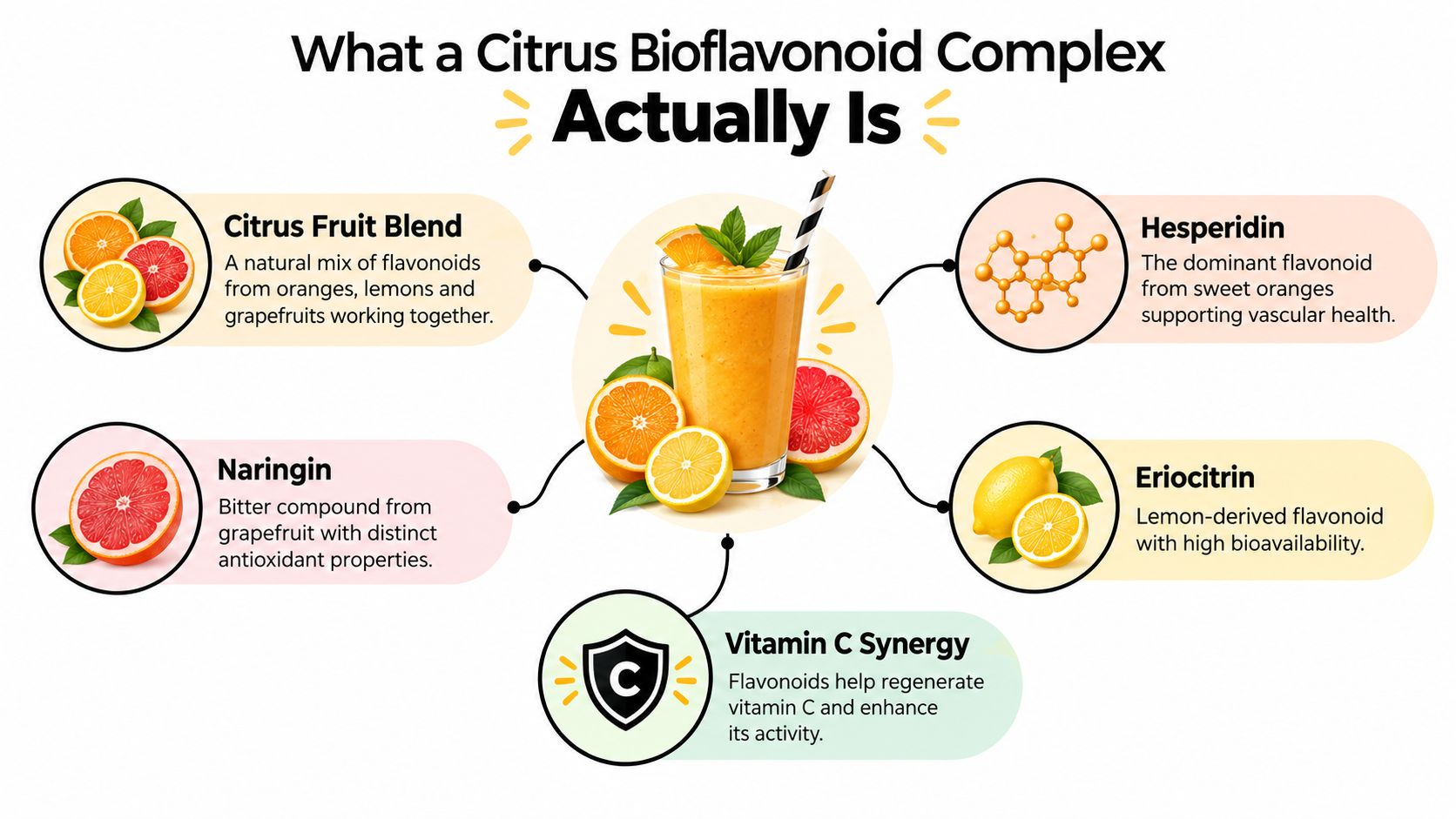
Vitamin C often appears alongside citrus flavonoids, but it's a separate nutrient, not another name for bioflavonoids. If you're comparing formulas, it also helps to understand the difference between liposomal and regular vitamin C, because delivery format and ingredient identity are different questions.
Key Compounds Inside a Citrus Bioflavonoid Complex
The fastest way to understand a blended product is to ignore the front label and inspect the Supplement Facts panel. Look for named compounds, plant sources, extract ratios, and standardization. A product that only says “citrus bioflavonoids” gives you less information than one that identifies its principal flavonoids.
The principal flavanones
Hesperidin is strongly associated with sweet oranges and related citrus. Its non-sugar form, hesperetin, is called the aglycone. Researchers study this pair in relation to antioxidant and vascular processes, but evidence for a hesperidin study shouldn't be presented as evidence for every retail complex.
Naringin gives grapefruit much of its bitter taste. The body can convert it into naringenin, a related aglycone. Naringin deserves special attention because grapefruit-derived compounds can affect drug-metabolizing pathways, including CYP3A4. That interaction question matters more than the appealing word “natural.”
Eriocitrin is associated particularly with lemons and is often included when formulators want a lemon-derived flavanone. Diosmin, a compound related to hesperidin, may appear in formulas focused on vascular research. Mandarin peel contributes polymethoxylated flavones such as nobiletin and tangeretin, which have distinct structures from the major flavanones.
Rutin is frequently grouped with citrus bioflavonoids, although it's technically a flavonol rather than a flavanone. Quercetin is another commonly discussed flavonol, and readers comparing it with bromelain can consult this guide to quercetin and bromelain for ingredient-specific context.
| Compound | Class | Primary Citrus Source | Notable Trait |
|---|---|---|---|
| Hesperidin | Flavanone glycoside | Sweet orange and related citrus | Commonly studied citrus flavanone |
| Naringin | Flavanone glycoside | Grapefruit | Bitter taste and medication-interaction relevance |
| Eriocitrin | Flavanone glycoside | Lemon | Lemon-associated flavonoid |
| Rutin | Flavonol glycoside | Citrus and other plants | Often added for a complementary flavonol profile |
| Nobiletin | Polymethoxylated flavone | Mandarin peel | Peel-derived compound with a distinct structure |
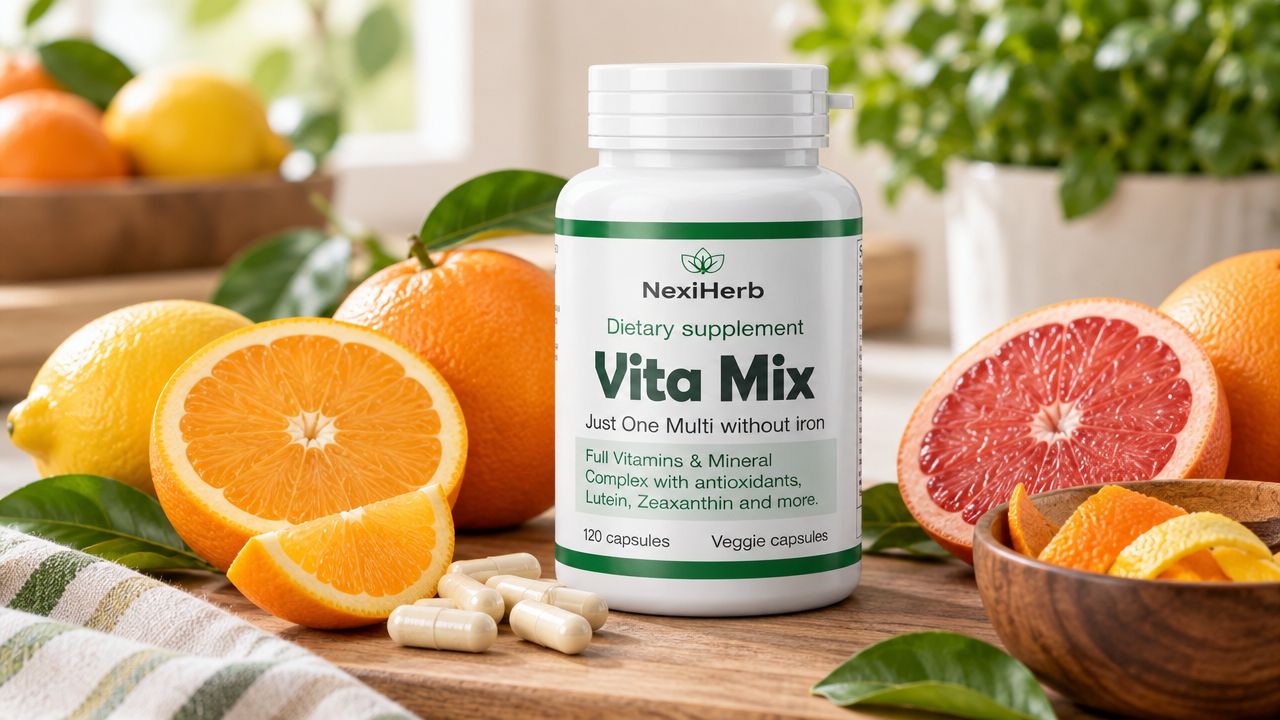
For a broader nutritional formula rather than a stand-alone flavonoid, Vita Mix NexiHerb Multivitamin & Mineral Dietary Supplement combines vitamins, minerals, citrus bioflavonoids, mixed tocopherols, lutein, and zeaxanthin in a once-daily vegetarian capsule. Its label is best understood as a general wellness formula, not as a standardized hesperidin or naringin trial product.
How Citrus Bioflavonoids Work in the Body
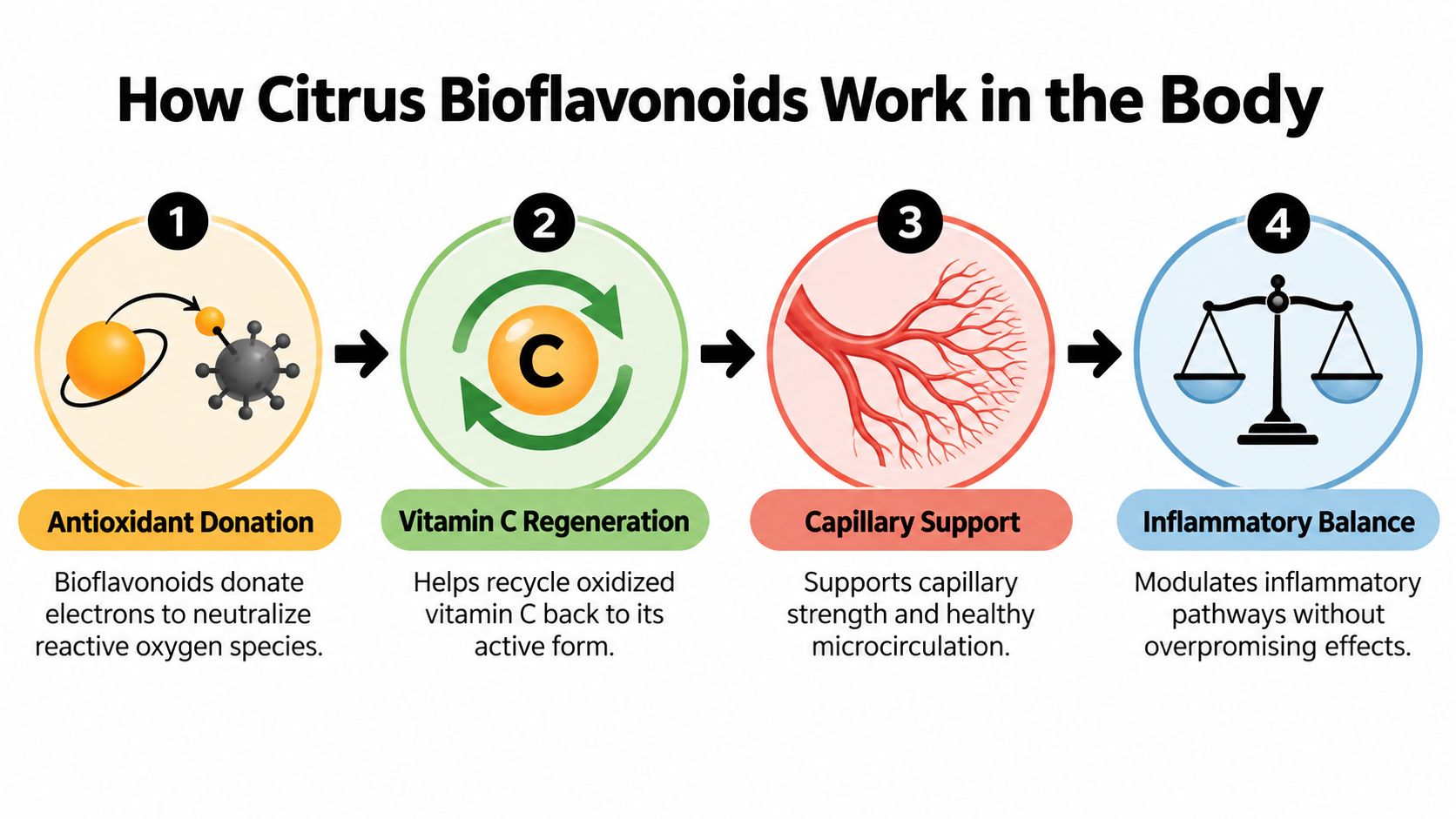
The word antioxidant can sound abstract, so use a simple model. Some unstable molecules are missing an electron. A flavonoid can donate an electron and help neutralize that instability. This doesn't mean a capsule “cleans” the body or prevents every form of cellular stress. It means the compounds can participate in chemical systems that influence oxidative balance.
Citrus flavonoids also interact with vitamin C in laboratory and biological models. They're chemically distinct, but they often occur together in citrus foods, which is one reason supplement formulas combine them. The practical lesson is modest: a formula containing vitamin C and flavonoids is delivering two classes of compounds, not a more powerful version of vitamin C by definition.
From chemistry to everyday physiology
Researchers study hesperidin and related compounds in connection with vascular function and microcirculation. A useful analogy is plumbing. Capillaries are extremely small vessels, so their condition influences how comfortably blood moves through tissues. That doesn't translate into a promise that a supplement will fix swelling, circulation disorders, or exercise soreness.
Cell and animal research also examines inflammatory signaling, including pathways involving NF-kB and cytokines. These findings help explain why citrus flavonoids remain scientifically interesting, but they're not equivalent to long-term human evidence. A defined intervention in a particular population can't automatically validate a generic complex sold across many brands.
Absorption adds another layer. The gut transforms some flavonoids, and gut microbes can help convert glycosides into other forms. Different compounds therefore have different absorption patterns, and a high milligram number on the front of a bottle doesn't reveal how much reaches circulation.
This short video on citrus bioflavonoid function can help visual learners connect antioxidant chemistry with the broader idea of biological pathways. For a wider discussion of supplement categories, see this resource on antioxidant-rich supplements. People comparing unrelated nutrients should also keep ingredient roles separate. For example, D3+K2 NexiHerb 10,000 IU of vitamin D3 + 120 mcg of Vitamin K2 is a vitamin D and vitamin K supplement, not a citrus flavonoid product.
For a balanced overview of plant-based products marketed for inflammatory support, Hemp Well Ireland's anti-inflammatory supplement guide offers additional reading. Its subject is broader than citrus flavonoids, so don't use it as proof for a particular hesperidin or naringin formula.
Natural Food Sources Worth Knowing
Whole foods give you more than an isolated flavonoid. They also provide water, fiber, flavor, and a meal pattern that's easier to evaluate than a concentrated capsule. Oranges, tangerines, lemons, limes, and grapefruit are the obvious sources, while the white pith and inner peel deserve attention because flavonoids often concentrate there more than in juice.
You don't need to chew a bitter orange peel to include these compounds. Add orange segments to breakfast, grate lemon zest into a salad dressing, or squeeze lemon over beans and vegetables. Choose grapefruit only after checking for medication conflicts, since the fruit and grapefruit-derived compounds can affect some medicines.
Rutin and related flavonols also occur outside citrus. Buckwheat, apples, figs, and black tea can broaden the plant-polyphenol mix in a normal diet. Fresh whole fruit generally preserves the food matrix better than juice, while prolonged storage and high heat can reduce some flavonoid content.
| Food | Serving Size | Key Bioflavonoid | Approx. Amount |
|---|---|---|---|
| Orange | Typical whole-fruit serving | Hesperidin | Varies by cultivar and preparation |
| Tangerine | Typical whole-fruit serving | Hesperidin and peel flavones | Varies by cultivar and preparation |
| Grapefruit | Typical whole-fruit serving | Naringin | Varies by cultivar and preparation |
| Lemon | Fruit, juice, zest, or pith | Eriocitrin and hesperidin | Varies by cultivar and preparation |
| Lime | Typical culinary serving | Citrus flavanones | Varies by cultivar and preparation |
| Buckwheat | Typical food serving | Rutin | Varies by variety and preparation |
| Apple | Whole fruit with skin | Rutin and other flavonols | Varies by variety and preparation |
| Black tea | Typical brewed serving | Flavonoid compounds | Varies by tea and brewing method |
The table uses qualitative ranges because food composition changes with variety, growing conditions, storage, and preparation. There isn't a single reliable serving value that applies to every orange, lemon, or cup of tea. That variability is normal in food, while supplements attempt to provide a more declared amount.
Typical Dosages in Supplements and Research
A capsule dose and a food serving answer different questions. Food supplies a variable background intake, while a study may use a defined compound at a controlled amount. The clinical literature also includes specific interventions that shouldn't be confused with an unspecified retail blend.
Research and commercial formulas can range from 250 milligrams to more than 1,000 milligrams of flavonoid material, as described in the supplied evidence summary (review of citrus flavonoid evidence). The same summary describes hesperidin research around 500 to 1,000 milligrams, rutin products around 200 to 500 milligrams, and blended products marketed at 500 to 1,500 milligrams of total bioflavonoids. These are examples of studied or marketed amounts, not universal recommendations.
How to read standardization
A label saying “citrus extract” tells you the source but not necessarily the active profile. A statement such as “standardized to 90% hesperidin” or “95% citrus flavanones” gives more detail about concentration. It still doesn't tell you whether the extract matches the compound, dose, population, or duration used in a particular trial.
Vitamin C is often added in amounts ranging from 60 to 500 milligrams in formulas discussed in the supplied plan notes, but a combined product isn't automatically interchangeable with a stand-alone vitamin C supplement. Check the serving size, the form of each ingredient, and whether the label names individual flavonoids.
| Compound | Study Dosage Range | Typical Supplement Dose | Notes |
|---|---|---|---|
| Hesperidin | Around 500 to 1,000 mg in cited circulatory research | Varies by formula | Compare the declared form and standardization |
| Rutin | Around 200 to 500 mg in cited product and research contexts | Varies by formula | Rutin is a flavonol, not a flavanone |
| Citrus flavonoid blend | 250 mg to more than 1,000 mg in cited research contexts | Around 500 to 1,500 mg marketed total | Total weight may hide the individual profile |
| Vitamin C with flavonoids | Around 60 to 500 mg in cited formula contexts | Varies by product | Vitamin C and flavonoids remain separate ingredients |
A thoughtful buyer asks, “Which compound is present, at what amount, and in what form?” That question is more useful than choosing the largest total milligram figure.
Safety, Interactions and Common Misconceptions
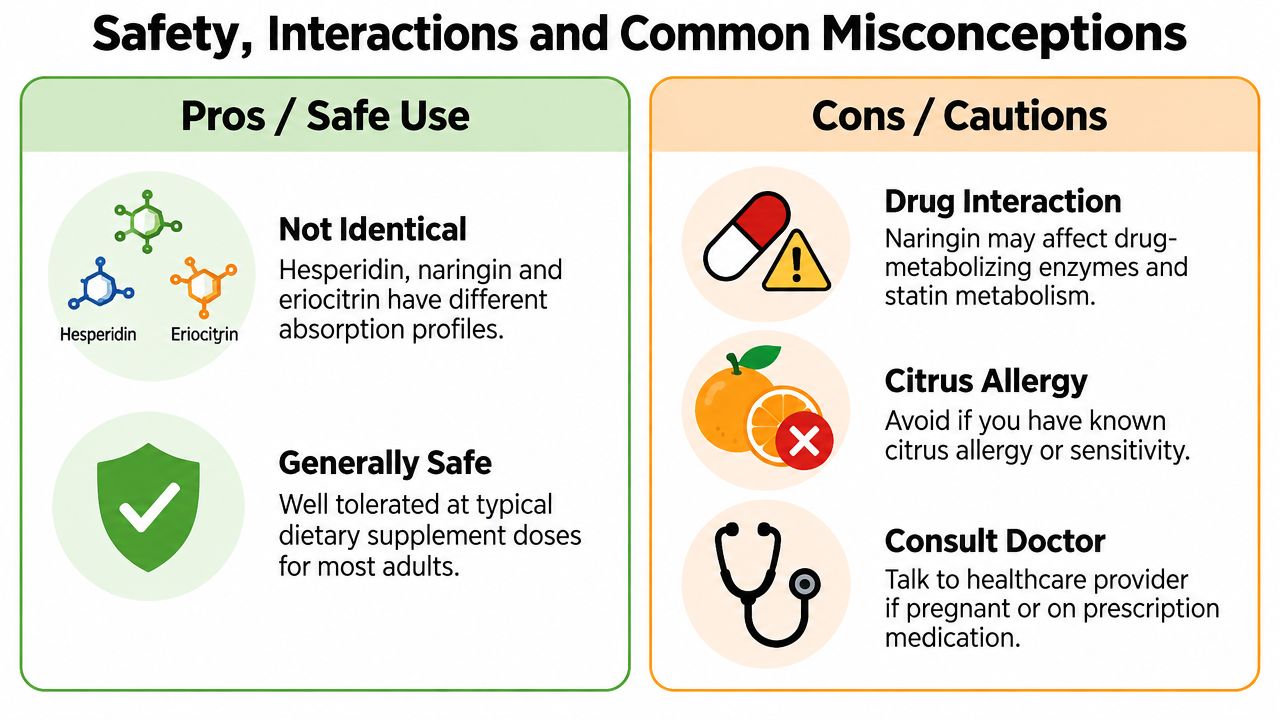
“Natural” doesn't mean interchangeable. Hesperidin, naringin, and eriocitrin have different structures and absorption profiles, so the body doesn't treat every citrus extract as if it were the same ingredient. Reviews generally describe a favorable safety profile, with some studies reporting no serious adverse effects and others reporting mild events, but safety depends on the product, dose, duration, and person (review of citrus flavonoid safety and clinical evidence).
Grapefruit needs a separate warning
Grapefruit-derived naringin and related compounds deserve special scrutiny when prescription medicines are involved. Grapefruit can affect drug-metabolizing enzymes, including CYP3A4, which may change how some medicines behave. A generic label that says “citrus bioflavonoids” may not clearly tell you whether grapefruit is included, so look for the botanical source and ask a pharmacist if you take medication.
Practical rule: Never assume a grapefruit-free label and a grapefruit-containing label carry the same interaction considerations.
The supplied evidence also supports a cautious distinction between short-term markers and long-term disease prevention. A defined citrus flavonoid intervention in adults with prediabetes improved post-meal glycemia, maintained GLP-1, reduced inflammation and oxidative stress, and modestly improved body composition and blood pressure. Those findings apply to that defined intervention and population, not automatically to an unlabeled complex or to everyone who takes one.
Pregnant people, individuals taking anticoagulants or blood-pressure medicine, people with chronic conditions, and anyone preparing for surgery should check with a qualified healthcare professional before using concentrated supplements. People with a known citrus allergy or sensitivity should avoid the relevant ingredient.
Food usually provides a less concentrated exposure than capsules, although grapefruit can still interact with medicines as a food. Supplement quality varies, so check for transparent ingredient amounts, serving instructions, allergen information, and a clear source rather than relying on broad antioxidant language.
Adding a Citrus Bioflavonoid Complex to Your Routine
Start with the least complicated option. Eat whole citrus regularly, then decide whether a supplement solves a specific consistency problem. An orange with breakfast or lemon zest in a meal adds a food-based flavonoid source without requiring you to interpret a concentrated extract.
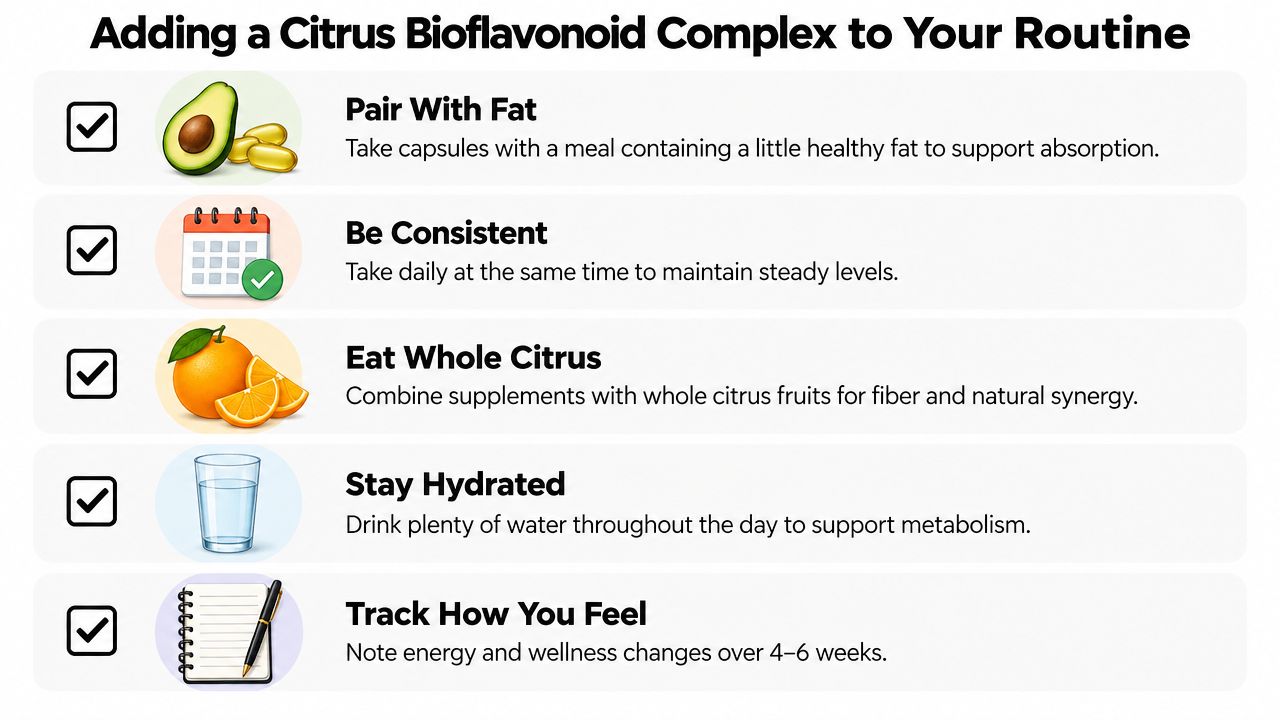
If you choose a capsule, take it according to the product label. A meal can make a routine easier to remember, and some formulators suggest taking flavonoid products with food, but the evidence doesn't establish one universal timing rule for every compound. Don't add several new supplements at once, because you won't know which ingredient caused a benefit or an unwanted reaction.
A manageable weekly pattern
Try a flexible rhythm rather than treating the complex as a quick fix:
- Citrus-forward breakfasts: Add orange or tangerine segments on a few mornings, keeping the whole fruit rather than relying only on juice.
- Flavor-based meals: Use lemon zest, lime, or citrus-based dressings with lunch and dinner.
- Supplement days: If a qualified professional agrees that a supplement fits your needs, follow its serving instructions consistently instead of changing the dose casually.
- Medication check-ins: Pause and review the label whenever you start a new prescription, especially if grapefruit or naringin appears.
- Simple tracking: Note the product name, serving size, and any changes you notice, without treating normal variation as proof of an effect.
A little healthy fat in a meal may be practical for tolerability and digestion, but don't assume it solves every absorption problem. Flavonoids differ in their chemical forms, and human absorption can vary with the food matrix and gut metabolism.
Before buying, use a supplement label reading guide to check whether the product names hesperidin, naringin, eriocitrin, rutin, or another defined compound. Pregnant people, adults taking blood-thinning or blood-pressure medication, those managing chronic conditions, and anyone facing surgery should seek professional advice first.
A citrus bioflavonoid complex makes the most sense as a supportive habit built around clear labeling, realistic expectations, and a varied diet. The key question isn't whether a complex sounds impressive. It's whether you know which compounds it contains and whether they fit your personal situation.
NexiHerb LLC offers science-inspired dietary supplements, including formulas that use citrus bioflavonoids alongside vitamins, minerals, and other selected plant-derived compounds. Visit NexiHerb LLC to review clearly presented wellness products and nutrition guides that can help you compare ingredients before choosing a routine.