

You're standing in front of a supplement shelf, and every bottle looks almost identical. Organic is printed on more than one label, one jar says high protein, another promises purity, and a third uses enough wellness language to sound convincing without saying much at all. The part that slows you down isn't the color of the capsules, it's the quiet question of which bottle deserves to go in your cart.
That hesitation is exactly where spirulina organic tablets become interesting. Tablets look simple, but the label can hide a lot: where the spirulina was grown, whether the lot was tested, how much protein or phycocyanin it contains, and whether “organic” is doing the work or just the marketing work. A good bottle should help you compare, not guess.
Table of Contents
- The Moment You Stand in Front of the Supplement Shelf
- What Spirulina Actually Is and Why Tablets
- The Nutrient Profile That Makes Spirulina Tablets Stand Out
- Evidence-Based Benefits for Everyday Health
- How to Take Spirulina Organic Tablets Safely
- Safety, Interactions, and the Organic Quality Question
- Tablets Versus Powder and Who Each Format Suits
- Your Spirulina Tablet Buyer Checklist
The Moment You Stand in Front of the Supplement Shelf
The hardest part of choosing spirulina often happens before you buy anything. One brand uses earthy packaging and a calm, natural tone. Another looks clinical and mentions certification, but not much else. Then you notice the tablet count, the serving size, and the price, and the differences still don't tell you what matters most.
That's because the best question isn't “Which bottle sounds healthiest?” It's “Which bottle tells me enough to judge the product inside?” Spirulina moved into mainstream supplement channels in the late 1970s, and tablets became a practical way to deliver a standardized daily dose in a shelf-stable format, especially in North America, where convenience and consistency still shape how people shop for it (spirulina market history).
What usually confuses shoppers
Most confusion comes from three places. First, many brands lead with organic certification but don't explain what they test for beyond that. Second, some bottles talk about purity without publishing batch-specific data. Third, tablet format itself can make a product feel more “finished” than powder, even when quality markers are missing.
A useful label reader slows down and checks the basics:
- What was tested, and for which lot?
- Does the brand name the species and the source?
- Are protein, phycocyanin, and contaminants listed?
- Is the tablet a convenience format, or a transparency shortcut?
Practical rule: if a brand gives you a lot of claims but no batch-specific proof, treat the label as a sales pitch, not a quality report.
The rest of this guide is about learning to read those bottles the way a careful buyer should, with less hype and more evidence.
What Spirulina Actually Is and Why Tablets
Spirulina is a cyanobacterium, which is a photosynthetic microbe that grows in water, not a land plant and not a wild-harvested seaweed. Think of it as a microscopic organism that uses sunlight, minerals, and controlled growing conditions to build dense biomass. That is why it can be rich in protein, pigments, and other nutrients despite being so small.
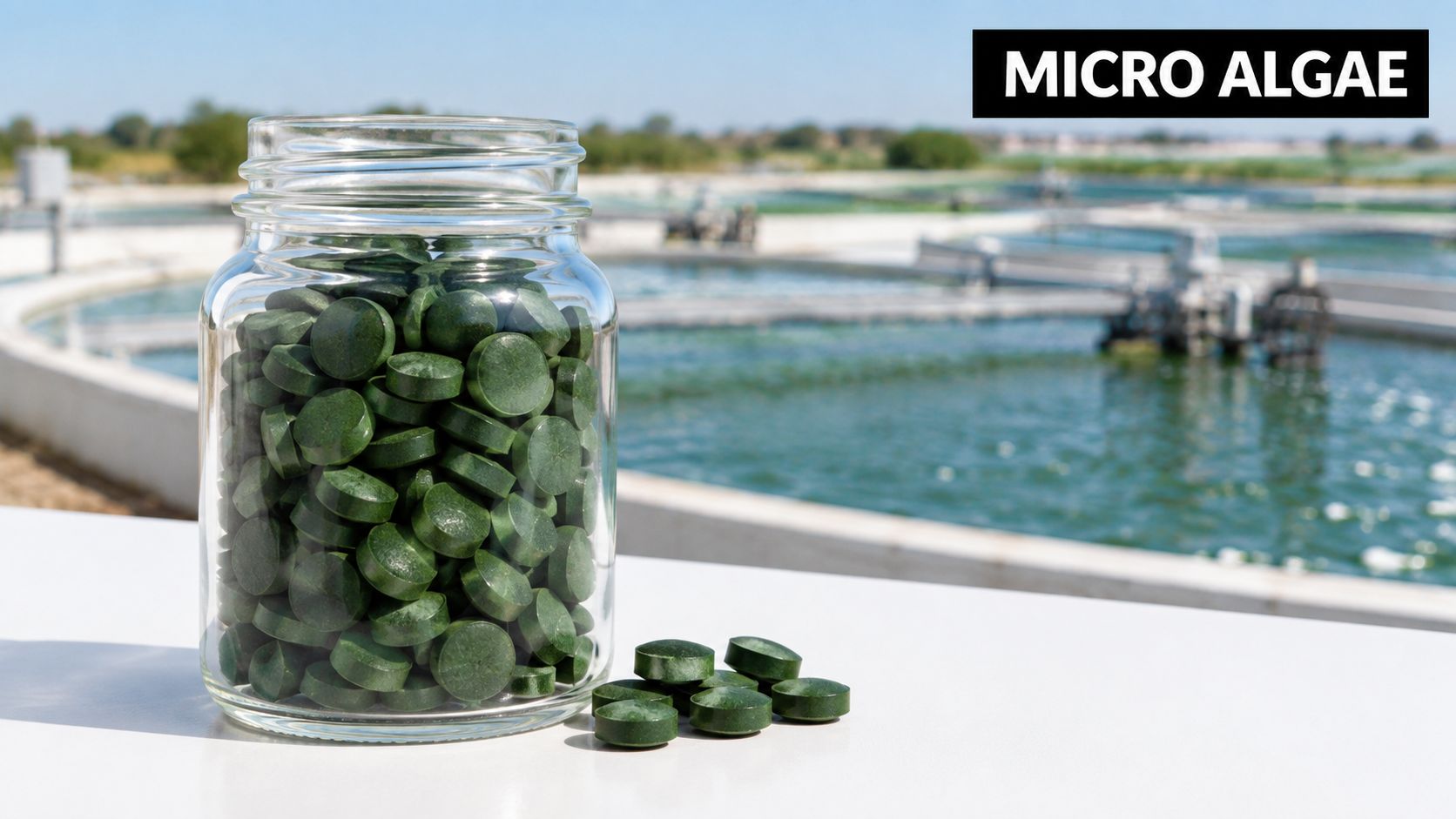
From pond to tablet
The tablet format exists for a practical reason. After cultivation, the spirulina biomass is washed, dried, and compressed into a uniform dose. That gives you a consistent serving, less taste exposure, and an easier way to carry it in a bag or keep it on a desk.
Organic certification, meanwhile, speaks to farming practices. It generally means the crop was produced without synthetic pesticides or fertilizers, but it does not automatically tell you whether the final tablets were tested for heavy metals, microcystins, or residue variability. That difference matters, because farming practice and final product quality are related, but they're not the same thing.
Why tablets became the default for many buyers
Tablets are built for routine. You don't need a blender, a scoop, or a recipe. You also don't have to taste the “pond” note that turns some first-time users off powders. For people who want a fixed daily habit, tablets make spirulina feel more like a standard supplement and less like a special ingredient.
That convenience is part of why spirulina's older retail history still matters today. The product didn't spread only because it was novel. It spread because tablets fit the way supplement shelves worked, standardized, portable, and easy to explain.
If you're comparing products, the question is not whether tablets are more “natural.” It's whether the tablet format matches how you'll use the supplement every day.
The Nutrient Profile That Makes Spirulina Tablets Stand Out
Spirulina earns attention because it's unusually dense for its size. A quality tablet is small, but the biomass behind it can carry a lot of value per gram. The main reason people keep coming back to it is not one magic nutrient, it's the combination of protein, pigments, and micronutrients bundled together.
What people usually look for
The headline components are easy to remember once you map them to daily life:
- Protein, which helps explain why spirulina is often treated as a concentrated food, not just a herb-like add-on.
- Phycocyanin, the blue pigment that gives spirulina much of its signature character and is often discussed for antioxidant activity.
- Iron, which matters most to readers who want to support dietary intake from plant-based sources.
- Carotenoids and chlorophyll, which are part of the pigment profile that makes spirulina visually and nutritionally distinctive.
These nutrients are why some industry guidance for spirulina tablets looks past the word “organic” and checks actual composition markers too. Commercial guidance commonly targets about 12% minimum protein, phycocyanin at or above about 120 mg/g, a lead specification near 0.5 ppm, and the species name Arthrospira platensis on documentation (tablet quality guidance).
Why composition matters more than marketing language
A tablet can be organic and still be under-detailed. It can also be bright green and still tell you nothing about what survived cultivation, drying, and compression. That's why nutrient density per gram matters more than vague wellness promises.
Useful analogy: think of spirulina like a concentrated library of pigments and proteins. The shelf label tells you the book exists. The assay tells you which chapters are still intact.
Tablet compression can slightly reduce sensitive compounds compared with fresher biomass, so the best brands are the ones willing to publish measured composition instead of relying on the word “organic” alone. If you want to understand why many supplement discussions focus on antioxidant pigments, the broader logic is similar to other plant-based antioxidant products, as outlined in this antioxidant supplement overview.
For readers who also use blended wellness products, a multinutrient supplement such as Vita Mix NexiHerb Multivitamin & Mineral Dietary Supplement can sit alongside spirulina in a routine, since it's designed as a once-daily capsule with vitamins, minerals, and plant-derived compounds. The two products solve different problems, spirulina for concentrated microalgae nutrition, multivitamins for broader dietary coverage.
Evidence-Based Benefits for Everyday Health
The best way to think about spirulina organic tablets is as a supportive food-like supplement, not a cure-all. The evidence is most convincing when you stay close to everyday outcomes, such as recovery, dietary gaps, and general antioxidant support. Once the claims get too dramatic, the evidence usually gets thinner.
Where the evidence is most believable
Phycocyanin and carotenoids are the two compounds that tend to anchor most antioxidant conversations. In practical terms, that means spirulina is often discussed in the same breath as cell protection, exercise recovery, and general resilience, not because it replaces food, but because it adds another layer of nutrient density.
A simple way to read the claims is this:
| Benefit Area | Typical Studied Dose | Evidence Strength | Everyday Function |
|---|---|---|---|
| Antioxidant support | Varies by product and study | Moderate | Helps support normal recovery after daily stress |
| Lipid markers | Varies by trial design | Moderate | Fits a heart-conscious routine |
| Blood sugar trends | Varies by study | Emerging | Supports balanced wellness habits |
| Iron intake | Food-based use, not a drug dose | Practical | Helps vegetarians and vegans diversify iron sources |
| Exercise support | Varies widely | Early to moderate | May fit active routines and recovery habits |
What to expect without overreading it
The most sensible reading of spirulina is that it can fit into a broader routine that already includes decent meals, sleep, and movement. That's a very different claim from saying it will transform energy or performance on its own. The stronger use case is consistency, especially for people who want a nutrient-dense tablet without a complicated routine.
A label can't prove outcome, but it can show whether the product is built around the nutrients most likely to matter. That's why a good buyer looks for composition data, not just a shiny front label.
A note on practical positioning
If you're already using a general wellness supplement and don't want to stack too many overlapping products, compare what each one covers. A tablet can support your routine, but it shouldn't duplicate everything blindly. That's the difference between intentional supplementation and a drawer full of near-identical bottles.
How to Take Spirulina Organic Tablets Safely
The easiest way to start is slowly. Many people do better when they treat spirulina like a new food rather than a power supplement. That means giving your body time to adjust before you decide whether the tablet form suits you.
A simple build-up approach
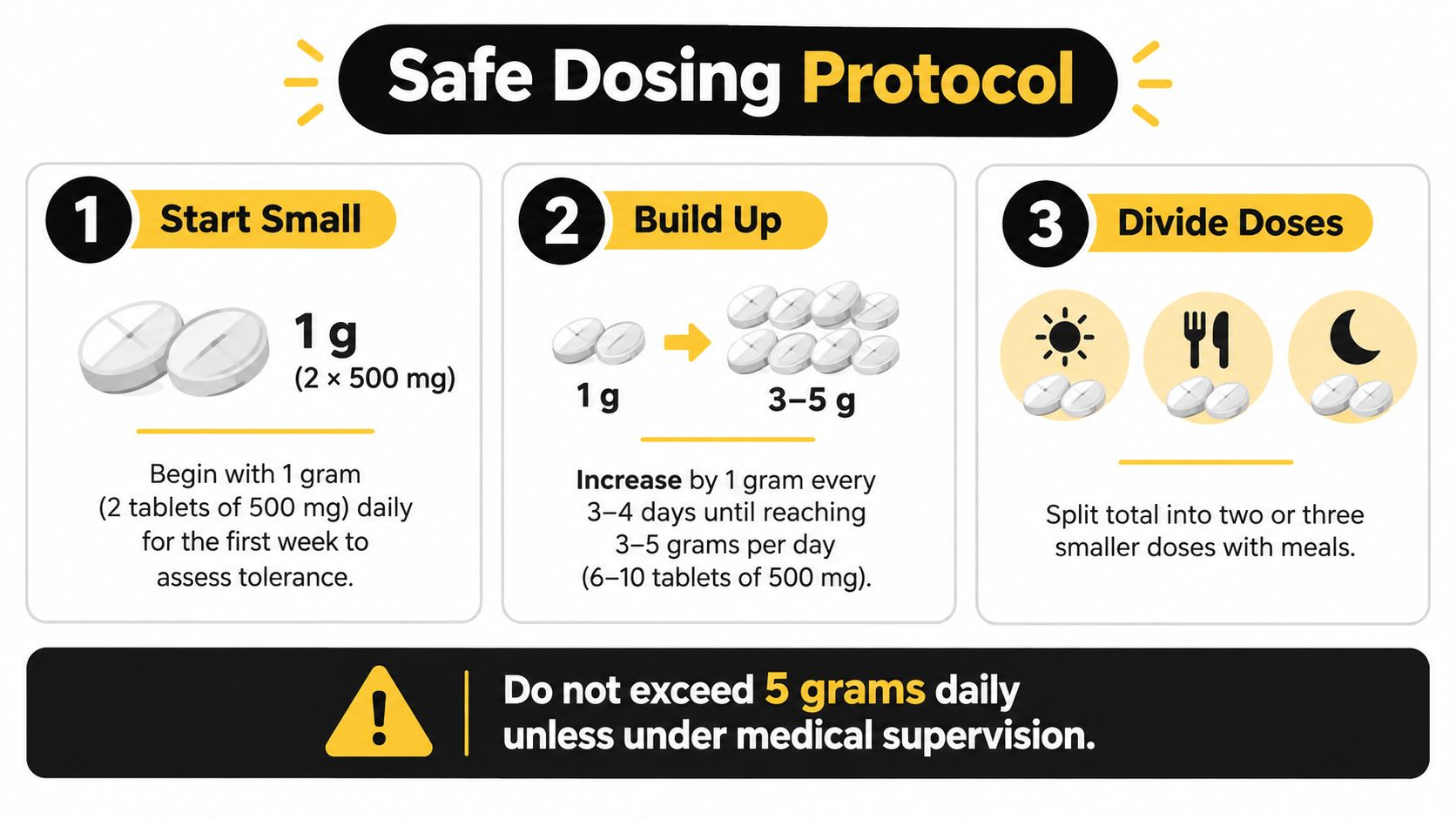
A common studied range for spirulina is 3 to 5 grams per day. If your tablets are 500 mg each, that's roughly 6 to 10 tablets daily. If they're 1,000 mg each, that's about 3 to 5 tablets daily. The point of translating grams into tablets is to make the label usable in real life, not to force a one-size-fits-all ritual.
A beginner-friendly pattern looks like this:
- Start small. Take one tablet daily for about a week if you're sensitive to new supplements.
- Build gradually. Increase slowly over the next couple of weeks until you reach the amount you plan to use.
- Split the dose. If you take several tablets a day, divide them with meals instead of taking everything at once.
Practical rule: take spirulina with breakfast or lunch and water. That usually feels gentler than taking it late in the day.
What to notice in the first two weeks
A mild digestive adjustment can happen when you introduce any concentrated green supplement. Some people also notice greener stools, which is usually just a reflection of the pigment content. Those are the kinds of effects that tell you the supplement is new to your system, not necessarily that something is wrong.
Storage matters too. Keep tablets tightly sealed, cool, and dry so the pigments and other sensitive compounds stay more stable. If a bottle smells stale or looks discolored, that's a reason to pause before taking it.
A short video guide
If you're a visual learner, this quick overview can help reinforce the basic routine.
The cleanest pattern is boring in the best way, steady timing, enough water, and no rush to max out the serving on day one.
Safety, Interactions, and the Organic Quality Question
“Organic” sounds reassuring, but it doesn't close the safety conversation. Spirulina can be a useful supplement and still deserve scrutiny, especially when you're buying it in tablet form from a brand you don't know well. The safety question is not whether organic labels exist. It's whether the product was verified lot by lot.
What can go wrong
Common side effects are usually mild, things like bloating, digestive discomfort, headaches, or green stools. The more important issue is not everyday tolerance, it's whether the product itself is analytically clean. Independent testing has found that even premium-positioned spirulina can vary in nickel, lead, and detectable pharmaceutical residues, and the big takeaway is simple, organic status alone is not a guarantee of a clean analytical profile (independent testing summary).
A later retail-channel review also raised the broader supply-chain question, noting that a significant share of tested spirulina and greens products initially exceeded California Proposition 65 lead exposure limits, and that organic products did not clearly outperform conventional ones on that risk (retail-channel lead review). That's exactly why the buyer has to look beyond the front label.
Who should be extra careful
Some groups need more caution with spirulina supplements, including people with autoimmune conditions, phenylketonuria, iodine sensitivity, and anyone taking anticoagulants or immunosuppressants. If that's you, the label is not enough. Talk with a clinician and ask for batch-specific proof before you commit to daily use.
What trustworthy quality looks like
A serious brand should be able to show a certificate of analysis for the exact lot in the bottle. That document should cover heavy metals, microcystins, and microbial screening, and it should match the batch you're buying. Third-party seals such as USP, NSF, and Informed Sport matter because they add independent oversight, but the lot-specific certificate still tells you what happened to the actual product in your hand.
Organic farming can reduce pesticide exposure, but it doesn't erase all contamination risk. That's why the smartest question is not “Is it organic?” It's “Can this brand prove the tablet is clean, consistent, and traceable?”
Tablets Versus Powder and Who Each Format Suits
Tablets and powder solve different problems, and that's why people get frustrated when a brand tries to sell them as interchangeable. Tablets are about precision and portability. Powder is about flexibility and mixing. Neither one is automatically better, but one is usually better for how you live.
Side by side
| Dimension | Tablets | Powder |
|---|---|---|
| Dose precision | Fixed and simple | Flexible, but easier to mismeasure |
| Convenience | Easy for travel and work | Best at home with a scoop or spoon |
| Taste | Minimal exposure to flavor | Strong grassy note unless blended |
| Shelf life and stability | Usually easier to store | Can be more exposed after opening |
| Use style | Daily routine, set amount | Smoothies, recipes, bigger custom servings |
Who usually prefers tablets
Tablets fit people who want to take spirulina at work, while traveling, or as part of a fixed morning habit. They also suit beginners who don't want to deal with taste or measuring. If you dislike anything vegetal, tablets are the lowest-friction entry point.
Who usually prefers powder
Powder works better for people who like to control the dose more freely or blend spirulina into food. It's also easier to use in larger servings if someone is building a smoothie-based routine. The tradeoff is obvious, you have to measure it, and you have to tolerate the taste.
A useful comparison for supplement buyers is how much trust comes from format versus documentation. For a broader example of how people compare supplement formats and label clarity, the structure is similar to the way shoppers evaluate other wellness products, including the guidance in this matcha supplement comparison.
If you want the simplest answer, choose tablets for routine and powder for customization.
Your Spirulina Tablet Buyer Checklist
Standing at the supplement shelf, you can narrow the choice quickly by separating visible claims from proof. Use the label, the company website, and one focused email. The aim is a product you can evaluate, not a bottle that looks healthy.
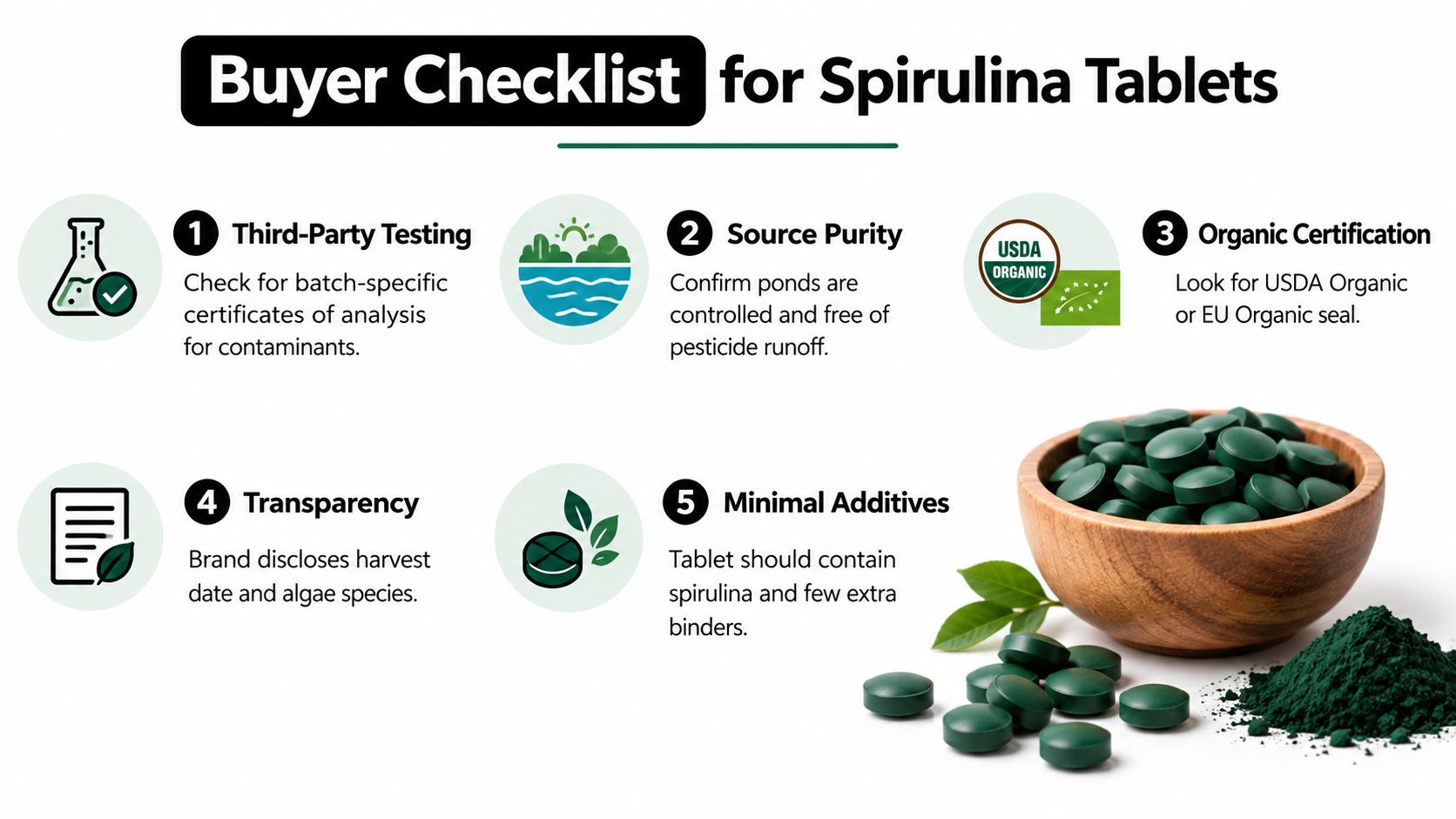
Five checks that matter
- Match the identity. The label should name the spirulina species, serving size, tablet contents, and cultivation origin or facility where available.
- Check the supplement facts panel. Start with this guide on how to read supplement labels to review species, serving size, and composition markers.
- Review phycocyanin and protein information. These details make a broad purity statement more useful for comparing products.
- Scan the additive list. Fewer unnecessary binders make the formula easier to understand and compare.
- Put organic certification in context. Certification describes production standards. Contaminant testing and traceability address separate questions, so look for both.
A 30-second verification email
If the website does not provide enough detail, send this:
“Please send the certificate of analysis for the current lot of spirulina tablets. Does it show the lot number matching the bottle, a test date within the last 12 months, and results for lead and microcystins?”
A useful COA should identify the tested lot, date, laboratory or testing method, and results against stated limits. The lot number should match the bottle in your hand. A response such as “Our products are tested to high standards, but we cannot share lot documents” does not verify the specific product.
Organic certification can support confidence in sourcing, while a COA helps examine what was tested in that batch. Neither replaces the other. If a bottle claims purity but offers no practical way to check its lot, you are paying for assurance without enough evidence.
NexiHerb LLC offers science-inspired supplements for everyday routines, including capsule-based formulas for adults who value convenience and clear labeling. Its educational guidance can also help shoppers compare supplement labels more carefully.