

You're standing in the supplement aisle after another week of poor sleep, dragging through workouts, and reaching for a bottle labeled “vitamin D and B-complex.” The pairing feels familiar, but the reason isn't always clear. Are these vitamins complementary, or are they popular names placed side by side?
Both deserve attention, but they solve different nutritional problems. Vitamin D is a fat-soluble nutrient and hormone precursor involved in calcium balance, bone health, immune signaling, and muscle function. B vitamins form a group of water-soluble nutrients that help the body use food, support blood cells and the nervous system, and maintain essential cellular processes.
The more useful question isn't only, “Can I take vitamin D and B vitamins together?” It's “Who should test first, and which test answers the question?” That distinction can help you avoid guessing from vague symptoms, stacking overlapping products, or treating lifestyle exhaustion as a nutrient deficiency.
Table of Contents
- Why These Two Vitamins Keep Coming Up Together
- What Vitamin D and B Vitamins Actually Do
- How Vitamin D and B Vitamins Differ
- Reading the Signs of Low Vitamin D or B Status
- Who Actually Needs Testing First
- Food Sources and Smart Supplement Choices
- Safe Dosing Timing and Daily Habits
- A Simple Starting Plan for Your Routine
Why These Two Vitamins Keep Coming Up Together
After a week of short sleep, demanding workouts, and too much time indoors, fatigue and poor concentration can feel like signs of a vitamin problem. Search results often connect those complaints with vitamin D and B vitamins, while supplement shelves place both in one convenient formula. The pairing feels logical, but a shared bottle does not mean the nutrients address the same need.
Vitamin D and B vitamins appear together because they are common topics in nutrition advice, multivitamins, and standalone supplements. Their roles touch different parts of health. Vitamin D relates to bone and muscle function and immune signaling. B vitamins support energy metabolism and nervous-system processes. These associations can turn the pair into a vague “energy and immunity” answer, even though their chemistry and biological jobs differ.
The symptom overlap makes self-diagnosis difficult. Poor sleep, insufficient food, hard training, or chronic stress can all produce fatigue that resembles low nutrient status. The reverse can also happen: inadequate intake may exist without obvious symptoms. A 2023 global vitamin D meta-analysis found low vitamin D status was widespread across studies covering 2000 to 2022, with lower status more common in winter-spring than summer-autumn.
That finding provides context, not a personal diagnosis. Population data can show that a nutrient problem deserves attention, but it cannot identify whether your fatigue comes from vitamin D, a B vitamin, another health issue, or daily habits.
The practical shift: Don't ask only whether vitamin D and B vitamins can share a routine. Ask whether your history, diet, medications, or symptoms justify testing first.
The useful starting point is triage: identify who has a reason to check status before adding supplements, then match any test or food change to the suspected nutrient. This approach separates a plausible deficiency from a familiar but nonspecific complaint.
What Vitamin D and B Vitamins Actually Do
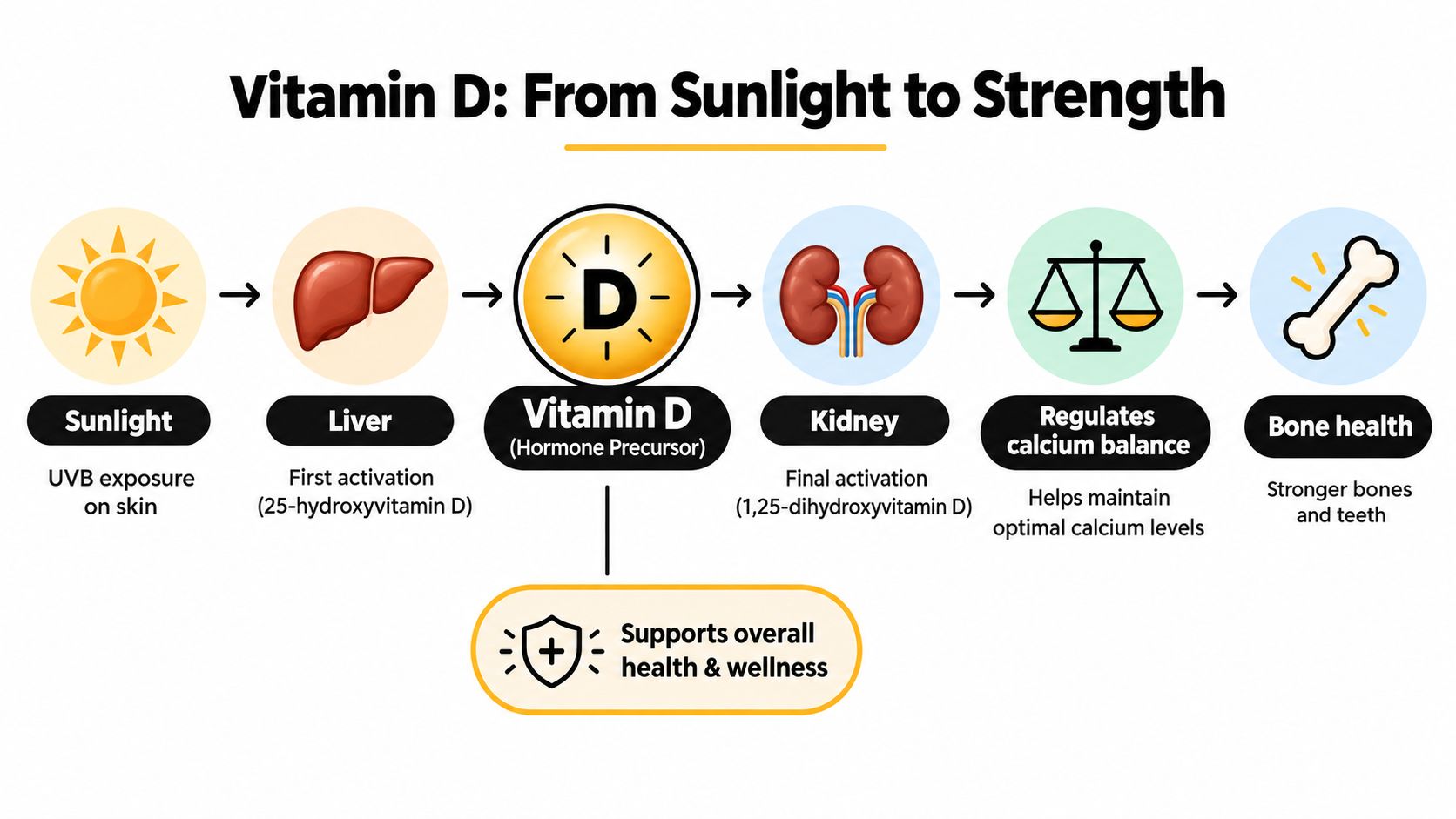
Vitamin D begins with sunlight, but its work continues through several organs. Ultraviolet B exposure can help skin produce an initial form of the vitamin. The liver changes it first, and the kidneys complete the activation. The active form helps regulate calcium balance and bone health, while also contributing to immune signaling and muscle function. The National Institutes of Health identifies serum 25-hydroxyvitamin D, or 25(OH)D, as the main marker used to assess vitamin D status in its vitamin D fact sheet for health professionals.
B vitamins work like an eight-part toolbox. The B-complex includes B1, B2, B3, B5, B6, B7, B9, and B12. Together, these nutrients help enzymes convert carbohydrates, fats, and proteins into usable cellular energy. They also support red blood cell formation, neurotransmitter production, and DNA-related processes.
That does not mean B vitamins supply energy like fuel in a tank. They help the body process the fuel already provided by food.
Different chemistry, different questions
Vitamin D and the B vitamins share a place in nutrition discussions, but they are not one nutrient family. Vitamin D is fat-soluble and acts as a hormone precursor. B vitamins are generally water-soluble coenzymes, assisting chemical reactions that usually require regular dietary replenishment.
This difference changes the practical question. A combined “D plus B” product cannot address every possible reason for fatigue. Someone may have adequate B12 with low vitamin D, or adequate vitamin D with insufficient B12 intake. Testing should match the suspected nutrient. Methylmalonic acid, or MMA, can add information when assessing B12, while vitamin B6 status is commonly evaluated with plasma pyridoxal 5-phosphate, or PLP, as described in this review of vitamin biomarkers.
Readers seeking more detail can review the Dr. Matt Gianforte B vitamin protocol and this guide to coenzyme B-complex.
A daily formula such as Vita Mix NexiHerb Multivitamin & Mineral Dietary Supplement combines vitamins, minerals, B-complex vitamins, vitamin D, folate as L-5-MTHF, lutein, and zeaxanthin in a vegetarian capsule. It is intended to complement overall nutritional intake, not diagnose or treat a deficiency.
How Vitamin D and B Vitamins Differ
The easiest way to understand vitamin D and the B-complex is to compare their sources, behavior, and jobs rather than treating them as a single supplement category.
| Criteria | Vitamin D | B-Complex |
|---|---|---|
| Solubility | Fat-soluble | Mostly water-soluble |
| Main sources | Sunlight exposure, fortified foods, fatty fish, and egg yolks | Animal proteins, legumes, leafy greens, whole grains, dairy, nuts, and fortified foods |
| Primary roles | Calcium balance, bone mineralization, immune signaling, and muscle function | Energy metabolism, red blood cell formation, nervous-system support, neurotransmitter synthesis, and DNA-related processes |
| Storage behavior | The body can maintain circulating reserves, so status reflects more than one meal | Many B vitamins need regular intake, although storage and metabolism vary by individual vitamin |
| Testing strategy | Serum 25(OH)D is the accepted status marker | The biomarker depends on the vitamin, such as MMA for B12 and PLP for B6 |
| Supplement logic | Dose should reflect blood status, season, sun exposure, and clinical context | Choose the specific B vitamin or a balanced complex based on diet, symptoms, and risk factors |
Vitamin D's fat solubility helps explain why it's usually taken with food containing fat and why high-dose supplementation deserves more caution than casual “extra” intake. B vitamins are often included together because they participate in related metabolic pathways, but that doesn't mean every person needs every B vitamin in large amounts.
Food sources also differ. Sunlight contributes to vitamin D production, while diet and fortified foods supply additional amounts. B12 is especially associated with animal-derived foods or fortified alternatives, folate is common in legumes and leafy greens, and other B vitamins appear across grains, poultry, dairy, nuts, and produce.
Same letter, separate nutrient families. Their testing, storage, food sources, and supplement decisions shouldn't be interchangeable.
Reading the Signs of Low Vitamin D or B Status
Symptoms can provide a reason to investigate, but they can't confirm which nutrient is low. Low vitamin D may appear alongside persistent tiredness, lower mood during darker seasons, frequent illness, or generalized bone and muscle discomfort. These signs are nonspecific, and the same pattern can result from insufficient sleep, reduced calorie intake, stress, or an overly demanding training schedule.
B-vitamin concerns can form different clusters. Low B12 or folate status may be considered when unusual tiredness occurs with cognitive fog or tingling in the hands and feet. B6-related concerns may involve mood changes or sleep disruption, while inadequate B1 or B2 intake can be associated with reduced exercise tolerance or changes around the mouth. None of these patterns proves a deficiency on its own.
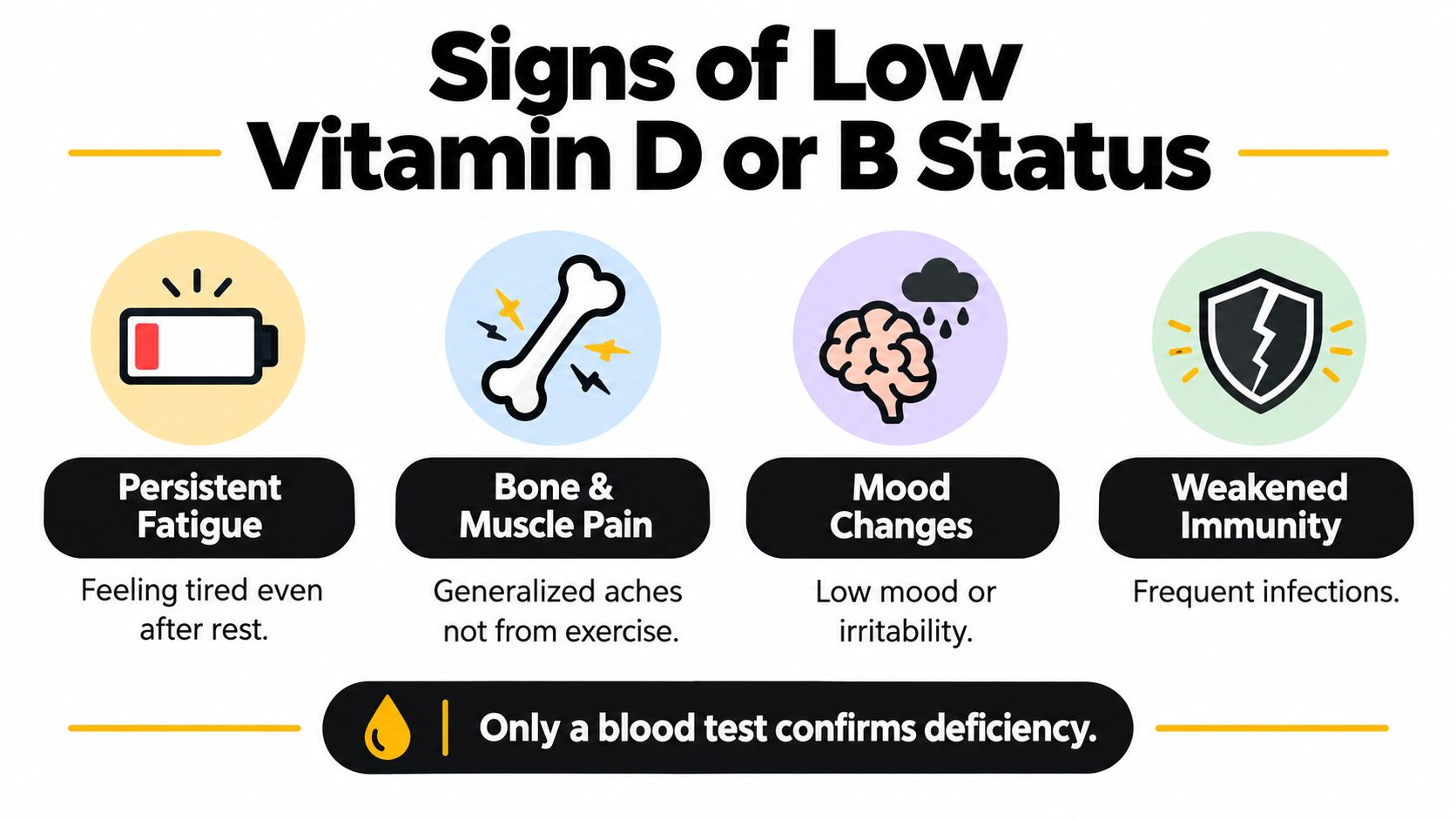
Why symptom matching fails
Fatigue is the most confusing example. A person who works long hours, sleeps inconsistently, under-eats, or increases training volume may feel depleted even with normal vitamin levels. Conversely, someone with low status may have few obvious symptoms. That's why a broader guide to reasons for low energy after 40 can be useful alongside, not instead of, a nutrition assessment.
The strongest way to separate a vitamin gap from lifestyle burnout is appropriate bloodwork. For vitamin D, serum 25(OH)D is the relevant marker, not the active 1,25(OH)2D form in routine status assessment. The NIH explains that 25(OH)D is the major circulating metabolite used for evaluation, and assay standardization matters because measured values can vary by method.
For B vitamins, one broad “B-vitamin test” isn't enough. B12 evaluation can include MMA, particularly when kidney function is normal, while PLP is commonly used for B6 status. Homocysteine may add functional context but isn't specific to B12 because it can also reflect folate-related metabolism.
A botanical product such as All Night NexiHerb - Advanced Herbal Formula for Male Vitality & Daily Wellness has a different purpose. Its traditional botanical blend is formulated for adult men's vitality and daily wellness, so it shouldn't be used as a substitute for testing suspected vitamin deficiency.
Who Actually Needs Testing First
The pairing question becomes more useful when testing is treated as triage. Vitamin D and B vitamins may appear together in supplement discussions, but the practical question is who has enough risk that bloodwork should come before guessing. Routine screening is not necessary for everyone.
| Profile | Likely gap | Why it matters |
|---|---|---|
| Indoor workers or people with limited sun exposure | Vitamin D | Work, clothing, season, or lifestyle can reduce skin exposure |
| People living at high latitudes | Vitamin D | Low-UV conditions can make inadequate status more likely |
| Adults with restricted diets | B12 or other B vitamins | Removing animal foods or major food groups can reduce dependable sources |
| People taking long-term acid blockers or metformin | B12 | Medication history can change the reason to investigate status |
| Women planning pregnancy | Folate, particularly B9 | Folate has a specific role in reproductive nutrition and should be discussed with a clinician |
| Active adults who train hard while under-eating | B vitamins and vitamin D | High activity does not guarantee adequate intake |
| Adults with relevant symptoms or absorption concerns | Nutrient-specific gaps | Bloodwork can help separate intake problems from other causes |
A person with several of these factors has a stronger case for targeted testing than someone who saw vitamin D and B supplements marketed together. The test should match the concern. A suspected B12 issue calls for a different evaluation from a suspected vitamin D issue, and a broad “D and B panel” may not answer every question.
Vegans and some vegetarians deserve a focused B12 discussion because natural B12 sources are concentrated in animal-derived foods, unless fortified foods or supplements are used consistently. People who cover most of their skin, spend little time outdoors, or live through long low-UV seasons may also have more reason to discuss vitamin D testing.
Age, medication history, diet, sun exposure, and symptoms each add context. Exercise does not cancel those factors. A 2026 study of healthy exercising adults reported that vitamin D intake below the estimated average requirement was common in its intake analysis, showing why an active lifestyle does not automatically protect against low intake (study of exercising adults).
People with varied diets, regular sun exposure, and no relevant symptoms or risk factors generally have less reason to pursue routine testing. That does not make testing inappropriate. It means the decision should follow personal context, with testing prioritized for people whose history makes a nutrient gap more plausible.
Food Sources and Smart Supplement Choices
Food should provide the foundation. Vitamin D is naturally present in a relatively limited range of foods, including fatty fish and egg yolks, while fortified dairy and plant milks can add a dependable dietary source. Winter, indoor routines, and limited sun exposure can make food planning more important, but dietary patterns still don't reveal blood status by themselves.
B vitamins are distributed more widely. B12 comes from animal proteins and fortified nutritional yeast. Folate, or B9, is found in legumes and leafy greens. Poultry and bananas contribute B6, whole grains contribute B1, and dairy and almonds provide B2. A varied pattern is more useful than chasing one “energy food.”
| Vitamin | Best food sources | Preferred supplement form |
|---|---|---|
| Vitamin D | Fatty fish, egg yolks, fortified dairy and plant milks | Vitamin D3, selected according to blood status and clinical guidance |
| B12 | Animal proteins and fortified nutritional yeast | A B12 form selected for the person's needs, with MMA considered when appropriate |
| B9 | Legumes and leafy greens | Folate as methylfolate may suit formulas designed around active forms |
| B6 | Poultry and bananas | Pyridoxal-5-phosphate, or PLP, is a commonly assessed active form |
| B1 and B2 | Whole grains, dairy, and almonds | A balanced B-complex when dietary coverage is inconsistent |
Supplements should fill a known gap
D3 and K2 are often discussed together because vitamin D supports calcium absorption and vitamin K participates in calcium-related protein function. That pairing isn't a reason to take high-dose products automatically, especially for people using blood thinners or managing conditions that affect calcium or kidney function.
For B-complex products, form and total exposure matter more than chasing the largest label number. Methylfolate, methylcobalamin, and pyridoxal-5-phosphate are examples of forms readers may encounter, but the right choice depends on the nutrient, the person's needs, and professional guidance. You can browse Vitamin B Complex as one way to compare a product format, then review its label against your diet and other supplements.
A practical guide to daily vitamins you should take can help organize the routine, but no supplement list replaces a nutrient-specific evaluation when risk factors or persistent symptoms are present.
Safe Dosing Timing and Daily Habits
A person rushing through breakfast may wonder whether vitamin D and a B-complex belong in the same routine. They can, but the practical question is how each supplement fits the day and whether testing should come first when symptoms or risk factors are present.
Vitamin D is fat-soluble, so taking it with a meal containing avocado, olive oil, nuts, or eggs offers a sensible absorption habit. Regular use is easier to manage than taking irregular large amounts to make up for missed days. For more guidance on scheduling supplements, see this guide to the best time to take vitamins.
A B-complex often fits breakfast or another morning meal, especially for someone seeking daytime support. Some people find B6 or B12 stimulating enough to disturb sleep. Moving the product earlier may help, but continued sleep disruption calls for reviewing the formula and dose with a clinician rather than repeatedly changing the timing.
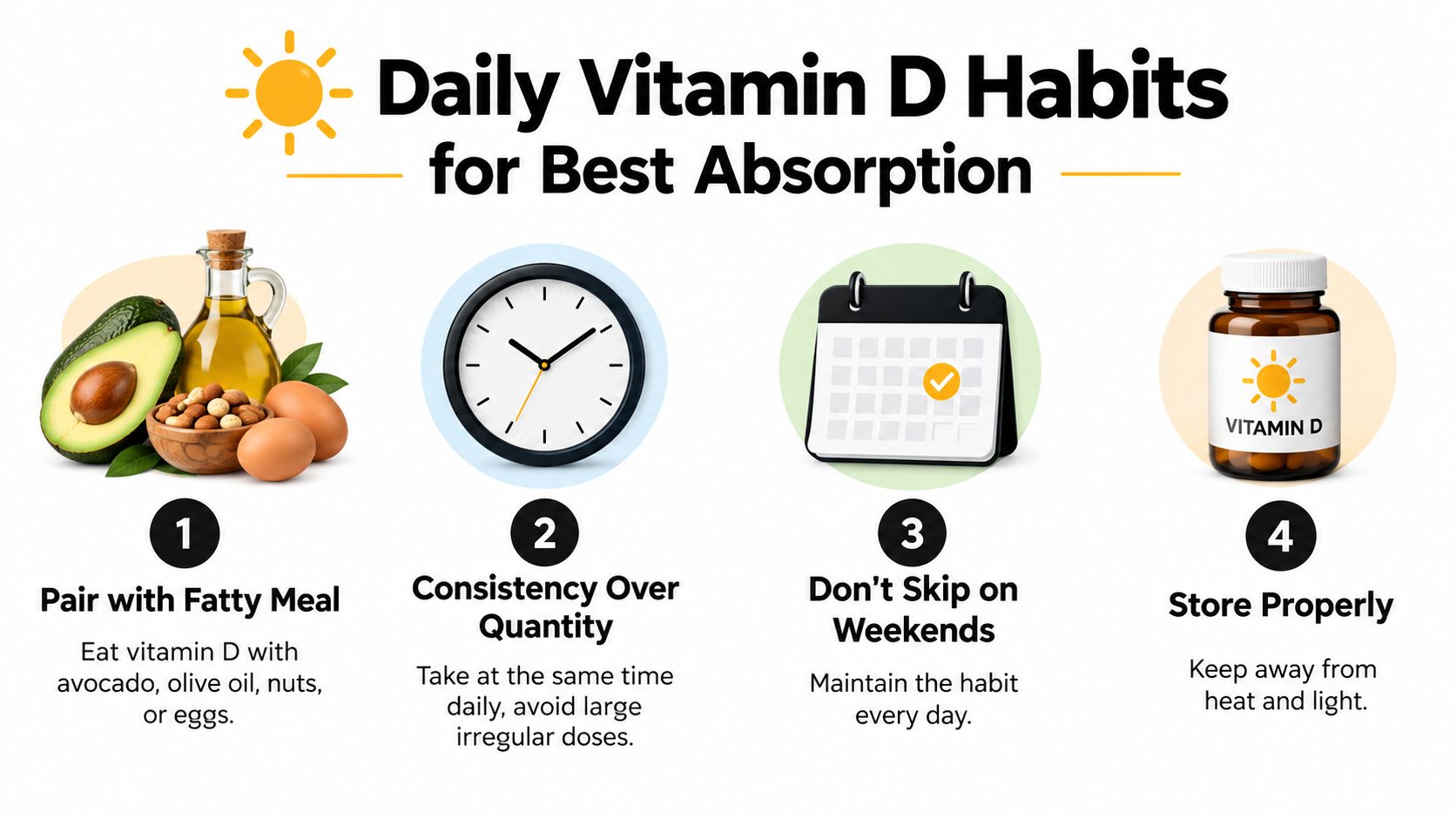
Limits and medication checks
For most adults, the established upper intake level for vitamin D is 4,000 IU per day, according to NIH guidance. This is not an individualized prescription. A clinician may use a different short-term plan for confirmed deficiency, so routine high-dose use should not be casual.
Vitamin B6 needs attention when several products overlap. Intake above 100 mg per day has raised concern about nerve-related symptoms. Check multivitamins, B-complex products, energy formulas, and fortified foods together before adding another capsule, as noted in the earlier B-vitamin evidence review.
Ask a clinician before changing supplements if you take blood thinners, thyroid medication, anticonvulsants, or long-term acid-suppressing medication, or if you have kidney disease. A simple routine may place B-complex with breakfast and vitamin D with lunch or dinner. Follow-up testing should reflect the original result and clinical advice, because one fixed retest interval will not suit every situation.
A Simple Starting Plan for Your Routine
A reasonable starting plan depends on the person in front of the label, not on the popularity of the combination. Someone who trains regularly, eats a varied diet, and has no clear risk factors may begin by reviewing total intake and avoiding overlapping formulas. If fatigue persists, testing is more informative than adding several products at once.
For someone with limited sun exposure, a clinician may suggest vitamin D supplementation and a baseline 25(OH)D test. Office work, northern-latitude living, winter conditions, and clothing that limits skin exposure can all make the result more useful than guessing from a supplement bottle. People focused mainly on energy may start by reviewing sleep, calorie intake, training load, and B-vitamin sources before choosing a targeted B-complex.
| Profile | B-Complex Approach | Vitamin D Approach | First Action |
|---|---|---|---|
| Active adult with a varied diet | Review food intake before adding a broad formula | Consider testing if sun exposure is limited or symptoms persist | Log sleep, meals, training, and symptoms |
| Indoor worker or person with limited sun exposure | Use diet and history to decide whether B testing is relevant | Discuss a baseline 25(OH)D test | Check current supplements and arrange appropriate bloodwork |
| Energy-focused reader | Prioritize sleep, sufficient food, and a clearly labeled B-complex if appropriate | Don't assume fatigue proves low vitamin D | Investigate persistent symptoms rather than escalating doses |
| Vegan or vegetarian | Pay particular attention to reliable B12 sources and professional testing when indicated | Use sun exposure and dietary history to guide evaluation | Review fortified foods and existing supplement labels |
| Person taking multiple supplements | Avoid stacking products with overlapping B6, B12, folate, or D | Add vitamin D only with attention to total intake | Make a complete supplement list for a clinician or pharmacist |
Keep a simple symptom and routine log for several weeks, then use testing or professional review to decide whether to continue, adjust, or stop a supplement. The goal is targeted correction, not blanket supplementation. Taking vitamin D and B vitamins together can be convenient, but convenience shouldn't replace knowing which nutrient you're addressing.
NexiHerb LLC offers multivitamins and targeted dietary supplements designed to complement balanced nutrition and everyday wellness routines, including formulas that contain vitamin D or B-complex nutrients. Visit NexiHerb LLC to review the catalog and choose products that fit your diet, testing results, and daily habits.