

Stop shopping for the leaf on the front of the bottle. The most popular advice says plant based means cleaner, gentler, and better absorbed, as if your gut gives extra credit for a botanical origin story. It doesn't. Your body responds to elemental calcium, chemical form, dose size, stomach acid, meal timing, and whether you'll tolerate the product well enough to take it consistently. If you're comparing the best plant based calcium supplements, judge them like formulas, not farming methods. A modest, clearly labeled product taken correctly will beat an expensive algae blend taken in one oversized dose on an empty stomach.
Table of Contents
- Why Plant Based Does Not Automatically Mean Better Absorption
- How to Read a Calcium Supplement Label Like a Practitioner
- Comparing the Main Plant Based Calcium Formats
- Cofactors That Decide Where Calcium Actually Goes
- A Practical Dosing Plan That Fits a Real Day
- Safety, Contraindications, and Who Should Pause Before Supplementing
- Matching the Right Format to the Right Buyer
- A Simple Shopping Checklist Before You Buy
Why Plant Based Does Not Automatically Mean Better Absorption
A plant source tells you where an ingredient started. It doesn't tell you how much calcium you'll absorb. That's the central flaw in most rankings, because they treat algae, seaweed, and other botanical language as proof of performance before checking whether the label delivers a sensible elemental dose.
Two products can both say plant based and behave very differently. One may use a form that needs food and adequate stomach acid. Another may use a form that's less dependent on gastric acidity and easier to schedule. One may pack the whole daily amount into a single serving, while the other splits it into smaller doses. The source didn't create those differences. Formulation did.
What actually moves the result
Start with four questions. How much elemental calcium is in each serving, not just how much powder or compound is present? Which chemical form supplies it? Does the product need a meal for reliable absorption? Will it cause enough gas, bloating, or constipation that you will stop taking it?
Those questions matter more than whether the marketing shows ocean plants, leaves, or a rustic mineral deposit. Tolerability is especially practical. A supplement with an elegant source story is useless if it sits in your cabinet because it makes you uncomfortable after every dose.
Judge the dose you'd actually absorb and repeat daily, not the ingredient's origin story.
Diet also belongs in the decision. If you already eat calcium set tofu, fortified plant beverages, leafy greens, beans, tahini, and nuts regularly, you may need a smaller supplemental top up than someone whose meals rarely include those foods. The right product fills a measured gap. It doesn't automatically replace food or reward megadosing.
That's why I don't rank products by how natural they sound. I look for transparent elemental dosing, sensible serving sizes, clear food instructions, and credible quality testing. If you want the broader habits behind utilization, read this guide on improving nutrient absorption through timing and food pairing and apply the same skepticism here. Plant based is a sourcing preference. Absorption is a formulation outcome. Confusing those two ideas is how shoppers overpay for ordinary products.
How to Read a Calcium Supplement Label Like a Practitioner
Turn the bottle around and ignore the front panel until you've finished the back. The front sells identity. The Supplement Facts panel tells you whether the formula works on paper.
The three part label check
First, find elemental calcium per serving. That's the calcium amount available from the compound, and it's the number you should compare across brands. Compound weight can mislead you because forms differ sharply in density. The NIH calcium guidance for health professionals states that calcium carbonate contains approximately 40% elemental calcium by weight, while calcium citrate contains about 21%, so equal compound weights don't deliver equal calcium.
Second, identify the form in the ingredient list. Carbonate and citrate create different meal and pill burden trade offs, even when both come from non animal supply chains. Third, check the serving size. A front label can look potent until you notice that the serving requires several capsules, and that changes cost, convenience, and adherence.
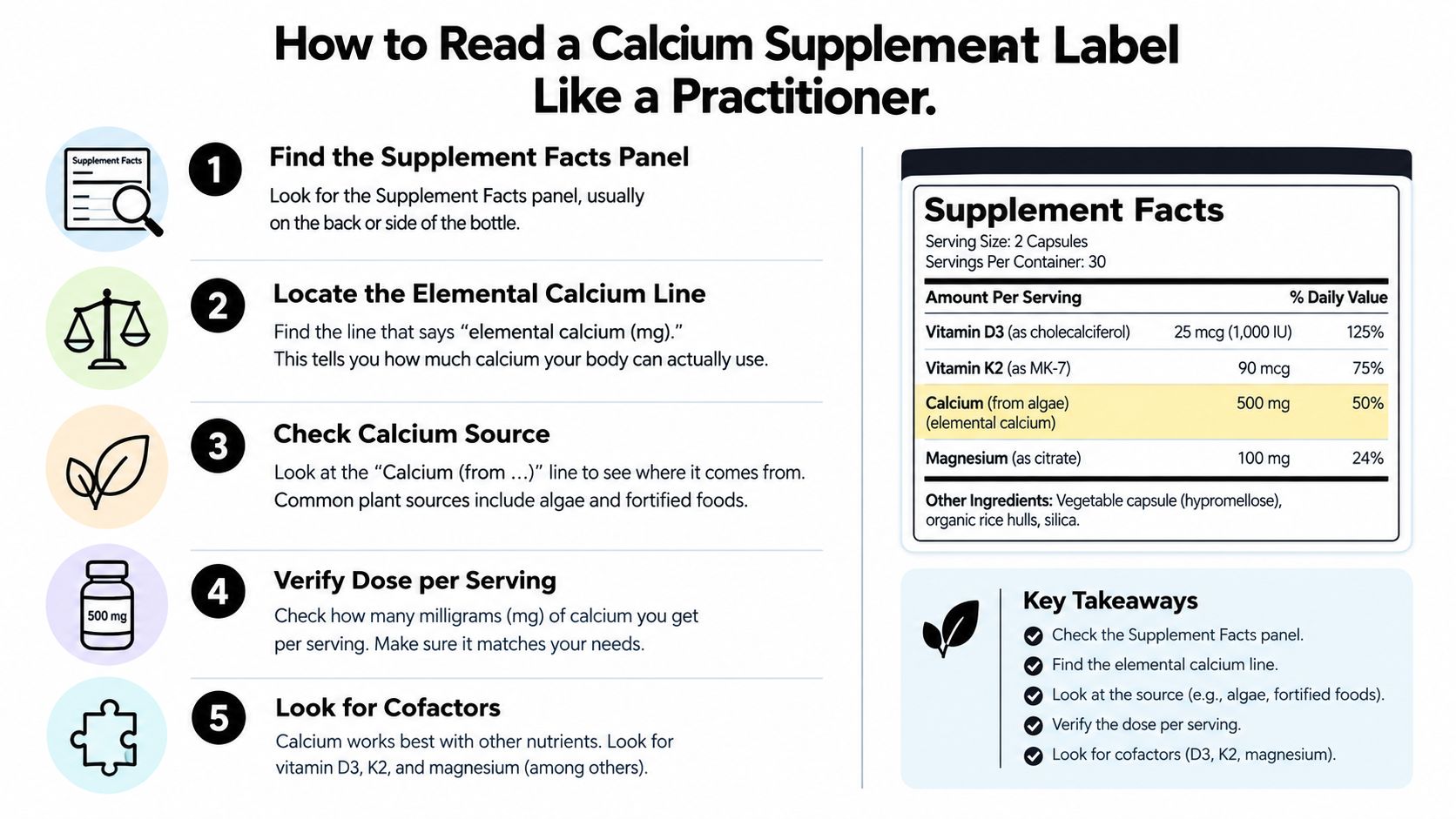
Use a simple worked example. If an algae product highlights a large amount of algae powder, don't stop there. Find the elemental calcium line and divide it by the number of capsules in the serving. Then compare that result with a citrate product using the same math. You're now comparing usable calcium per dose, not advertising weight.
- Front panel claims: Treat plant based, whole food, and ocean derived as sourcing language, not dose evidence.
- Proprietary blends: Skip products that hide the elemental amount inside a blend total.
- Directions: Confirm whether food is required and whether the daily serving can be split.
- Testing language: Prefer brands that discuss identity, assay, contaminants, and dissolution instead of only purity slogans.
This label discipline matters beyond calcium, particularly when you're assessing broader gaps such as nutrients for hormonal wellness and deciding whether food or a supplement should fill them. NexiHerb's separate primer on reading supplement labels without trusting front panel claims reinforces the same habit. My rule is blunt. If you can't identify the elemental dose, form, and serving burden in under a minute, don't buy it.
Comparing the Main Plant Based Calcium Formats
Four formats cover most of the market, and each wins in a different situation. Don't ask which one is universally best. Ask which one fits your stomach acid, schedule, diet, and tolerance.
| Format | Elemental Ca density | Food required | Tolerability | Best for |
|---|---|---|---|---|
| Algae derived calcium | Varies by formula, verify assay | Follow product directions | Often positioned as gentle, but formulation dependent | Shoppers who prioritize marine plant sourcing and documented testing |
| Calcium citrate | Lower per gram, more material needed | No, can be taken with or without food | Often easier for people sensitive to carbonate | Low stomach acid, acid suppressing medication, flexible schedules |
| Calcium carbonate from non animal mineral sources | Higher per gram, smaller pill burden | Yes, best with a meal | Gas, bloating, or constipation can be more likely | Budget focused shoppers with normal digestion who eat regular meals |
| Fortified plant foods and beverages | Varies widely by serving | Part of normal eating | Usually easiest to integrate | People who can meet most needs through consistent food choices |
Algae derived calcium
Algae products have the strongest plant based identity and some interesting research, but don't turn a small study into a category wide guarantee. The 2025 comparative research indexed in PubMed Central reported that fractional absorption of algal calcium was 1.57 times that of calcium carbonate in 10 postmenopausal women, though that small sample keeps the finding preliminary. That's promising, not conclusive.
I'd consider algae calcium when the manufacturer discloses elemental calcium clearly and supports the finished product with assay and dissolution testing. I wouldn't pay a premium merely because the source came from the sea. Particle structure, excipients, and manufacturing controls can change performance, so finished product evidence matters more than the ingredient brochure.
Citrate and carbonate
Calcium citrate is my default recommendation for older adults, people with low stomach acid, and anyone whose schedule makes meal linked dosing unreliable. Its weakness is pill burden because lower elemental density means more material to reach the same dose. If swallowing several capsules makes you inconsistent, that theoretical advantage disappears.
Carbonate is the efficient budget choice when digestion is normal and you will reliably take it with food. Its higher density keeps tablets smaller or fewer, but that convenience comes with stricter timing and a greater chance of gastrointestinal complaints for some users. Don't choose it because each tablet looks stronger.
Fortified plant foods deserve more respect than supplement rankings usually give them. Calcium set tofu, fortified plant milks and yogurts, leafy greens, beans, seeds, and nuts can cover much of the job when they're eaten consistently. Food also supplies protein, magnesium, potassium, and other nutrients that a calcium capsule doesn't. Use supplements to close a real gap, not to excuse an erratic diet. Among the best plant based calcium supplements, the winner is the format you'll take correctly, tolerate, and verify from the label.
Cofactors That Decide Where Calcium Actually Goes
Calcium doesn't manage itself after you swallow it. Vitamin D influences intestinal absorption, vitamin K2 participates in proteins involved in bone and vascular calcium handling, and magnesium supports vitamin D metabolism. Boron is also included in some bone focused formulas, but it shouldn't distract you from the primary trio.
Dose size still sets the ceiling. The NIH guidance on calcium absorption and dose size states that absorption is highest at single doses of 500 mg or less, with roughly 36% absorbed from a 300 mg dose versus about 28% from a 1,000 mg dose. Cofactors can't rescue a careless bolus strategy.

Build the stack in the right order
- Vitamin D3 first: Check your overall intake and lab status with a clinician when appropriate, because guessing can lead to either too little or unnecessary excess.
- Vitamin K2 second: Look for transparent labeling if it's included, especially in formulas designed around calcium utilization.
- Magnesium third: Prioritize food sources such as legumes, nuts, seeds, and whole grains, then consider whether a supplement fits your total routine.
- Boron last: Treat it as a supporting ingredient, not a reason to choose an otherwise weak calcium product.
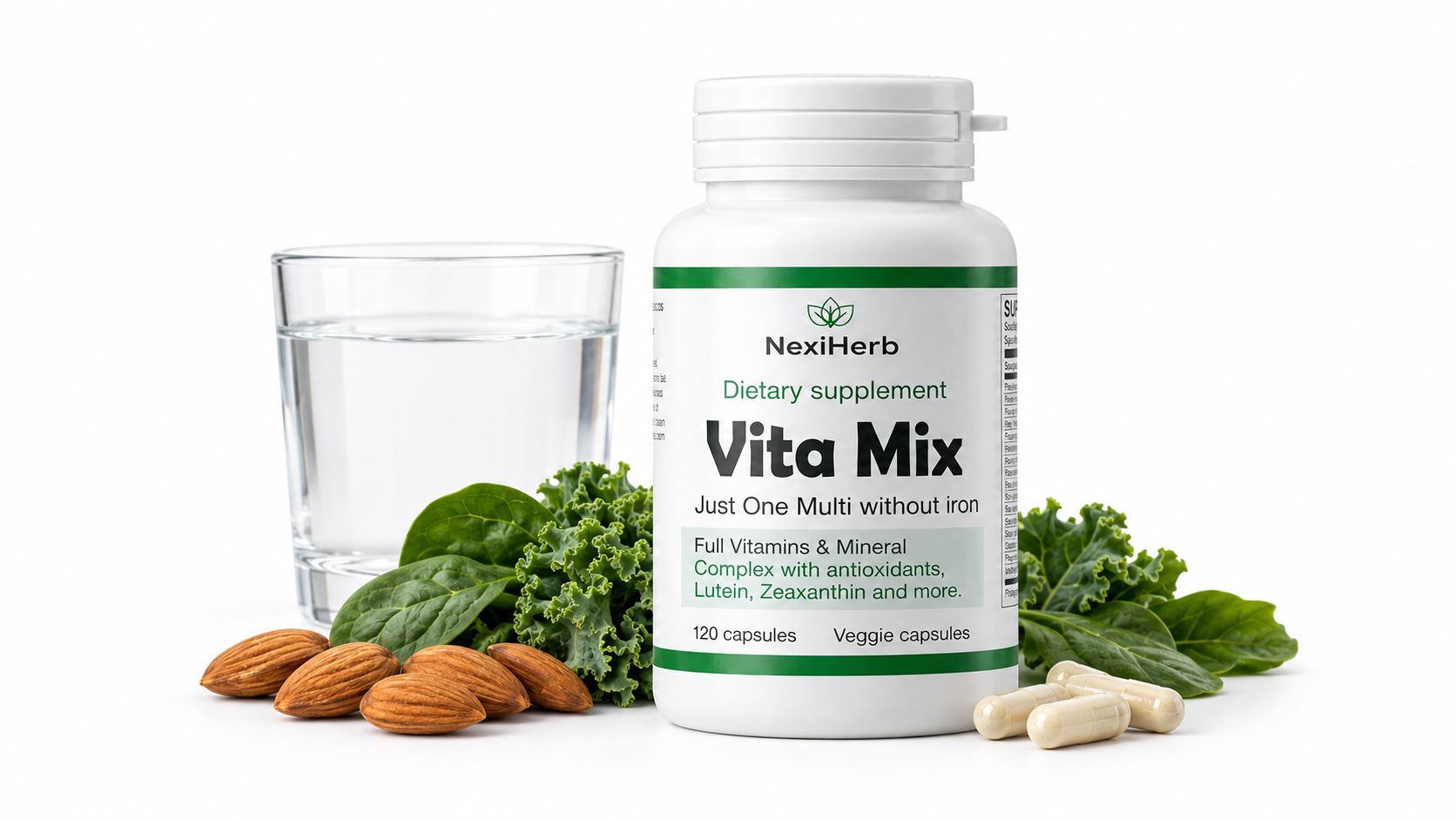
Don't buy a calcium formula just because it sprinkles in fashionable cofactors at undisclosed or trivial looking amounts. The label should show what each ingredient contributes, and the full routine shouldn't duplicate the same nutrients across several products. A separate multivitamin may already cover part of that background. For example, Vita Mix NexiHerb Multivitamin & Mineral Dietary Supplement is a once daily vegetarian capsule providing a broad blend of vitamins, minerals, boron, lutein, and zeaxanthin to complement overall nutritional intake. That's context for avoiding overlap, not a substitute for checking a calcium product's elemental dose.
If you're unsure how vitamin D interacts with other fat soluble or B vitamin choices, review this overview of vitamin D alongside B vitamin supplementation before stacking products. My recommendation is simple. Fix vitamin D and dietary magnesium, confirm whether K2 is already present, and only then judge the calcium form. Cofactors support the system, but they don't excuse poor dosing.
A Practical Dosing Plan That Fits a Real Day
Don't build your routine around the largest serving you can swallow. Build it around meals you already eat, medications you already take, and a schedule you can repeat on busy days.
Start by estimating what your food reliably provides on ordinary days, not your best meal prep days. Then use the supplement for the remaining gap and divide larger daily amounts rather than forcing everything into one sitting. Smaller divided doses are easier to schedule and align better with how absorption changes as dose size rises.
A workable daily pattern
Take carbonate with a substantial meal because food and stomach acid support its use. Citrate gives you more flexibility and can fit between meals, which helps if breakfast is rushed or dinner timing moves. Algae products should follow their finished product directions because formulas and accompanying ingredients vary.
Morning: Keep calcium away from thyroid medication and iron if those are part of your start to the day. Use that window for the medication or mineral that needs separation, and place calcium later.
Midday: Lunch is often the easiest anchor for the first calcium dose. Pair carbonate with the meal, or take citrate after eating if that feels better and fits the product directions.
Evening: Use dinner or an evening snack for a second divided dose when one is needed. Don't add a bedtime dose merely because the bottle allows multiple servings if your diet already covered the target.
Scheduling rule: Attach each dose to an existing habit, then separate it from medicines and minerals that compete or interact.
Shift workers should define morning and evening by their main sleep and meal pattern, not the clock. Athletes should avoid experimenting with a new form immediately before training if gastrointestinal comfort is uncertain. Parents buying for a household should keep adult and child products separate and follow age appropriate directions rather than splitting adult tablets informally.
Track the routine for a short trial. Note constipation, bloating, reflux like discomfort, missed doses, and whether meal timing was realistic. If adherence fails, change the form or schedule before increasing the dose. A smaller amount taken consistently is a better plan than an ambitious protocol abandoned after a week.
Safety, Contraindications, and Who Should Pause Before Supplementing
Calcium is familiar, which makes people careless. Familiar doesn't mean interaction free, and plant based doesn't remove medication or kidney related concerns.
People using proton pump inhibitors or H2 blockers should be cautious with carbonate because reduced stomach acid can make that form less dependable. Citrate is usually the more practical option in that setting because it's less dependent on gastric acidity. Anyone with low stomach acid should judge form before source.
Pause and get individualized advice
- Kidney stone history: Don't megadose or assume food and supplement calcium carry identical considerations. Discuss total intake, urine risk factors, hydration, and timing with your clinician.
- Thyroid medication: Calcium can interfere with levothyroxine absorption, so strict separation matters and the medication instructions should control the schedule.
- Other medicines and minerals: Calcium may affect the absorption of certain antibiotics and can compete with iron or zinc when taken together. Build separation into the day instead of swallowing everything at breakfast.
- Persistent digestive symptoms: Repeated constipation, bloating, or abdominal discomfort is useful feedback. Change form or dose timing, and seek medical advice if symptoms persist.
Also audit duplication. Calcium can appear in a dedicated supplement, fortified beverages, antacids, and multivitamin or bone formulas. People often underestimate the total because they only count the bottle labeled calcium. Read every label before adding another product.
Don't use supplements to self treat bone loss, kidney disease, parathyroid problems, unexplained fractures, or abnormal blood calcium. Those situations require diagnosis and monitoring, not a stronger shopping cart. Pregnant people, children, and adults with chronic kidney conditions should follow clinician directed guidance rather than general product marketing.
My safety filter is straightforward. Switch form when acid or tolerance is the issue, adjust timing when medication separation is the issue, and pause for medical advice when kidney history or abnormal labs are involved. No botanical source overrides those distinctions.
Matching the Right Format to the Right Buyer
Forget a universal top ten. Your digestive pattern, medication list, food habits, and budget narrow the choice faster than any brand ranking.
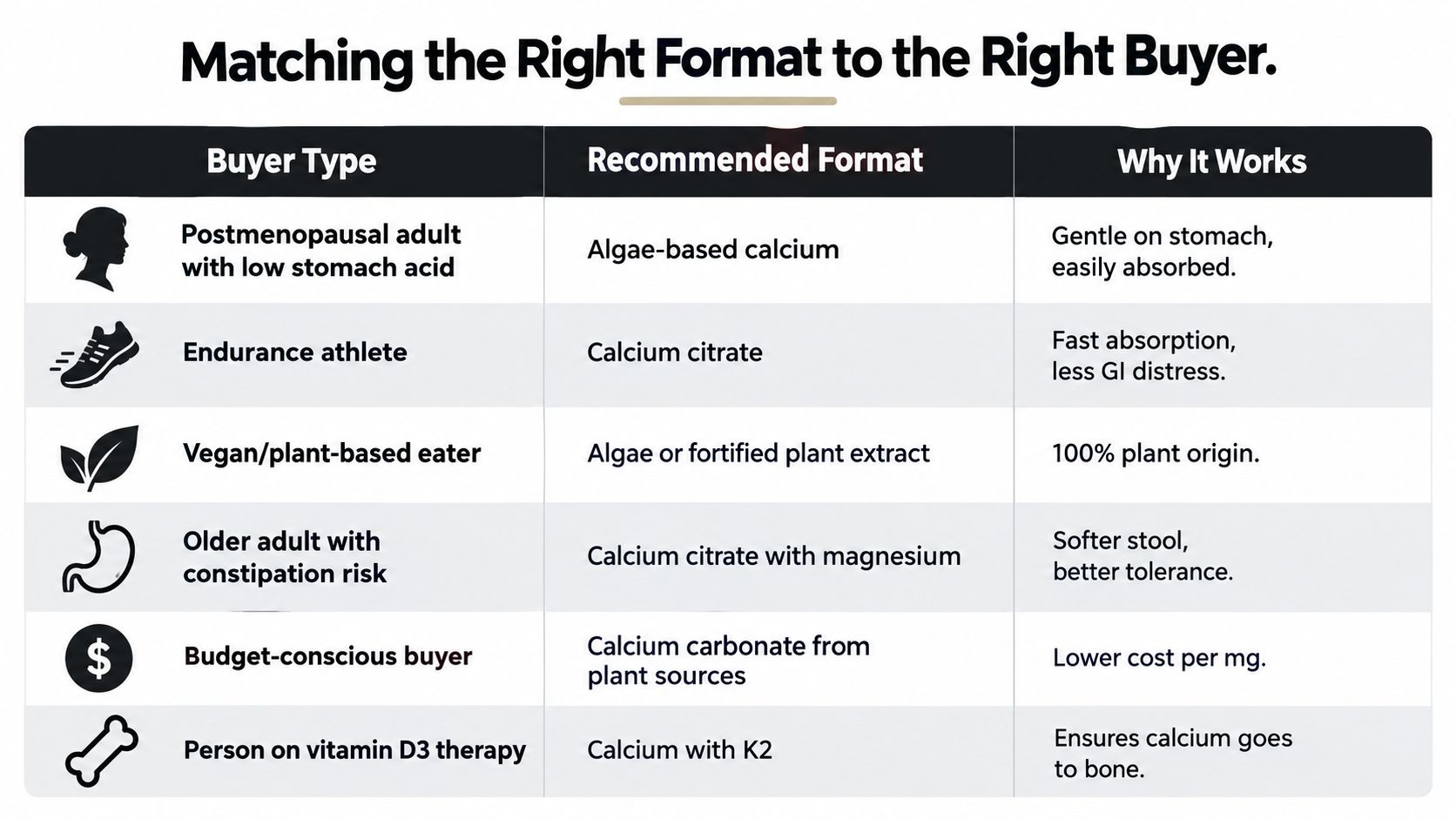
Postmenopausal adult with low stomach acid: Pick calcium citrate first because it doesn't depend as heavily on gastric acidity or a meal. Consider a well tested algae formula as the backup if its elemental dose and directions are transparent. Avoid making carbonate your default unless a clinician advises otherwise.
Endurance athlete: Pick the form you tolerate during heavy training blocks, often citrate because scheduling is flexible and gastrointestinal comfort matters. Food should do most of the work because training also increases overall energy and nutrient needs. Don't test a new product during competition week.
Vegan who already eats plenty of greens: Start with a food audit before buying anything. Calcium set tofu, fortified beverages, legumes, seeds, and suitable greens may leave only a small or occasional gap. If supplementation still makes sense, choose a lower dose product you can use selectively rather than automatically taking the largest serving every day.
Older adult using a PPI: Pick citrate and review medication timing carefully. Carbonate's lower cost isn't a bargain if reduced acid makes the routine unreliable. Constipation risk also deserves attention, so track tolerance instead of assuming discomfort is unavoidable.
Budget focused shopper: Pick carbonate if you have normal digestion and can take it consistently with meals. Compare cost per elemental serving after accounting for the number of tablets required. Don't pay extra for algae sourcing unless the label and testing justify the premium.
Family shopper buying for kids: Pick age appropriate products and food based strategies designed for children. Don't divide adult formulas, share high dose products across ages, or assume a gummy's front panel tells the full story. When growth, restricted eating, or medical conditions complicate intake, ask a pediatric clinician.
The pattern is consistent. Match acid dependence, tolerance, and schedule first. Then decide whether plant sourcing is worth paying for.
A Simple Shopping Checklist Before You Buy
Carry this checklist into the store or keep it beside you online. It'll eliminate most weak products before price or branding enters the discussion.
The in store check
- Elemental calcium: Find the amount per serving and ignore total compound or powder weight.
- Chemical form: Identify citrate, carbonate, algae derived calcium, or another clearly named form in the ingredients.
- Serving burden: Count how many capsules or tablets are required and whether the daily amount can be divided.
- Food directions: Confirm whether the product should be taken with a meal or can be scheduled independently.
- Cofactors: Check whether vitamin D, vitamin K2, magnesium, or boron are present and whether they duplicate products you already use.
- Quality evidence: Look for batch testing, identity and assay verification, contaminant screening, and dissolution information where available.
- Tolerance clues: Avoid starting with the largest dose if you've previously reacted to calcium with constipation or bloating.
- Total routine: Add up calcium from fortified foods, antacids, multivitamins, and bone formulas before deciding you need more.
If a brand won't clearly state the elemental amount, it hasn't earned your trust.
Apply three final rules. Prioritize elemental dose over source. A dramatic marine origin can't compensate for unclear labeling or an impractical serving. Prefer disclosure over adjectives. Testing documentation, transparent amounts, and plain directions tell you more than clean, pure, or premium. Skip proprietary blends for core minerals. You can't manage interactions, divided dosing, or cost per serving if the manufacturer hides the number that matters.
Don't chase the best plant based calcium supplements as if one bottle suits every adult. Choose the form that fits your acid level, medications, meals, and tolerance, then verify it with the back label. That habit will serve you on every supplement purchase, long after today's calcium decision is settled.
Browse the plant inspired multivitamins, minerals, and everyday wellness formulas at NexiHerb LLC, check each Supplement Facts panel before you buy, and build a calcium routine around the elemental dose and schedule you will follow.