

A universal recovery stack sounds convenient, but it's usually the wrong starting point. A strength trainee trying to support muscle growth, an endurance athlete preparing for another demanding session, and someone whose main concern is next-day soreness don't necessarily need the same supplement.
The better question isn't “Which product is best?” It's “What recovery job am I trying to solve, and is my diet already doing it?” That distinction changes the shortlist: protein has a clear role when dietary intake falls short, creatine is better understood as a performance aid than a soreness remedy, and some popular add-ons have less convincing evidence than their labels imply.
Table of Contents
- Why the Best Recovery Stack Starts With Your Workout, Not Your Supplement Shelf
- The Seven Recovery Supplement Families Worth Knowing
- Side by Side, Which Categories Actually Have the Evidence
- How to Time and Dose for Real World Results
- Matching the Stack to Your Training Style
- Building a Recovery Budget That Actually Makes Sense
- Limits, Safety, and a Simple Decision Checklist
Why the Best Recovery Stack Starts With Your Workout, Not Your Supplement Shelf
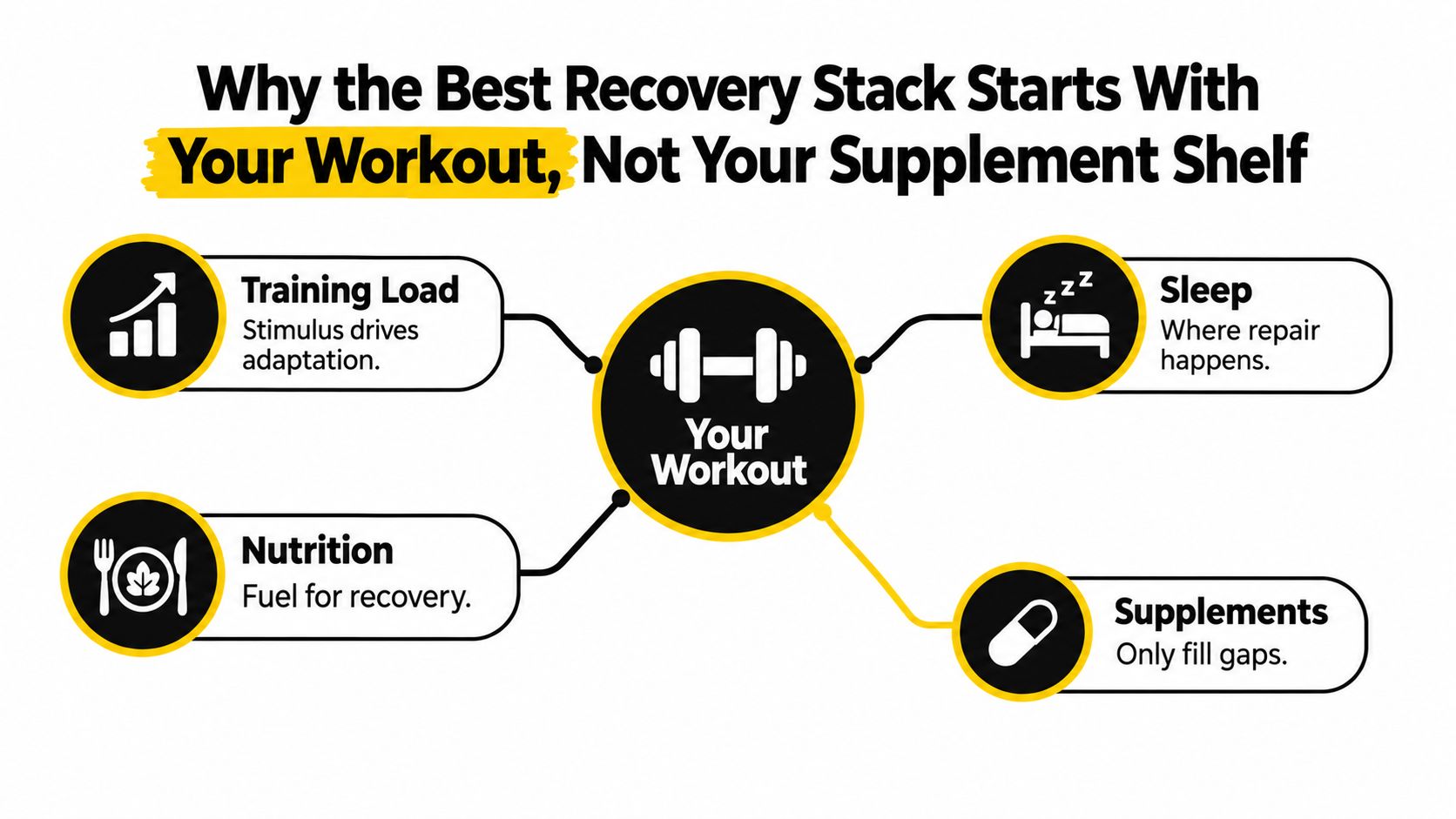
The supplement industry sells "recovery" as a single category. Exercise physiology treats it as at least three different problems. After resistance training, the priority is supplying amino acids to repair and remodel muscle. After endurance work, the immediate concern is replacing fuel and fluid before the next session. When soreness is the main complaint, the question narrows further: has the ingredient been shown to reduce soreness itself, or only a marker loosely related to it?
The narrow post-workout "anabolic window" is the most overused argument in this category. The International Society of Sports Nutrition's position stand reports that the anabolic effect of resistance exercise stays high for at least 24 hours, declining gradually, and puts the emphasis on total daily intake and sensible distribution across the day. Its review concludes that most exercising adults can support muscle gain or maintenance with 1.4–2.0 grams of protein per kilogram of body weight per day, roughly 105–150 grams daily for a 75-kilogram adult (ISSN position stand on protein and exercise).
Timing still matters at the margins. If a regular meal is hours away, a convenient protein serving helps close the gap. For most trainees, though, fixing the day's total intake does more than sprinting to the locker room with a shake.
One complication the marketing rarely mentions: chronic high-dose antioxidant supplementation is sold as recovery support, yet frequent use may blunt some of the adaptations the training was meant to produce. Reducing soreness and maximizing adaptation can pull in opposite directions.
| Training or recovery need | First question to ask | Supplement category to consider |
|---|---|---|
| Muscle-focused recovery | Am I getting enough complete protein across the day? | Protein, or a suitable plant blend |
| Repeated high-intensity training | Do I want support for training capacity rather than a soreness fix? | Creatine |
| Endurance recovery | Will I need to train again before normal meals can meet my needs? | Food and fluid first, supplements only for a specific gap |
| Less perceived soreness | Is the product supported for soreness, or only for a related marker? | Check the outcome evidence before buying |
| Connective-tissue concerns | Is my goal different from muscle protein synthesis? | Collagen may be a targeted option, but the evidence and protocol matter |
| Chronic antioxidant use | Could daily high doses interfere with training adaptations? | Use caution; food sources are the safer default |
These are decision prompts, not a universal prescription. Training load, sleep, meals, hydration, and programming still shape recovery. Supplements can complement those basics, but they can't replace them.
The Seven Recovery Supplement Families Worth Knowing
A label can make very different ingredients sound interchangeable. They aren't. These seven families aim at different targets, and a product's intended role doesn't establish that it reliably improves soreness, strength recovery, or future performance.
Protein powders and essential amino acids (EAAs) supply amino acids used in muscle protein synthesis. They're most relevant when meals don't provide enough protein or aren't convenient. A practical guide to amino acids for muscle recovery can help explain why a complete amino-acid supply matters, rather than focusing on a single ingredient.
BCAAs provide leucine, isoleucine, and valine, but they don't supply every essential amino acid needed to build muscle protein. If someone already gets adequate complete protein, a standalone BCAA product is difficult to justify as a priority.
Creatine monohydrate is primarily associated with repeated high-intensity performance and training capacity. It has a strong performance evidence base, but that doesn't mean it reliably reduces soreness after a damaging workout.
Glutamine is marketed for muscle recovery and soreness. The supplied evidence doesn't establish it as a dependable recovery choice, so it shouldn't outrank basic nutrition or better-supported options.
Omega-3 supplements are often used with inflammation and soreness in mind. Findings depend on the dose and duration studied; they shouldn't be treated as an immediate, guaranteed post-workout fix.
Collagen peptides target connective tissue rather than serving as a direct substitute for complete dietary protein. Evidence summarized in a 2025 review suggests potential for reducing perceived soreness, but results across popular add-ons aren't uniformly positive. For a separate overview of how peptide-related claims should be evaluated, see what peptide therapy really shows.
Antioxidant blends may combine vitamins or plant compounds and are often marketed as universally beneficial. That framing overlooks the possibility that frequent, high-dose antioxidant use may interfere with some exercise-signaling responses.
Products can also combine ingredients without demonstrating that the finished formula improves a specific recovery outcome. For example, Argi-Max NexiHerb L-Arginine, L-Citrulline-DL-Malate, and beet root powder is a capsule dietary supplement containing those amino-acid and plant-based ingredients. Its listed ingredients alone don't establish that it is a muscle-recovery treatment.
Side by Side, Which Categories Actually Have the Evidence
Evidence quality varies far more across this category than the labels imply. A fair comparison asks three things: whether an ingredient matches the goal, whether the trials measured an outcome a buyer cares about, and whether the label gives enough information to judge the serving. "Supports recovery" answers none of them.
| Category | Primary recovery job | Evidence strength | What the cited evidence supports |
|---|---|---|---|
| Protein | Muscle repair and remodeling when daily intake falls short | Strongest fit for meeting protein needs | Servings of roughly 20–40 g can stimulate muscle protein synthesis |
| BCAAs | Supply selected amino acids | Weak as a standalone choice when complete protein is adequate | No demonstrated advantage over adequate protein intake |
| Creatine monohydrate | Repeated high-intensity output and training capacity | Stronger for performance than for soreness | Lowered one muscle-damage marker only |
| Glutamine | Marketed for soreness and recovery | Not established as a dependable choice | No consistent benefit in the evidence reviewed here |
| Omega-3s | Muscle damage and inflammation | Promising under longer, higher-dose protocols | Findings depend on dose and duration |
| Collagen | Perceived soreness and connective tissue goals | Promising, not consistently settled | A 2025 review suggests reduced perceived soreness |
| Antioxidants | Oxidative stress | Context-dependent | Frequent high-dose use may interfere with exercise signaling |
Protein is the one category where the evidence supports specific numbers. The ISSN position stand reviewed earlier reports that a 20–40 gram serving supplying approximately 10–12 grams of essential amino acids and 1–3 grams of leucine can stimulate muscle protein synthesis, and that 20–30 grams of high-quality protein before or after resistance exercise was generally sufficient to maximize the acute response in younger adults. Plant-based blends typically need to go higher, around 25–40 grams of protein delivering 2.5–3 grams of leucine, to reach the same leucine threshold. Those are intake targets, not a mandate to buy powder.
Creatine earns a different verdict. A systematic review found no significant changes in soreness, muscle strength, range of motion, or inflammation at the follow-up points it analyzed. It did find reduced creatine-kinase activity 48 hours after exercise, with an SMD of −1.06 and a 95% confidence interval from −1.97 to −0.14 (systematic review and meta-analysis of creatine and exercise-induced muscle damage). Creatine kinase marks muscle-cell disruption, so a lower reading does not prove faster functional recovery. The honest read: creatine supports the repeated high-intensity work that drives adaptation, while its direct effect on next-day soreness looks weak.
That gap between a marker, a feeling, and restored performance is the line this table hangs on. Muscle-focused recovery and endurance recovery also ask different things of supplements, since glycogen, fluids, and sleep do most of the work after long aerobic sessions. A guide to supplements for soreness is most useful when it keeps those outcomes separate. Readers weighing claims outside sports recovery can see the same evidence-first test applied to supplements for pelvic floor health.
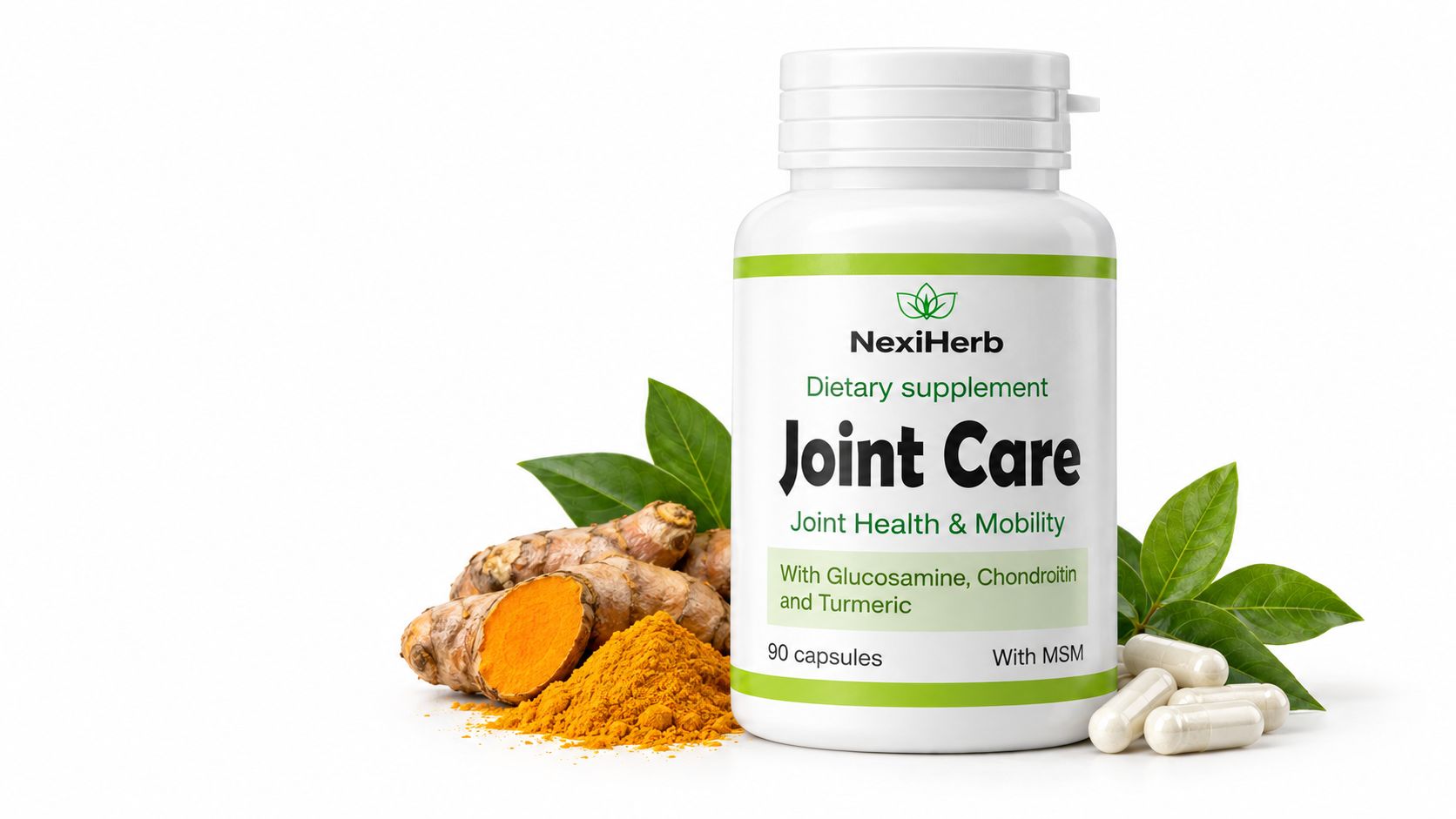
Joint support sits adjacent to recovery rather than inside it. Joint Care Complex NexiHerb Glucosamine & Chondroitin Complex lists glucosamine sulfate potassium, chondroitin sulfate, botanical extracts, and MSM. The ingredient list alone is not evidence that the product repairs muscle or shortens post-training soreness.
How to Time and Dose for Real World Results
Dose questions usually arrive before the more useful one: is there a gap to fill? If daily protein falls short, a measured serving helps close it. If meals already cover the target, another scoop adds cost, not recovery. Consistent with the ISSN position stand's 20–40 gram serving range cited earlier, total daily intake and distribution across meals determine whether muscle protein synthesis gets stimulated throughout the day.
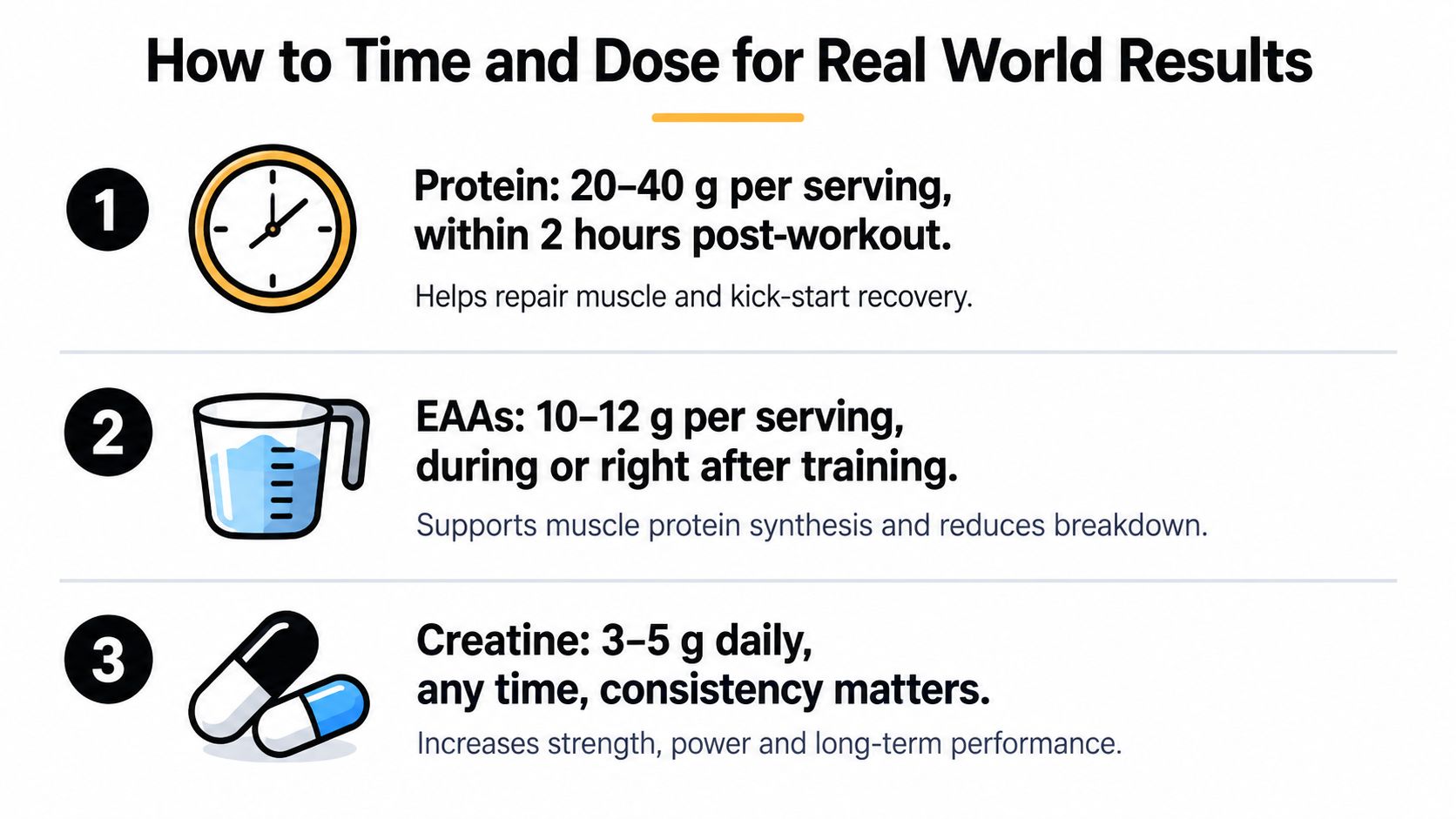
Treat the infographic's timing figures as general guidance; the evidence here supports protein serving ranges, not specific creatine, omega-3, or collagen doses.
Timing rule: Take protein when it helps you meet your needs. Don't mistake convenience for a narrow biological deadline.
A 2025 systematic review found that protein timing did not modify exercise-induced changes in lean body mass, although some strength outcomes differed between pre- and post-exercise intake. The practical read: the anabolic window is wider than product labels suggest. A shake before training suits a lifter who cannot eat afterward; a shake after suits someone who arrived underfed. For a fuller look at that choice, see protein shake before or after.
Antioxidants are where dosing can backfire. Frequent high-dose antioxidant supplementation may attenuate some beneficial exercise-signaling responses, while acute or targeted use may differ. The concern is not antioxidant-rich food. It is a chronic megadose habit with no individualized reason behind it, since the same oxidative signals those pills suppress help drive adaptation. (2025 review on recovery supplements and antioxidant use)
Mega-stacks fail on the same logic. A product blending several ingredients without disclosed quantities or a defined goal makes tolerability and benefit impossible to evaluate. Count what is missing first, then buy only that.
Matching the Stack to Your Training Style
The endurance athlete training on consecutive days should first check whether meals and fluids can cover the demands of training and the time before the next session. A 2025 systematic review in the supplied evidence found that protein-and-carbohydrate supplementation immediately after exercise generally improved recovery, glycogen restoration, and perceived fatigue versus delayed intake, but the effect varied with exercise type and individual context. That points to a meal or targeted supplement when normal food isn't practical, not a default collection of capsules. (2025 systematic review of post-exercise nutrition)
The strength lifter focused on hypertrophy should start with total daily protein and whether servings are distributed in a workable way. If food already covers those needs, a protein powder is convenience, not a mandatory recovery product. Creatine may be relevant for repeated high-intensity performance and training capacity, but it shouldn't be added with the expectation that it will reliably erase soreness.
The plant-based athlete concerned about leucine should scrutinize the serving's actual protein and amino-acid profile rather than choosing a product based on “plant protein” alone. A 2025 systematic review reported that plant proteins can produce recovery outcomes comparable to animal proteins when servings provide roughly 25–40 grams of protein and about 2.5–3 grams of leucine, with blends generally more effective than single sources. (2025 systematic review of plant-based protein recovery)
The key is the complete serving. A blend can be a practical way to improve amino-acid delivery, but it still has to fit the person's daily intake. A label that discloses protein and leucine makes comparison easier.
The casual gym-goer who mainly wants less next-day soreness should resist buying an entire recovery stack. Creatine isn't a proven soreness reliever, and evidence for other popular add-ons varies by dose, duration, and outcome. Before buying a product marketed for joint support or soreness, clarify whether the concern is muscle discomfort, joint symptoms, or a specific medical issue. The overview of joint-support supplements can be a starting point for sorting that category from muscle recovery.
Across all four profiles, the best shortlist is usually the one tied to a real gap. Training style changes what might be useful; a supplement label doesn't tell you whether you need it.
Building a Recovery Budget That Actually Makes Sense
A sensible budget starts with the cost of a serving that meets a defined need, not the number of ingredients on the front label. The available evidence and product information here don't establish current monthly prices, so a precise budget or claim that one category is always cheapest would be guesswork. Compare products using their serving size, the amount of the relevant ingredient, and how often you'd use them.
For protein, compare the cost of meeting your needs through food with the cost of a powder used for convenience. If meals already provide enough, spending on additional protein may not solve a recovery problem. For creatine, judge the product by the ingredient and label transparency, not elaborate blends promising to do more than the evidence supports.
Omega-3 and collagen products need a similar check: a bottle's price doesn't show whether its formula matches a studied protocol. Since the evidence supplied doesn't give a universal effective daily dose for either, don't infer value from a large container or a long ingredient list.
Spend where the gap is clear. A protein product can make sense when convenient meals aren't realistic. Save where the claim is vague. BCAA add-ons, oversized antioxidant blends, and “everything in one” formulas aren't automatically better choices.
Subscriptions and bundles only save money when they reduce the cost of products you already plan to use. Check the serving information and recurring purchase terms before committing. A lower headline price isn't useful if you're buying ingredients without a clear role in your routine.
Limits, Safety, and a Simple Decision Checklist
Supplements can't fix poor sleep, under-eating, or a badly programmed training block. They also can't guarantee that soreness disappears or that you'll be ready for every session on schedule. If persistent pain or a medical concern is driving the purchase, a supplement marketing claim isn't a substitute for advice from a qualified health professional.
People who are pregnant, have kidney or liver conditions, or take medication that could interact with supplements should consult a clinician before use. The supplied guidance also flags blood-thinning medication as a concern to discuss for omega-3s or curcumin, and upcoming surgery as a reason to check before creatine loading. Don't assume that an ingredient is safe for you just because it appears in a sports product.
Keep the decision simple:
- Name the recovery job. Decide whether you're trying to support muscle protein intake, prepare for another demanding session, or address a different concern.
- Choose one primary category. Pick the option with the clearest fit for that job, instead of starting with a stack.
- Check the label. Look for protein grams and leucine where relevant, and clear quantities for the ingredients you intend to use.
- Add only if a real gap remains. A second product should address a separate need, not repeat the first product's promise.
- Check tolerability and budget. Start with a routine you can sustain, and stop to reassess if it doesn't suit you.
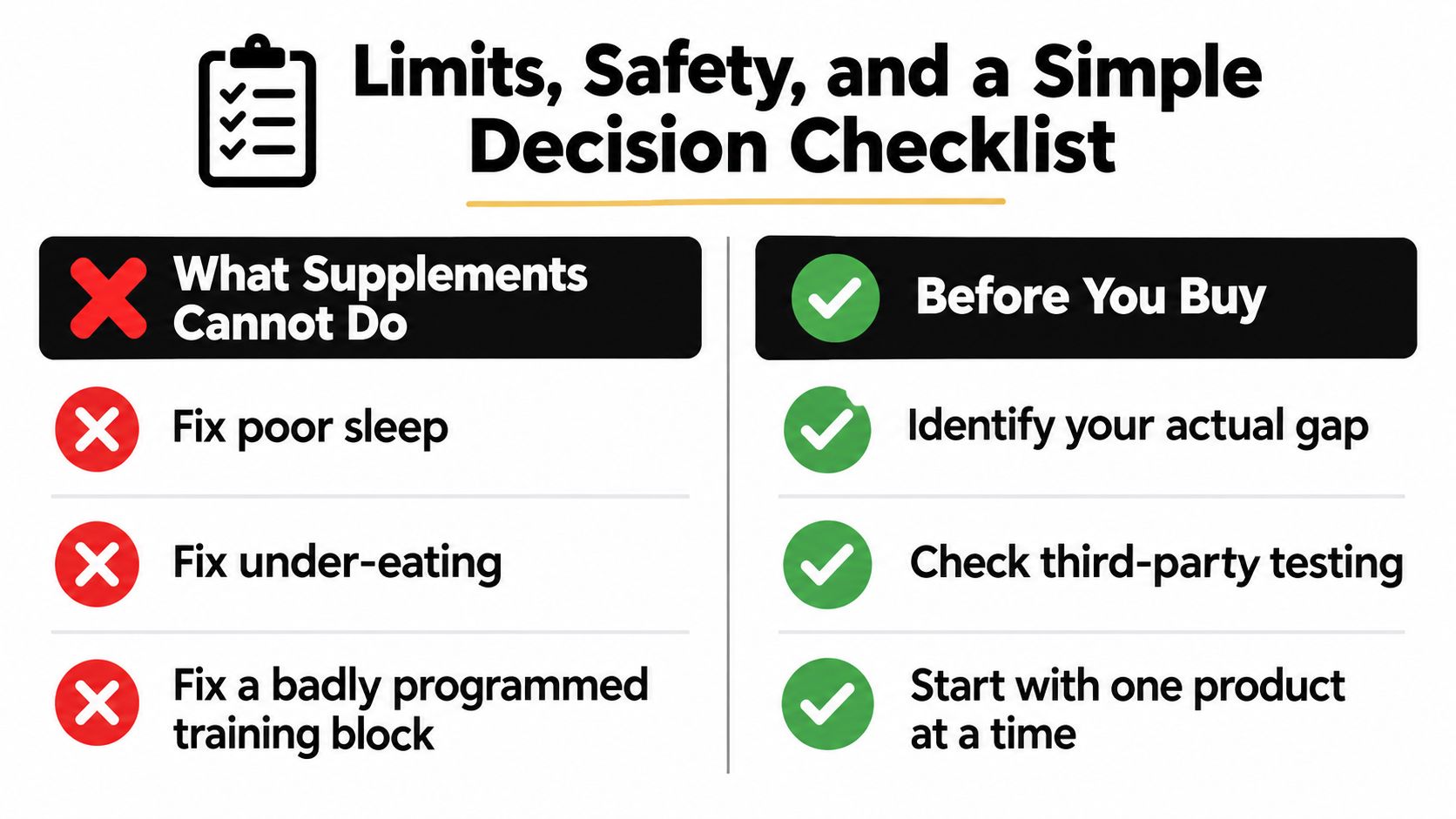
Choose the product for the recovery job you can name, then judge it by the outcome you actually care about.
NexiHerb LLC offers dietary supplements across categories including amino acids, omega-3s, antioxidants, and joint care, alongside nutrition guides intended to help readers make practical choices. Visit NexiHerb LLC to review its catalog and choose products that fit your routine and dietary needs.