

BCAAs are often sold as a shortcut to bigger muscles, faster recovery, and better workouts. That advice skips the most important distinction: an anabolic signal isn't the same as new muscle tissue. Leucine can help activate the machinery involved in muscle protein synthesis, but muscle also needs the other essential amino acids to supply the material for construction.
The most defensible interpretation of branched chain amino acids benefits is narrower and more useful. BCAAs may help reduce exercise-related muscle damage markers and delayed-onset muscle soreness, particularly during demanding training. They're less convincing as a stand-alone muscle-building supplement, especially when someone already eats enough complete protein. The practical question isn't whether BCAAs “work” in the abstract. It's whether your diet, training schedule, and recovery problem create a gap they can reasonably fill.
Table of Contents
- The Reality of Branched Chain Amino Acids Benefits
- The Physiology of Muscle Protein Synthesis
- What the Clinical Evidence Actually Shows
- Who Truly Benefits From BCAA Supplementation
- Practical Dosing and Timing Strategies
- Safety Profiles and Common Misconceptions
- Building Your Evidence-Based Supplement Routine
The Reality of Branched Chain Amino Acids Benefits
The popular assumption is simple: BCAAs switch on muscle growth, so taking more of them should produce more muscle. The biology is more constrained. Leucine can initiate a signal, but the signal can't build tissue without the full set of essential amino acids. A sports nutrition review explains that BCAA ingestion without the other essential amino acids cannot produce a maximal muscle protein synthesis response, and reported only a limited post-exercise response from BCAAs compared with what would be expected from a high-quality intact protein dose. The sports nutrition review makes the central point clear: activation and construction are different events.
That distinction changes how you should interpret supplement marketing. BCAAs may have a role in recovery support and limiting the consequences of exercise-induced muscle damage, but they shouldn't displace meals, whey, dairy, eggs, meat, fish, soy, or another complete protein source when those foods are available. The strongest evidence doesn't show a reliable route from isolated BCAA intake to meaningful hypertrophy in people whose total protein intake is already adequate. A systematic review found reductions in creatine kinase after exhaustive exercise, but it didn't establish consistent muscle-building benefits. The PubMed-indexed meta-analysis supports using BCAAs as a recovery aid, not treating them as a stand-alone muscle builder.
For a deeper comparison of amino-acid categories, see essential amino acids versus branched-chain amino acids. The useful takeaway is that BCAAs are a subset of essential amino acids, not a complete replacement for them.
Practical interpretation: BCAAs may help you feel less sore after difficult training, but feeling less sore doesn't automatically mean you'll lift more, recover your performance faster, or gain more muscle.
The Physiology of Muscle Protein Synthesis
BCAAs are leucine, isoleucine, and valine, three essential amino acids with branched molecular structures. Your body can't make essential amino acids, so you must obtain them through food or supplements. They participate in protein metabolism, but they don't play identical roles.
Think of muscle protein synthesis as a construction site. Leucine acts like a foreman who signals that construction should begin. It helps activate anabolic signaling, including the mTOR pathway, which regulates processes involved in protein synthesis. Isoleucine and valine contribute to the broader amino-acid pool, but none of the three can provide every component required to assemble a complete muscle protein.
The rest of the essential amino acids are the bricks, fasteners, and other materials. If the foreman turns on the equipment but the site lacks key materials, construction can't continue at its maximum rate. That's why a leucine signal can be biologically real while the final amount of new muscle protein remains limited.
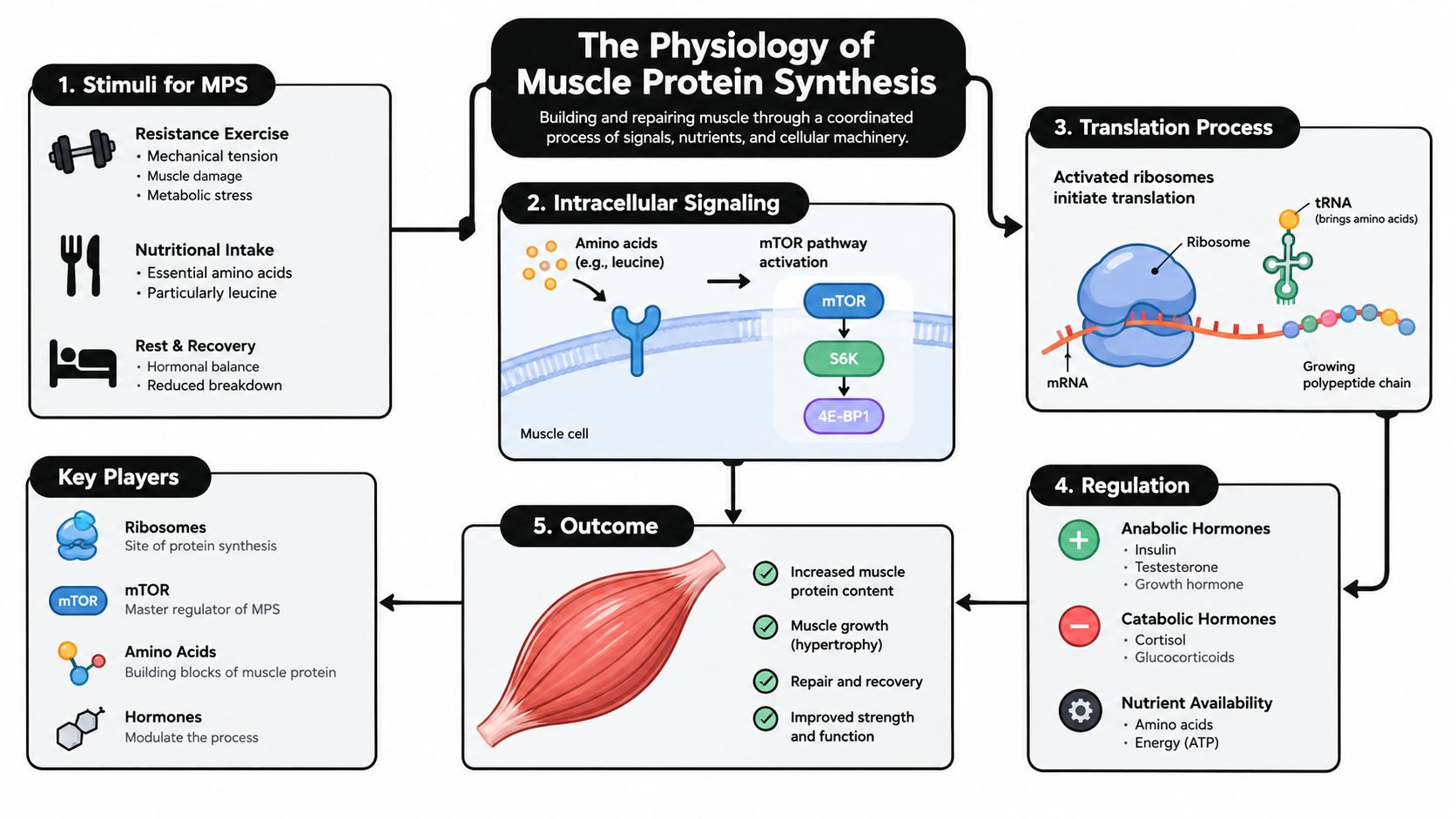
Signal versus substrate
The sports nutrition evidence describes this separation directly. BCAAs can stimulate anabolic signaling, but ingestion without the other essential amino acids can't produce a maximal MPS response. One review reported only a 22% post-exercise MPS increase from 5.6 g of BCAAs, a quantitative result that must be interpreted alongside the review's conclusion that this response was far below what a high-quality intact protein dose would be expected to produce. The GSSI review therefore supports a hierarchy: complete protein supplies both the signal and the substrate, while isolated BCAAs mainly emphasize the signal.
This matters most when your goal is growth. Muscle hypertrophy requires repeated training stimulus, adequate energy, sufficient total protein, and the amino-acid materials needed to repair and remodel tissue. BCAAs can be present within that system, but they don't replace the system.
A complete protein meal is usually more useful after training because it delivers BCAAs alongside the other essential amino acids. If a meal is unavailable, BCAAs may be a convenient interim option, but that convenience shouldn't be confused with superiority.
Where other amino acids fit
Not every amino-acid supplement targets MPS. Argi-Max NexiHerb L-Arginine, L-Citrulline-DL-Malate, and beet root powder is formulated with L-arginine, L-citrulline-DL-malate, and beet root powder for adults seeking a capsule supplement as part of a balanced lifestyle. Those ingredients represent a different formulation purpose from BCAAs, so they shouldn't be evaluated as interchangeable tools for muscle protein synthesis.
For a broader discussion of how lifestyle and health choices interact, change your health change your life offers related context. The nutrition principle remains straightforward: match the ingredient to the physiological job instead of grouping every amino acid under “muscle growth.”
What the Clinical Evidence Actually Shows
The clearest BCAA findings concern post-exercise muscle damage and soreness, not superior performance. A 2020 systematic review and meta-analysis found that BCAA supplementation lowered creatine kinase by a mean difference of -129.55 IU/L at 24 hours after exercise, with a 95% confidence interval from -237.02 to -22.07 and P=0.018. The same analysis found lower DOMS at 24, 48, and 72 hours, with standardized mean differences of -0.43, -0.55, and -0.44, respectively. The 2020 systematic review and meta-analysis also concluded that daily dosing appeared more effective than periodic dosing for athlete recovery.
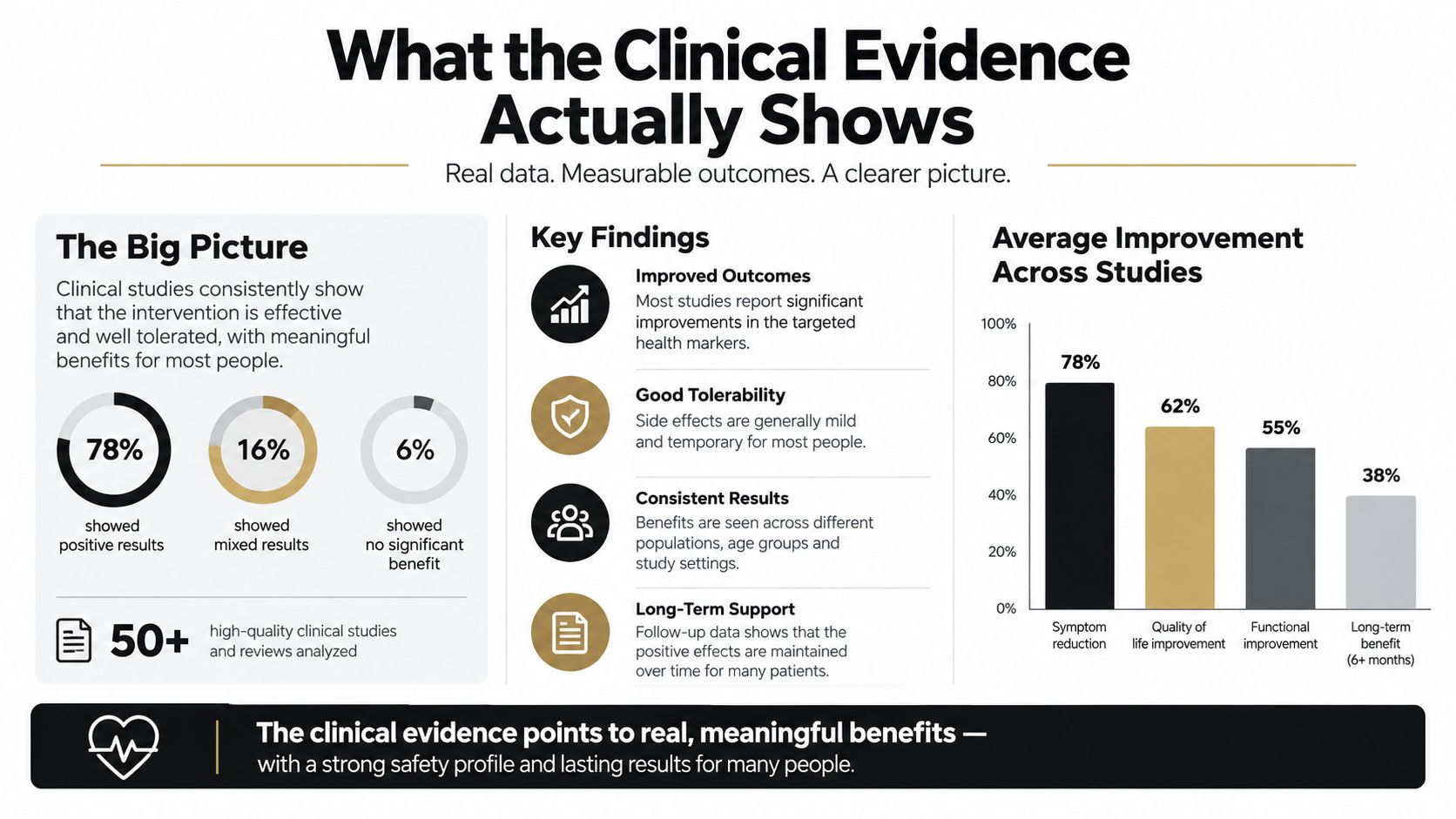
Those results are meaningful, but they answer a specific question: do BCAAs influence markers and perceptions associated with recovery? They don't answer whether an athlete performs better in the next session or builds more muscle over time.
The biomarker gap
A broader 2023 overview of systematic reviews found that BCAAs can reduce post-exercise muscle-damage biomarkers, especially creatine kinase, and lower soreness, while not improving muscle performance recovery. Its discussion of an earlier 2017 meta-analysis reported pooled creatine kinase reductions of -71.55 U/L before 24 hours, based on five trials, and -145.04 U/L at 24 hours, based on eight trials, compared with placebo. Muscle soreness and lactate dehydrogenase weren't significantly improved in that earlier pooled analysis. The 2023 overview shows why a lower biomarker shouldn't be treated as proof of better athletic output.
Creatine kinase is a biochemical marker, while performance recovery is an outcome athletes can experience directly through strength, power, pace, or repeated training quality. A supplement may influence one without reliably changing the other.
The analytical rule: A lower damage marker can support a recovery claim, but it can't substitute for a performance result.
A 2026 PubMed-indexed review found no consistent improvement in endurance performance, fatigue, recovery, or body composition from stand-alone BCAAs or leucine, and concluded that the evidence doesn't support BCAAs as an effective endurance aid. The review's findings also highlight limitations involving methodological quality and surrogate outcomes. For healthy endurance athletes, that makes BCAAs a weak replacement for a sound fueling plan.
One practical conclusion follows. If your problem is soreness after high-volume or eccentric training, BCAAs may be worth considering. If your problem is declining pace, poor power output, inadequate carbohydrate intake, insufficient sleep, or low total protein, BCAAs aren't a logical first fix.
Who Truly Benefits From BCAA Supplementation
BCAA usefulness depends less on the label and more on the nutritional gap. A well-fed gym-goer who regularly consumes complete protein has already obtained BCAAs and the other essential amino acids through food. For that person, adding isolated BCAAs may offer little beyond convenience, particularly if the main target is muscle growth.
A fasted trainee presents a different situation. Training without a recent protein-containing meal may create a practical reason to use amino acids during or around exercise, especially during a demanding session. That doesn't turn BCAAs into a complete meal, but it can make them a targeted option when food isn't available and the immediate goal is to support recovery rather than maximize a post-workout MPS response.
A useful comparison
| Situation | Likely role of BCAAs | More complete priority |
|---|---|---|
| Adequate daily protein and regular meals | Limited added value | Complete meals and training progression |
| Long or fasted training session | Convenient interim support | A complete protein and appropriate exercise fuel |
| High-volume or eccentric training block | Potential soreness and damage-marker support | Total protein, energy, sleep, and recovery planning |
| Older adult with muscle loss concerns | Context-dependent, not a universal answer | Medical nutrition guidance and resistance training |
| Liver disease or cirrhosis | Clinical application may be relevant | Clinician-directed care |
The clinical populations deserve separate treatment. In cirrhosis and hepatic encephalopathy, a 2022 meta-analysis reported lower hepatic encephalopathy risk, with RR 0.684, and lower liver-related event risk, with RR 0.788, without a significant mortality benefit. The meta-analysis in cirrhosis indicates that BCAAs can have clinical relevance in a disease-specific setting, but those findings shouldn't be transferred directly to healthy recreational athletes.
A 2024 meta-analysis in cirrhotic patients with sarcopenia found improvements in liver frailty index, BMI, and quality of life, while handgrip strength, walking speed, skeletal muscle index, and MELD score didn't improve. Newer evidence in older adults after resistance training found skeletal muscle index improved, but other functional and body-composition outcomes did not. These mixed findings reinforce the need to distinguish clinical nutrition from gym supplementation.
Who should pause: Anyone with liver disease, significant metabolic conditions, pregnancy, breastfeeding, or prescription medications should discuss BCAA use with a healthcare professional before adding it.
Practical Dosing and Timing Strategies
Start with the problem, not the scoop. If you already eat complete protein around training and across the day, BCAAs may add little. If you train fasted, face long gaps between meals, or enter a high-volume block where soreness disrupts consistency, they have a more defensible place.
The commonly discussed leucine trigger is approximately 2 to 3 grams per dose, but this range isn't supplied by the verified evidence for this article, so it shouldn't be presented as a universal clinical prescription. Product labels vary, and a BCAA serving may not provide the same leucine proportion. Follow the label and treat any dose as a supplement to, not a replacement for, complete protein.
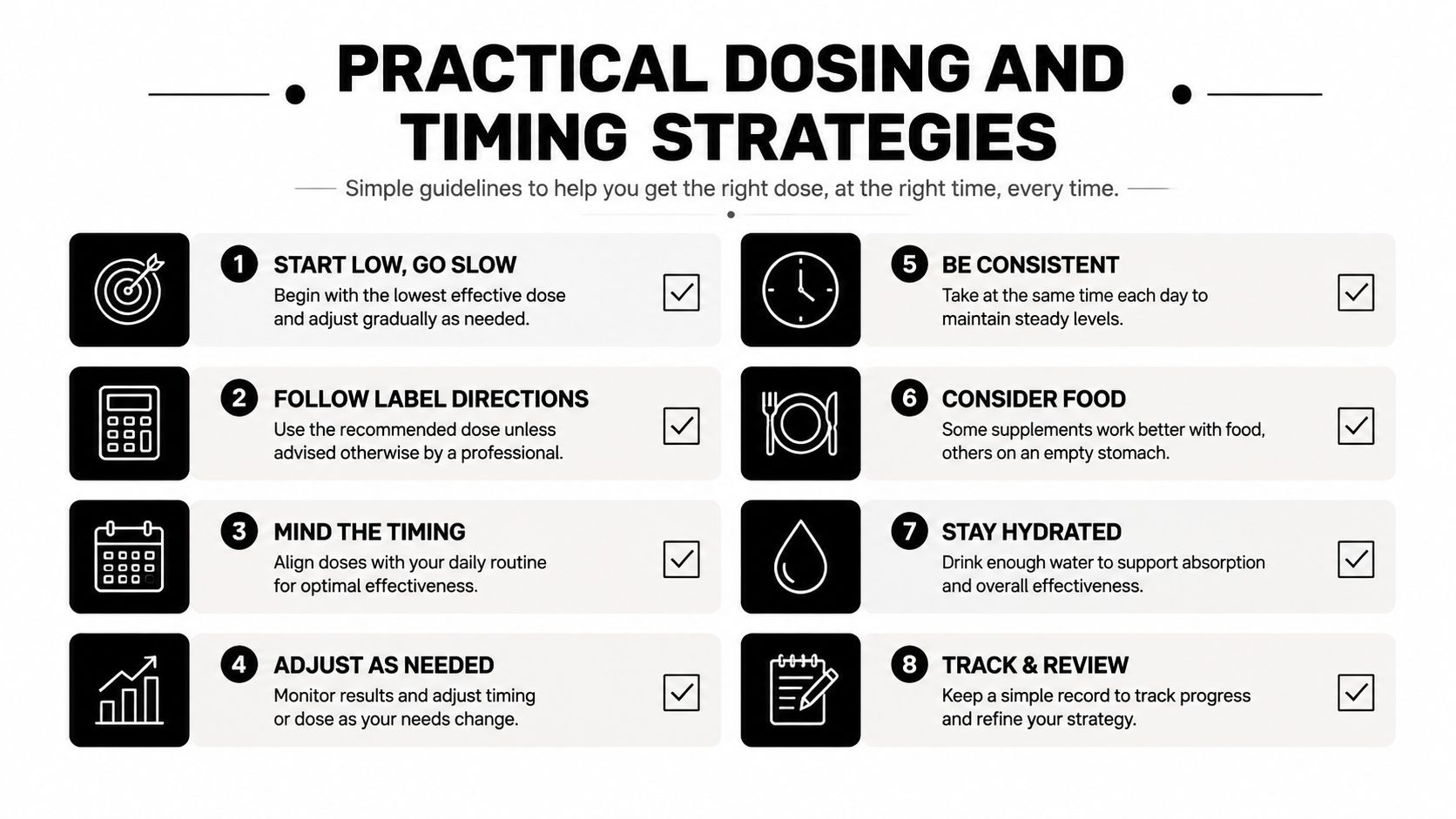
Match timing to the gap
Before training, BCAAs may be reasonable when you haven't eaten and don't tolerate a full meal. Their role is mainly to provide amino acids during a period when food intake is delayed.
During training, they can be convenient for long sessions or situations where drinking is easier than eating. This is a logistics decision, not evidence that sipping BCAAs produces a superior anabolic environment.
After training, complete protein is the stronger choice because it supplies the full essential amino-acid profile. If BCAAs are all you have immediately available, they may support a recovery-focused strategy, but plan a balanced meal or complete protein serving afterward.
The 2020 meta-analysis found that daily BCAA dosing appeared more effective than periodic dosing for athlete recovery, as reported in the systematic review. That finding supports consistency during a demanding training period more than sporadic use after one unusually hard session.
Build a simple hierarchy
- Cover food first. Establish regular meals with complete protein and enough total energy.
- Use BCAAs for access problems. Keep them for fasted sessions, travel, or a long gap before a proper meal.
- Pair rather than substitute. Add a complete protein source later when muscle-building is the objective.
- Track the outcome that matters. Note soreness, session quality, and recovery between workouts, not just whether the powder feels effective.
For more context on scheduling amino-acid products, read the best time to take aminos. Other amino-acid formulas, including products with L-arginine and L-citrulline, serve different purposes and shouldn't be treated as interchangeable with BCAAs.
Safety Profiles and Common Misconceptions
BCAAs are generally tolerated by healthy adults, but “generally tolerated” isn't the same as “appropriate for everyone.” The evidence supplied here doesn't establish a complete safety profile for every condition, dose, medication, pregnancy, or breastfeeding situation. People with liver disease, metabolic disorders, pregnancy, breastfeeding, or prescription treatment should ask a clinician before using an amino-acid supplement.
The bigger everyday risk is often conceptual. People may spend attention and money on isolated BCAAs while neglecting the fundamentals that determine adaptation, including total protein, adequate energy, progressive resistance training, carbohydrate availability when relevant, and sleep.
Common claims under scrutiny
More BCAAs don't mean proportionally more muscle. Once the signal is active, additional isolated amino acids can't compensate for missing essential amino acids. The construction site still lacks materials.
Less soreness isn't proof of faster performance recovery. The clinical evidence supports lower soreness and creatine kinase in several analyses, but the broader review evidence doesn't show consistent improvement in muscle performance recovery. Those outcomes belong in separate columns when you assess a product.
BCAAs aren't complete protein. They contain leucine, isoleucine, and valine, but not the full essential-amino-acid profile required for maximal MPS. Whey and other complete proteins are usually more appropriate when the goal is muscle-building nutrition.
Clinical benefits aren't universal fitness benefits. Results in cirrhosis, hepatic encephalopathy, sarcopenia, or older adults can't be copied directly onto a healthy gym user's situation. Medical context changes the purpose, outcome, and supervision required.
A safer decision rule: If a supplement is intended to solve a medical nutrition problem, involve the clinician managing that problem. If it's intended for training, judge it by training-relevant outcomes.
Building Your Evidence-Based Supplement Routine
A sensible routine begins with a short audit. Ask whether you consistently eat complete protein, whether your training includes repeated high-volume or eccentric work, and whether soreness is interfering with the next session. If the answers are yes, no, and no, BCAAs probably aren't a priority.
If you train fasted or regularly face long gaps between meals, BCAAs may function as a convenience tool. Use them around the gap, then return to a complete meal. If your primary goal is hypertrophy, spend more effort improving the protein quality and consistency of your meals than chasing a stronger supplement signal.
For soreness-focused use, set a clear observation window around a demanding block. Track whether your perceived soreness and ability to complete planned sessions change. Don't interpret a reduction in soreness as proof that muscle growth or endurance has improved, because the clinical literature separates those outcomes.
A practical checklist looks like this:
- Nutrition first: Make complete protein and adequate overall intake the foundation.
- Define the gap: Use BCAAs only when fasting, scheduling, or food access creates a real need.
- Choose the outcome: Focus on soreness and recovery comfort, not automatic hypertrophy claims.
- Respect clinical boundaries: Seek professional advice for liver disease, metabolic conditions, pregnancy, breastfeeding, or medication use.
- Review the result: Stop treating the supplement as essential if it doesn't improve a relevant training outcome.
For readers comparing formats, amino acid powder can be part of that broader evaluation, but the same evidence standard applies to every product. Supplements should complement a varied diet and a consistent routine, not replace them.
NexiHerb LLC offers science-inspired dietary supplements across amino acids, herbal blends, multivitamins, omega-3s, antioxidants, and other wellness categories. Visit NexiHerb LLC to review formulas that can complement a balanced nutrition and recovery routine, then choose based on your specific gap rather than marketing promises.