

“Boost your immune system” sounds like sensible advice, but it describes the wrong target. Your immune system isn't a single switch that becomes healthier when turned up. An overly aggressive response can cause harm just as a weak response can leave you vulnerable. Herbal immune support is better understood as immune modulation and resilience, helping the body maintain readiness, communicate effectively, and resolve challenges without promising a dramatic shield against illness.
That distinction matters because herbal products differ sharply in their human evidence, preparation, dose, and safety profile. Some botanicals have clinical signals for specific respiratory outcomes. Others remain grounded mainly in traditional use, laboratory studies, or broad marketing language. The practical question isn't “Which herb boosts immunity most?” It's “Which preparation has credible human data for the outcome I care about, and is it appropriate for me?”
Table of Contents
- Why Immune Boosting Is the Wrong Goal
- How Herbal Immune Support Actually Works
- The Key Botanicals and What the Evidence Says
- Functional Mushrooms and Their Immune Roles
- Choosing Dosing Forms and Reading Labels
- Safety Considerations and Herb-Drug Interactions
- Building a Complete Immune Resilience Routine
- A Practical 7-Day Immune Support Plan
Why Immune Boosting Is the Wrong Goal
An immune system that never activates cannot protect you. One that reacts too intensely, or does not settle afterward, can create its own problems. The useful target is a proportionate response, with enough readiness to act and enough control to return toward balance.
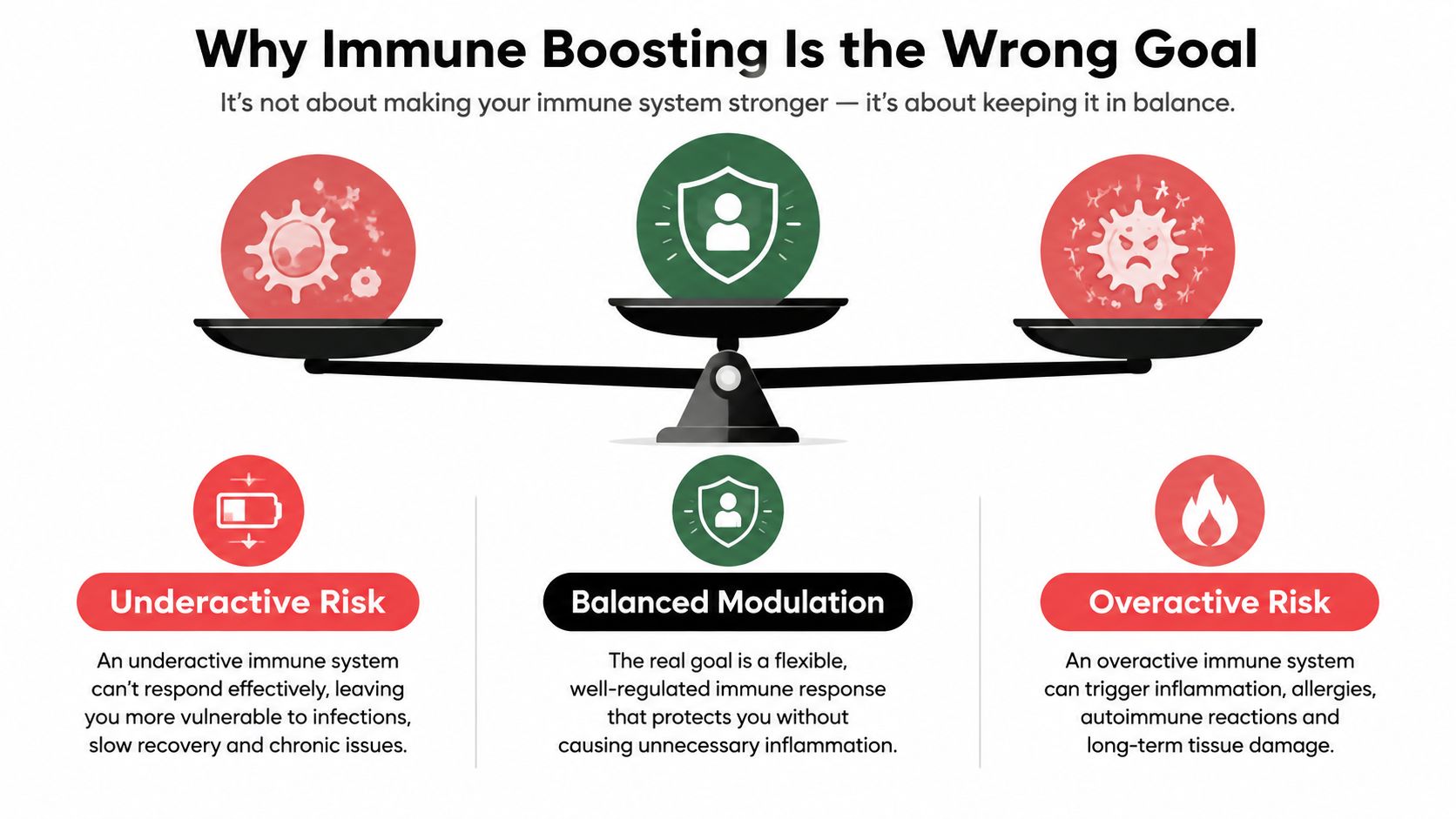
A coordinated security system offers a useful comparison. Physical barriers, including skin and mucosal surfaces, form the first boundary. Innate immunity acts as a rapid patrol, recognizing broad signs of danger and responding quickly. Adaptive immunity supplies a more specialized response, with cells that learn from earlier exposures and retain memory.
Why proportionate response matters
This framework changes how supplement claims should be read. “Stimulates immune cells” may sound beneficial, yet greater activity alone does not establish a better outcome. Ask whether the response is appropriately timed, whether inflammatory signaling resolves, and whether the product has been studied in people rather than only in cells or animals.
Consumer demand indicates strong interest, while market growth does not demonstrate clinical effectiveness. A European analysis cited by the Centre for the Promotion of Imports reported that immune-boosting products grew by 39.6% in 2020. It also projected the global immune-health supplements market to increase from US$20.2 billion in 2021 to US$31.5 billion by 2028, with herbal extracts representing about 30% of the category in the European estimate. These figures describe purchasing demand, not proof that every botanical works.
Practical rule: Treat “immune boosting” as a marketing phrase until the label identifies the ingredient, preparation, intended outcome, and supporting evidence.
A resilient approach supports three connected areas: barrier integrity, innate surveillance, and adaptive coordination. It also leaves room for safety screening, because an ingredient with a plausible mechanism may still be unsuitable with certain conditions or medicines. Evidence from human studies should therefore guide choices more strongly than tradition or laboratory findings alone.
How Herbal Immune Support Actually Works
Immunity works more like an orchestra than a volume knob. Different sections contribute at different moments, and the result depends on timing, coordination, and a controlled return to baseline.
The physical barriers are the skin and the respiratory and digestive linings. They limit unwanted entry while maintaining the conditions in which immune cells operate. Innate defenses provide rapid surveillance, recognize broad patterns, and send early signals. Adaptive immunity develops more targeted responses and immune memory, as explained in how active immunity works against measles.
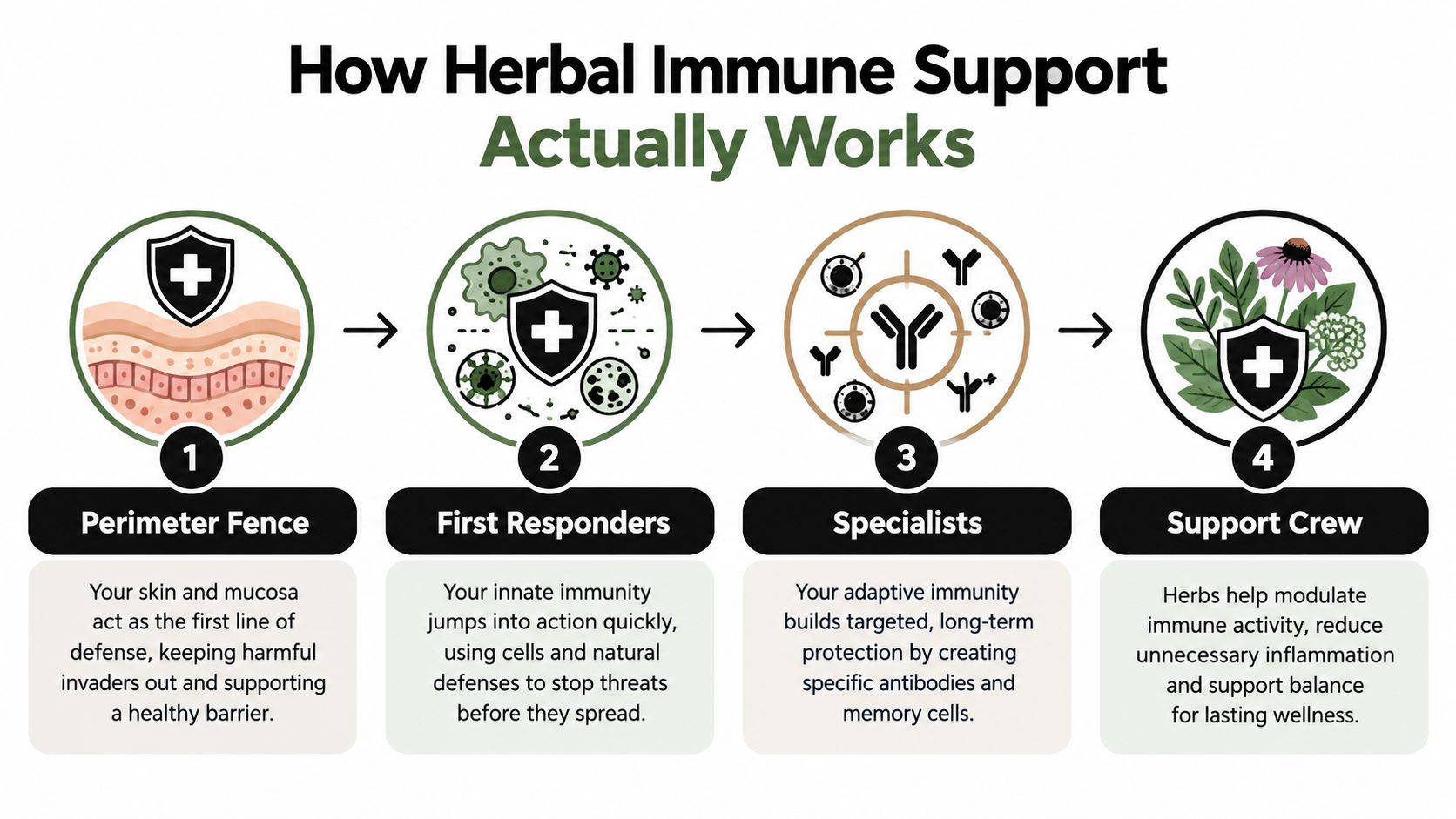
Herbal compounds may affect the signaling network between these parts. Their possible role is to influence when immune cells respond, how intense that response becomes, and how activity settles afterward. That is modulation, not a guaranteed increase in protection.
The main compound families
Polysaccharides and beta-glucans occur in medicinal mushrooms and some roots. Researchers examine how they interact with receptors involved in innate immune surveillance and communication. A plausible interaction does not show that a product eliminates pathogens or prevents illness.
Polyphenols can influence oxidative and inflammatory signaling. Their more defensible role is support for ordinary cellular communication and stress handling, rather than a universal antiviral effect.
Some alkaloids and other specialized compounds may affect cytokine signaling, antibody activity, or immune-cell behavior. These mechanisms can be biologically credible while their benefit in people remains uncertain. Findings from cells or test tubes are starting clues, not treatment outcomes.
Product form also matters. A capsule such as Triple Mushroom Complex Nexiherb, Cordyceps, Reishi, and Lion's Mane 90 caps contains mushroom-derived ingredients in capsule form for adult use. Its product statement says the claims have not been evaluated by the Food and Drug Administration and that it is not intended to diagnose, treat, cure, or prevent disease.
This short video offers another visual explanation of immune function:
The practical conclusion is modest. Herbal immune support may influence readiness or inflammatory signaling, but it does not replace medical care, vaccination, sleep, nourishing food, or habits that reduce exposure. Human evidence should guide selection, while conditions, medicines, and individual tolerance should shape the safety decision.
The Key Botanicals and What the Evidence Says
A useful comparison asks three separate questions: is the mechanism plausible, has the botanical been tested in people, and what outcome could a person reasonably expect? Laboratory activity can explain how an ingredient might work without proving that it prevents illness. A plant may also produce a modest effect for one narrow outcome while offering no basis for broad immune claims.
Echinacea has one of the clearer historical signals. A 2007 Lancet Infectious Diseases meta-analysis of 14 randomized trials reported a 58% reduction in the odds of developing a common cold, with an odds ratio of 0.42 and a 95% confidence interval of 0.25 to 0.71. It also reported a cold-duration reduction of 1.4 days and a number needed to treat of 6. These findings are summarized in this review of vitamin D, vitamin C, zinc, and echinacea. The result should still be read carefully because species, preparation, dose, and trial design differ.
Elderberry has a different evidence pattern. Review data describe antioxidant signaling involving Nrf2-related defenses, along with mucosal and innate immune activity such as secretory IgA, macrophage function, and natural killer cell activity. Across randomized trials involving influenza or upper-respiratory illness, symptoms were generally shortened by about 1 to 2 days, according to a review in PMC. That supports a possible role in symptom duration, not broad prevention.
Astragalus is better understood as a traditional resilience herb than as a firmly established clinical intervention. Its long history of use and growing interest in immune-cell signaling justify further study, while human evidence remains limited. Andrographis has a stronger acute respiratory trial signal, particularly with standardized extracts. Its apparent benefit still depends on the product used and the design of each trial.
Reishi and cordyceps require separate interpretation because they are fungi rather than herbs. Reishi is studied for immune and inflammatory modulation. Cordyceps is often discussed in relation to cellular energy and respiratory resilience. Human evidence for general prevention remains less definitive than marketing language suggests.
| Herb | Primary Mechanism | Best Evidence | Realistic Effect | Key Caution |
|---|---|---|---|---|
| Echinacea | Immune signaling and modulation | Meta-analysis of randomized cold trials | Modest reduction in cold odds or duration for some preparations | Autoimmune conditions and medication interactions require review |
| Elderberry | Antioxidant, mucosal, and innate immune support | Randomized influenza and upper-respiratory trials | Symptoms may resolve sooner, generally by about 1 to 2 days | Preparation quality and medication status matter |
| Astragalus | Traditional tonic and immune signaling | Traditional use with limited, growing clinical data | Possible long-term resilience support, not a proven shield | Caution with immunosuppressants and immune-mediated disease |
| Andrographis | Immune and inflammatory signaling | Trials of standardized respiratory extracts | Potential acute respiratory support | Review pregnancy, allergies, and medication use |
| Reishi or cordyceps | Beta-glucans and broader immune modulation | Early human studies plus mechanistic research | Possible supportive role, evidence remains limited | Mushroom allergy and medication interactions |
For a wider examination of plant compounds and respiratory claims, see this best natural antivirals list. Apply the same filter throughout: laboratory findings can suggest a mechanism, while human outcomes determine how much confidence a supplement deserves. The discussion of ashwagandha and ginseng also helps separate adaptogenic language from evidence of immune protection.
Tribulus belongs to a different wellness category. Tribulus Max NexiHerb Tribulus Terrestris Extract 40% Saponins is described as an adult dietary supplement containing Tribulus terrestris extract, with 1,500 mg per serving standardized to 40% Saponins. That product description does not establish Tribulus as an evidence-based immune-support ingredient.
Functional Mushrooms and Their Immune Roles
Functional mushrooms differ from classic herbs because researchers often focus on beta-glucans, polysaccharides, triterpenes, and related compounds, rather than primarily on alkaloids or volatile oils. Their effects are usually discussed as immune modulation, not as direct pathogen destruction.
Reishi has the broadest traditional reputation for immune balance and stress-related wellness. Human evidence supports interest in its polysaccharides and triterpenes, but many specific claims still come from laboratory or mechanistic work.
Cordyceps is commonly associated with energy metabolism and respiratory capacity. Those concepts may be relevant to resilience, yet they shouldn't be converted into claims that the mushroom prevents respiratory infection.
Turkey tail has more specialized clinical relevance. Its polysaccharide preparations, including PSK and PSP, have been studied alongside conventional oncology care. That research context doesn't justify using turkey tail as a replacement for cancer treatment or presenting it as a general immune cure.
Lion's mane has a stronger research identity around neurological and cognitive questions than immune outcomes. Chaga is traditionally valued for antioxidant and immune support, but human evidence remains limited. A practical overview of mushroom preparation and immune claims is available in this guide to mushroom immune support.
| Mushroom | Key Active Compounds | Primary Immune Mechanism | Human Evidence Grade | Best Use Case |
|---|---|---|---|---|
| Reishi | Beta-glucans and triterpenes | Immune and inflammatory modulation | Limited to moderate, depending on outcome | Carefully selected adjunct support |
| Cordyceps | Polysaccharides and nucleoside-related compounds | Possible cellular and immune signaling | Limited | General wellness, not infection treatment |
| Turkey tail | PSK and PSP polysaccharides | Innate immune signaling | More developed in oncology-support research | Clinician-guided complementary use |
| Lion's mane | Polysaccharides and hericenones | Immune claims remain exploratory | Limited for immune outcomes | Research-oriented wellness use |
| Chaga | Polysaccharides and polyphenols | Antioxidant and immune signaling | Limited | Traditional use with quality screening |
Extraction affects the result. A hot-water extraction is suited to water-soluble polysaccharides, while a mycelium-on-grain powder may contain a different balance of fungal material and substrate. The label should identify the mushroom species, the part used, the extraction method, and whether beta-glucans are measured rather than merely listing total polysaccharides.
Choosing Dosing Forms and Reading Labels
A plant's form can change what reaches your body. Tinctures use alcohol, water, or both and may extract compounds that don't dissolve well in plain water. Glycerites avoid alcohol but have a different extraction profile. Teas and decoctions are practical for water-soluble constituents, while capsules offer convenience and a consistent serving size.
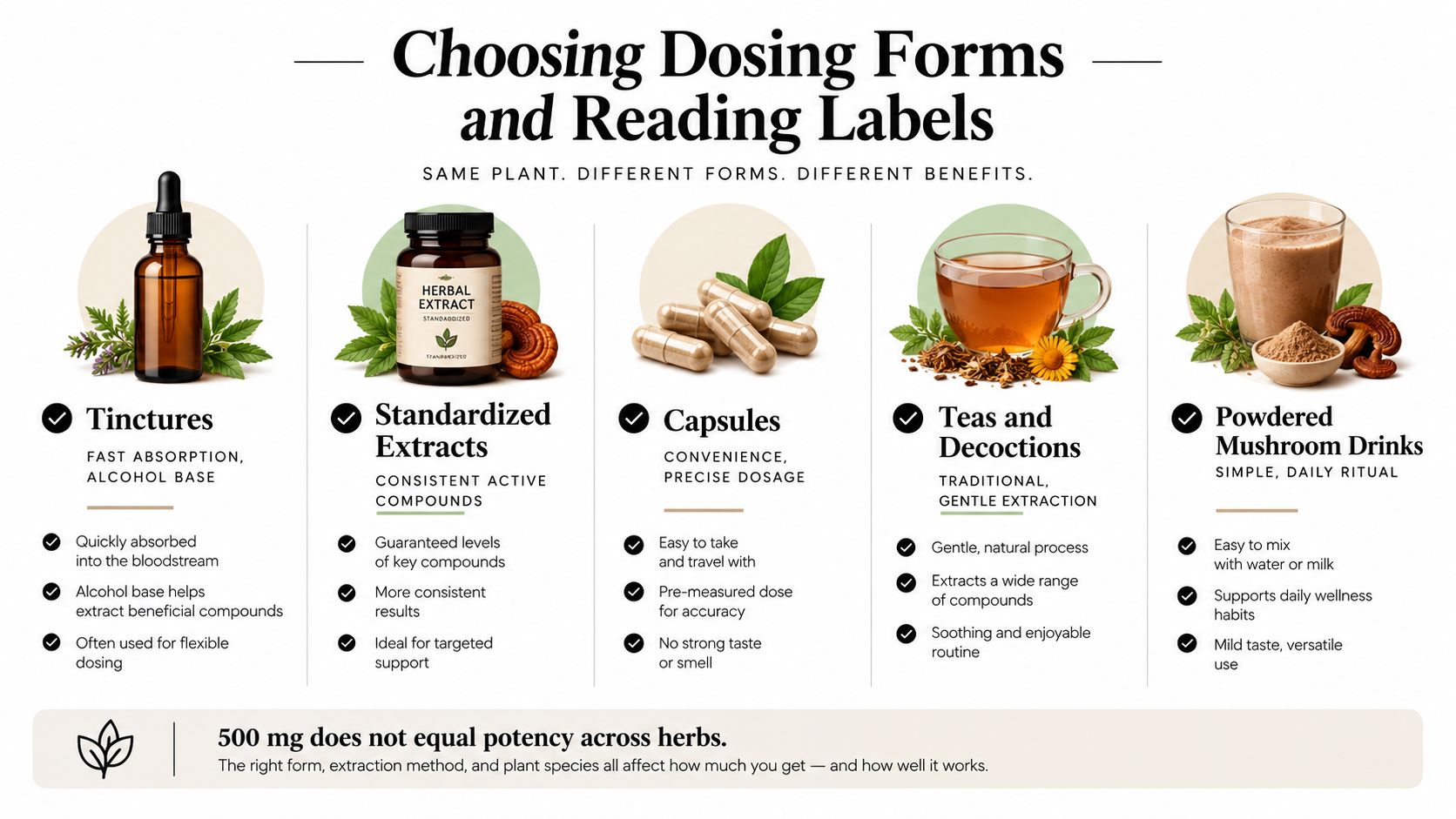
A 500 mg capsule isn't automatically equivalent to another 500 mg capsule. One may contain raw powder, while another contains a concentrated extract with a stated marker compound. For echinacea, look for species and plant part, along with standardization markers such as alkylamides when provided. For elderberry, identify the berry species and whether anthocyanins are quantified. For mushrooms, look for species, fruiting body or mycelium, extraction method, and beta-glucan disclosure.
A label-reading checklist
- Identify the plant part: Root, leaf, flower, fruit, seed, and aerial parts don't provide identical compounds.
- Find the extract ratio: A stated ratio can show how much raw material was used to make the extract, though it doesn't prove clinical potency.
- Check standardization: A named marker compound improves consistency between batches.
- Look for testing information: Species authentication and contaminant testing matter, especially for mushrooms.
- Read the intended use: A product designed for occasional use shouldn't automatically become a daily routine.
Meals can improve tolerance and may help absorption for some compounds, while others are intended for an empty stomach. Follow the product label rather than applying one rule to every botanical. A clear explanation of how to read supplement labels can help you compare products without treating the largest milligram number as the strongest option.
Cycle recommendations also need caution. Some herbal traditions suggest using stimulating preparations for a limited period, but a universal 4 to 8 week schedule followed by a 2 week break isn't established for every product or person. Use the shortest period appropriate to your goal, and ask a clinician or pharmacist before extended use.
Safety Considerations and Herb-Drug Interactions
“Natural” describes an origin, not a safety guarantee. Plants contain active chemicals, and those chemicals can alter bleeding, blood pressure, immune signaling, sedation, blood glucose, or drug metabolism.
The National Center for Complementary and Integrative Health guidance on herb-drug interactions notes that herbs can interact with common medicines. It gives ginkgo with warfarin as an example associated with increased major bleeding risk. Broader safety reviews also raise concerns about immune-active botanicals used with anticoagulants, immunosuppressants, or medicines metabolized by CYP enzymes.
Who should pause before using a product
- People taking anticoagulants or antiplatelets: Ask about bleeding risk before using immune-support blends, especially if they also contain herbs known to affect clotting.
- People receiving immunosuppressive treatment: Echinacea, astragalus, andrographis, and mushroom products may complicate a carefully managed immune-suppression plan.
- People with autoimmune disease: A product promoted as immune stimulating may not be appropriate for conditions involving abnormal immune activation.
- People who are pregnant, breastfeeding, or choosing products for children: Safety data and dosing standards can be limited, so professional guidance matters.
- People taking several prescriptions: The more medicines involved, the more important it is to screen for metabolic and additive effects.
Before adding a botanical, ask: What is the exact species and dose? What is the intended duration? Could it affect bleeding, blood pressure, sedation, blood glucose, immune suppression, or drug metabolism?
Bring the actual bottle or a complete label to a pharmacist. Mention every prescription, over-the-counter medicine, vitamin, tea, and supplement. Don't rely on a salesperson or online “natural” label to assess interactions.
Stop the product and seek medical advice if you develop a significant rash, breathing difficulty, unusual bleeding, severe digestive symptoms, or a sudden change in a chronic condition. Herbal immune support should fit into clinical care, not operate outside it.
Building a Complete Immune Resilience Routine
Herbs work best as a targeted layer, not as the foundation. The foundation is the daily routine that supports barrier tissues, immune-cell metabolism, sleep-wake regulation, and recovery.
Sleep comes first. Aim for a regular schedule and enough time in bed to wake refreshed. A wind-down routine, lower evening light, and consistent morning daylight can support circadian alignment. If sleep is repeatedly poor, adding more capsules won't solve the main problem.
Food supplies the raw material. Build meals around adequate protein, colorful vegetables and fruit, legumes, whole grains, nuts, seeds, and fermented foods you tolerate. Polyphenol-rich foods can complement the diet, while frequent heavy alcohol intake and a pattern dominated by ultra-processed foods can work against overall resilience.
Movement is another dependable input. Combine regular moderate aerobic activity with resistance exercise, adjusting the intensity when you're ill, under-recovered, or dealing with a medical condition. A routine you can repeat matters more than a punishing session followed by several inactive days.
Put supplements in the right order
- Correct known deficiencies: Vitamin D is most sensible when guided by status and clinical context.
- Use short-term tools selectively: Zinc may have a role during a brief period, but more isn't automatically better.
- Keep food central: Vitamin C from fruit and vegetables supports intake without turning the routine into a large supplement stack.
- Review omega-3s and magnesium: These may support broader wellness, but they're not substitutes for sleep or medical treatment.
- Add herbs for a defined reason: Seasonal transitions, travel, high stress, or recovery may be reasonable contexts for targeted use.
Stress regulation can be as practical as a few minutes of slow breathing, time outdoors, or maintaining social connection. Track your baseline with a simple scorecard: sleep quality, meal consistency, movement, stress load, symptoms, and any new supplement. This helps you notice whether a product changes anything instead of assuming every improvement came from the latest capsule.
A Practical 7-Day Immune Support Plan
Use this as a conservative routine for a generally healthy adult during a seasonal transition. It isn't a treatment plan, and adding a botanical should still go through medication and health-condition screening.
Day 1, establish the baseline. Drink water on waking, get morning daylight, eat a protein-forward breakfast, and take a short walk. In the evening, dim lights and record sleep quality, stress, digestion, and any symptoms.
Day 2, reinforce recovery. Add moderate movement and a colorful lunch containing vegetables, fruit, legumes, or whole grains. Keep the evening simple, with a consistent bedtime and no new multi-ingredient stack.
Day 3, choose one botanical only if needed. If early respiratory symptoms appear, discuss an evidence-relevant option such as elderberry or andrographis with a pharmacist, particularly if you take medication. Don't combine several stimulating products just because each label sounds supportive.
Day 4, protect the basics. Continue hydration, regular meals, gentle movement, and sleep protection. If you selected a product, follow its label exactly and watch for digestive, allergic, bleeding, or other unusual effects.
Day 5, review the response. Ask whether symptoms are stable, improving, or worsening. Avoid interpreting a normal day as proof that a supplement prevented illness, because you can't reliably observe the counterfactual.
Day 6, reduce complexity. Keep the baseline routine and avoid adding another herb. Review the ingredient list for duplicate botanicals across capsules, powders, teas, and syrups.
Day 7, pause and decide. Stop any short-term cycling unless a qualified professional has advised otherwise. Seek medical care for fever above 38.9°C, shortness of breath, or symptoms lasting beyond 10 days. Those thresholds are practical escalation rules, not a substitute for urgent care when symptoms are severe.
Screenshot checklist
- Baseline habits first: sleep, food, hydration, daylight, and manageable movement.
- One new botanical at a time.
- Screen anticoagulants, immunosuppressants, pregnancy, breastfeeding, autoimmune disease, and chronic medication.
- Stop for allergic symptoms, unusual bleeding, or serious deterioration.
- Seek care for shortness of breath, fever above 38.9°C, or symptoms beyond 10 days.
NexiHerb LLC offers science-inspired dietary supplements, including herbal formulas and functional mushroom products, intended to complement everyday wellness rather than replace a varied diet or medical care. If you're comparing clearly labeled options for a structured routine, visit NexiHerb LLC and review each product's ingredients, directions, and safety information before choosing.