

By evening, your legs may feel heavier than the rest of you. Maybe you stood at work for hours, sat through a long drive, or finished a normal day and noticed sock marks at your ankles, a dull ache in your calves, or a restless urge to prop your feet up.
That's the moment a lot of people start searching for circulation vein support. The phrase sounds simple, but it often hides two very different goals. One goal is to help legs feel better. The other is to repair a vein problem. Those are not the same thing, and mixing them up leads to unrealistic expectations.
Table of Contents
- Why Your Legs Feel Heavy and What Circulation Vein Support Really Means
- How Blood Flow Actually Works From Arteries to Veins
- Everyday Signs of Sluggish Circulation and Venous Insufficiency
- Lifestyle Pillars That Genuinely Support Vein Health
- Ingredients Used in Circulation Vein Support Supplements
- A Practical Daily and Weekly Routine for Vein Comfort
- Red Flags That Mean It's Time to See a Clinician
- Putting It All Together for Long-Term Vein Comfort
Why Your Legs Feel Heavy and What Circulation Vein Support Really Means
When people say they want circulation vein support, they usually mean they want their legs to feel lighter, less puffy, less achy, and less tired by the end of the day. That's a reasonable goal. It's also different from asking whether a supplement or habit can reverse visible varicose veins or repair worn vein valves.
What the phrase usually includes
In everyday use, circulation vein support is a catch-all term for strategies that help blood return from the legs to the heart more comfortably. That can include:
- Movement habits that wake up the calf muscles
- Posture changes that reduce long periods of stillness
- Hydration that supports normal fluid balance
- Leg elevation after standing or sitting
- Compression or medical care when a clinician recommends it
- Supplements aimed at vessel tone, capillary support, or symptom relief
If you want a broader primer on circulation habits in daily life, this guide on how to improve blood flow is a useful companion.
The distinction that changes everything
Here's the honest framework to keep in mind: symptom relief and vein repair are different jobs.
A supportive routine may help with heaviness, swelling, or aching. It may help your legs tolerate long workdays, travel, or sedentary stretches better. But supportive tools usually don't repair damaged vein valves or remove varicose veins. That point matters because a lot of people buy “circulation” products hoping for structural change, when what they're more likely to get is partial comfort support. That distinction is highlighted in this clinical overview of whether supplements for varicose veins work.
Practical rule: Ask of every product or habit, “Is this meant to help my legs feel better, or is it meant to correct the vein itself?”
That single question clears up most confusion. Once you use it, labels become easier to read, supplement claims sound less magical, and your daily choices become more grounded.
How Blood Flow Actually Works From Arteries to Veins
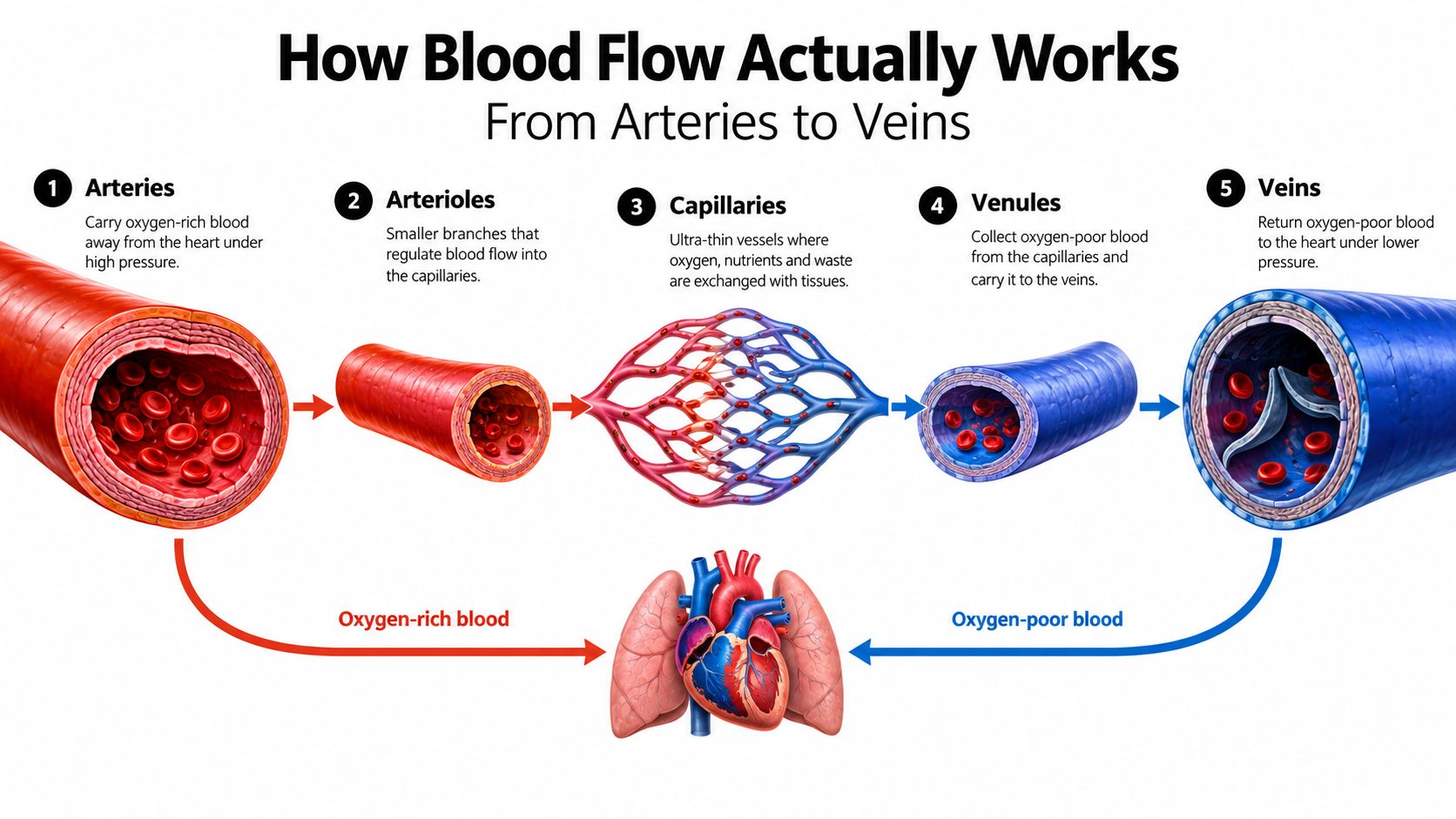
Your circulation system does two very different kinds of work. First, blood has to get out from the heart to the body. Then it has to get back.
The easiest way to picture it
Think of the system like a travel loop.
- Arteries are the outbound roads. They carry blood away from the heart under stronger pressure.
- Capillaries are the tiny exchange zones. Oxygen and nutrients move into tissues.
- Veins are the return roads. They carry blood back toward the heart.
The hard part happens in the legs. Veins in the lower body have to move blood upward against gravity. They don't get the same direct push that arteries do, so they depend more on valve function, surrounding tissue pressure, and muscle activity.
Why veins get sluggish more easily
The calf muscles act like a physical pump. When you walk, rise onto your toes, or bend your ankles, those muscles squeeze the deep veins and help move blood upward. When you stay still for long stretches, that pump is quieter.
That's why circulation vein support often focuses less on “boosting blood” in a vague sense and more on creating better return flow conditions in the legs.
A few terms help:
- Deep veins carry most of the returning blood and matter a lot for leg symptoms.
- Superficial veins sit closer to the skin and are the ones you may notice as spider veins or varicose veins.
- Perforator veins connect the superficial and deep systems.
Some ingredients marketed for blood flow are discussed mostly in the context of arterial function or nitric oxide rather than venous return. If you've seen amino acids promoted for circulation, this overview of L-arginine helps place that category in context.
Vein support is often less about “more flow everywhere” and more about helping the return trip happen with less pooling and pressure.
That's also why a person can have normal energy and still feel leg heaviness by late afternoon. The issue may not be whole-body circulation in a broad sense. It may be the mechanics of return flow in the legs.
Everyday Signs of Sluggish Circulation and Venous Insufficiency
A lot of vein-related discomfort starts without noticeable symptoms. It doesn't always begin with dramatic bulging veins. Sometimes it starts with patterns that are easy to dismiss as “just tired legs.”
Common patterns people notice first
Use this as pattern recognition, not diagnosis.
- Heavy legs by evening. This can reflect blood and fluid lingering in the lower legs longer than they should.
- Ankle swelling or sock marks. Mild pooling often shows up first around the ankles.
- Aching after standing still. Movement may feel better than standing in one place.
- Spider veins or visible ropey veins. Surface changes can be cosmetic, but they can also show that the vein system is under strain.
- Restlessness, itching, or tingling near the lower legs. Some people notice this before they ever think of “vein issues.”
- Relief with elevation. If propping your legs up feels unusually good, that's a clue worth noticing.
When a pattern deserves more attention
Chronic venous disease is common, not rare. A pooled analysis summarized in venous-disease literature reported stage-specific prevalence of about 9% for symptoms without visible signs, 26% for spider veins, 19% for raised varicose veins, 8% for leg swelling, 4% for skin changes, and roughly 1% to 1.4% for healed or active leg ulcers, according to this review on how common venous insufficiency is and who's at risk.
That matters because many people wait for a dramatic visual sign before taking symptoms seriously.
A practical self-check
Ask yourself these questions at the end of a normal week:
- Timing: Do symptoms build as the day goes on?
- Position: Are they worse after standing or sitting still?
- Relief: Do walking or elevation help?
- Visibility: Are you seeing more surface veins than before?
If the answer is yes to several of those, it's reasonable to pay closer attention. If you're already thinking beyond self-care and want to understand procedural options, a neutral starting point is to find vein removal services and review what specialists evaluate.
Early attention doesn't mean jumping straight to treatment. Often it means getting more consistent with the basics before symptoms become harder to ignore.
Lifestyle Pillars That Genuinely Support Vein Health
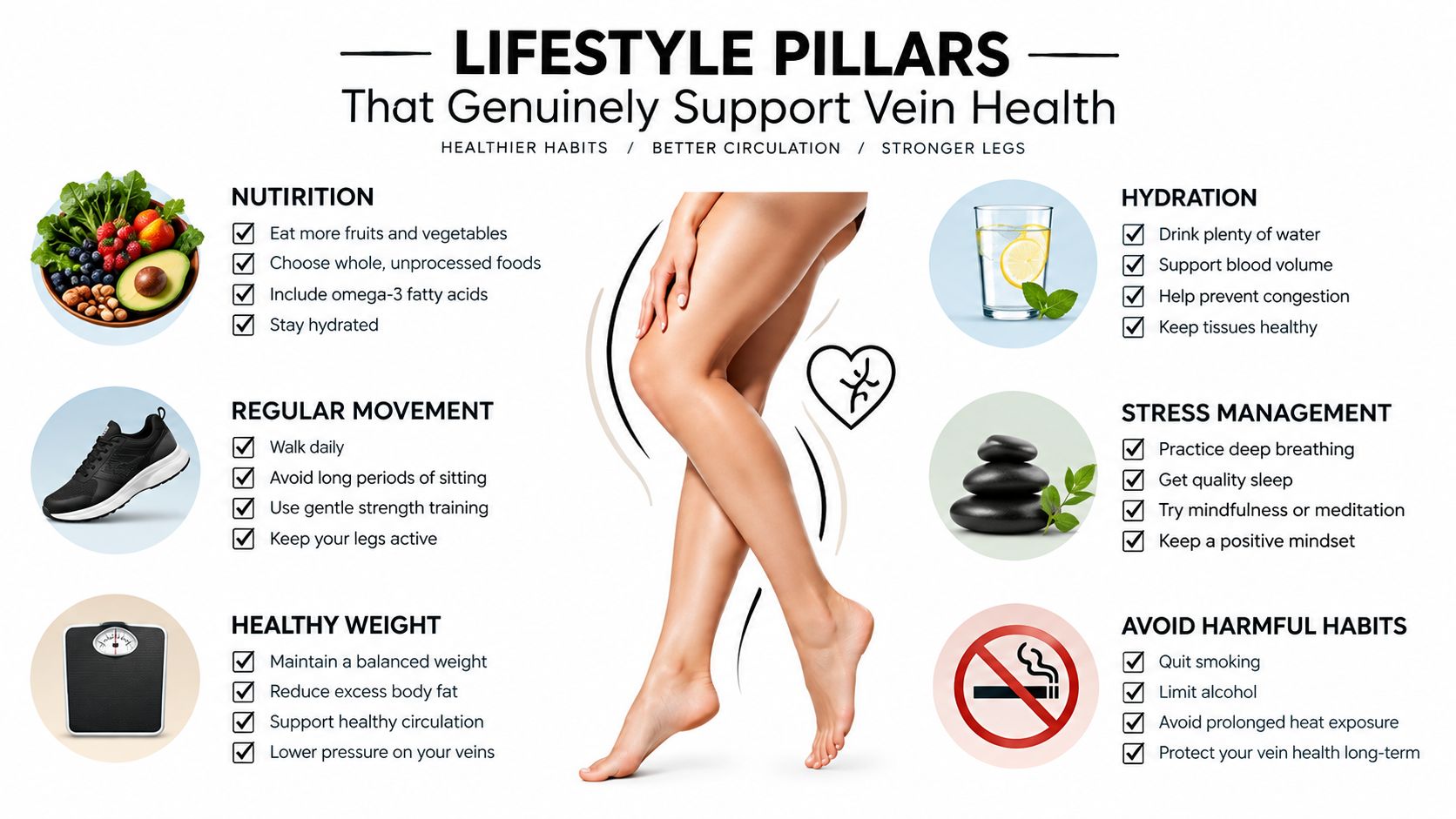
The most common mistake in this topic is looking for one fix. Veins don't usually respond that way. They respond better to repeated daily pressure in the right direction: more movement, less pooling, better recovery, fewer long still periods.
What helps symptoms most reliably
- Walk often. Walking turns the calf pump back on. It's one of the simplest ways to support return flow.
- Break up standing and sitting. Standing frozen and sitting frozen can both leave the lower legs doing too much passive holding.
- Raise your legs. This doesn't cure a vein problem, but it often helps reduce that end-of-day loaded feeling.
- Stay hydrated. Hydration won't repair valves, but many people feel worse when daily fluid intake is poor.
- Manage body strain. Extra pressure on the lower body can make leg symptoms harder to manage over time.
A useful companion read on food and plant-based support is this guide to best herbs for circulation.
What these habits can and can't do
They can improve comfort, reduce that heavy-leg pattern, and help you tolerate long days better.
They can't erase established varicose veins overnight, rebuild stretched vein walls, or guarantee that visible changes will reverse.
That may sound less exciting than a miracle promise, but it's much more useful. Real support is often boring. It's the walk after lunch, the calf raises while coffee brews, the feet-up routine after work, the decision not to stay in one position for half the day.
For a visual refresher on foundational habits, this short video is helpful:
The people who get the most from supplements usually already have the basics in place.
That's the right order. Foundation first. Add-ons second.
Ingredients Used in Circulation Vein Support Supplements
Supplement labels often mix together ingredients that belong to different conversations. Some are studied more for venous symptoms. Some are discussed more for general vascular wellness. Some are included because “circulation” sounds marketable.
Which ingredients have the clearest venous relevance
A recent ingredient-focused summary notes that evidence is uneven, and it highlights diosmin, MPFF, and hesperidin as more reliable single-agent options while also noting that venoactive substances still need higher-quality study in some areas. It also notes newer coverage on grape seed extract for venous reflux time and symptoms. You can read that discussion in this review of venoactive ingredient evidence.
Here's the practical interpretation:
- Diosmin and hesperidin are among the better-known options for venous symptom support.
- Horse chestnut seed extract is commonly discussed for heaviness and swelling support.
- Grape seed extract is usually framed around capillary and vein-wall support.
- Pycnogenol often appears in formulas aimed at swelling and oxidative stress support.
- Beetroot or nitrate-focused ingredients fit better under general blood flow support than direct vein repair.
- Omega-3 fats are usually part of broader cardiovascular support, not a direct fix for venous valve problems.
Circulation Vein Support Ingredients at a Glance
| Ingredient | Primary Use | Typical Studied Dose | Evidence Strength |
|---|---|---|---|
| Diosmin | Venous symptom support | Varies by product and study | Stronger relative support |
| Hesperidin | Often paired with diosmin for venous comfort | Varies by product and study | Stronger relative support |
| Horse chestnut seed extract | Leg heaviness and swelling support | Varies by product and study | Moderate support |
| Grape seed extract | Capillary integrity and symptom support | Varies by product and study | Emerging to moderate support |
| Pycnogenol | Swelling and vascular stress support | Varies by product and study | Moderate support |
| Beetroot or nitrates | General blood flow support | Varies by product and study | More indirect for veins |
| Omega-3 fatty acids | General vascular wellness | Varies by product and study | Indirect for venous symptoms |
Because precise dosing varies across products and studies, it's better to read labels carefully than assume all “vein support” blends are equivalent.
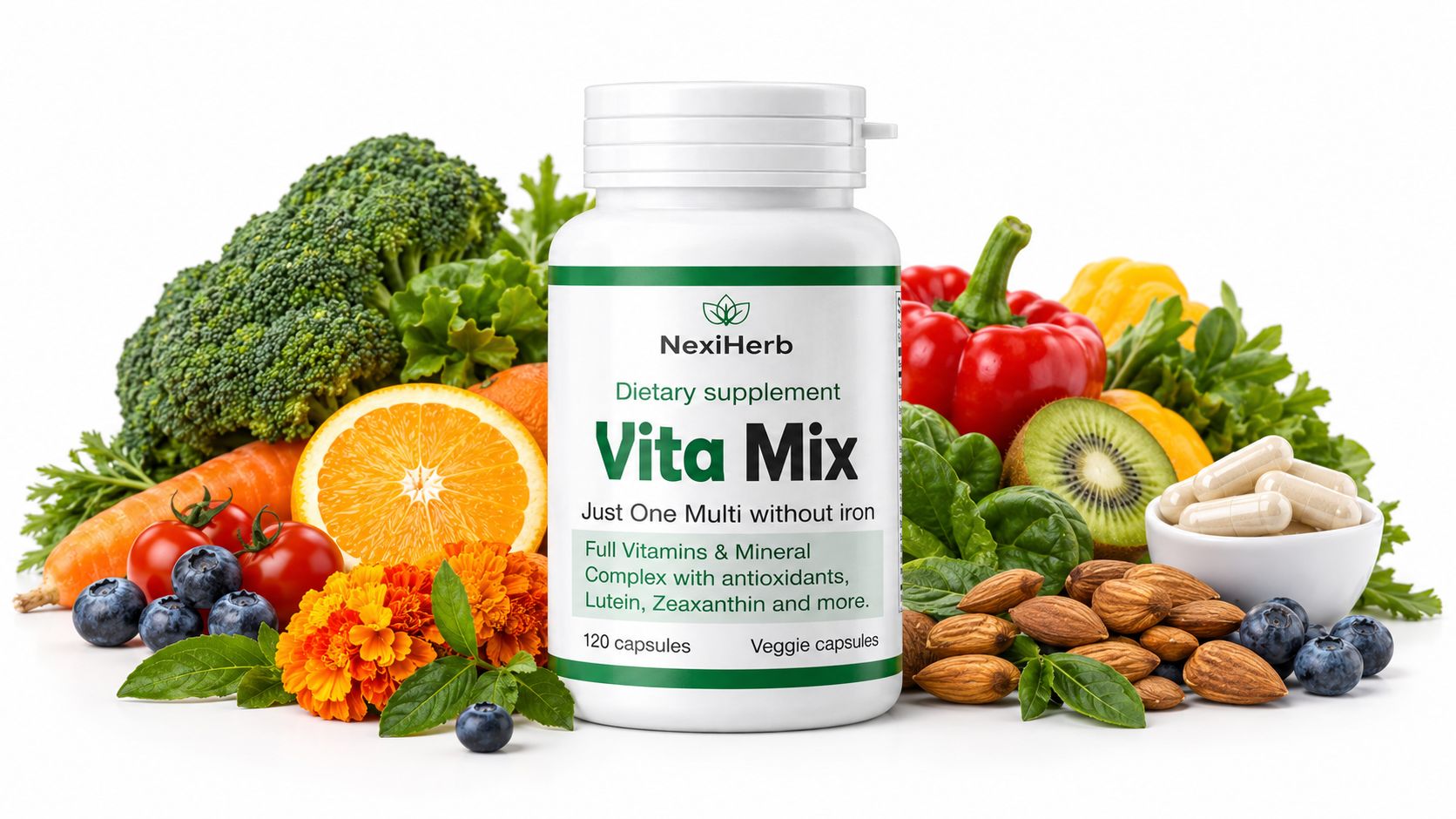
A general nutritional base can still matter. Vita Mix NexiHerb Multivitamin & Mineral Dietary Supplement is a once-daily multivitamin and mineral supplement designed to complement overall nutritional intake as part of a balanced lifestyle. It isn't a vein treatment, but it can fit a routine where the goal is broad nutritional coverage rather than a single-condition promise.
A Practical Daily and Weekly Routine for Vein Comfort
A good vein-support routine shouldn't feel like a second job. It should fit into the shape of a normal week.
A simple daily rhythm
Morning
- Hydrate early. Start the day with water before the longest sitting block begins.
- Wake up the calves. A short walk, ankle circles, or calf raises can help before commuting or desk time.
Midday
- Interrupt stillness. If you sit for work, stand up regularly and do ankle pumps under the desk or during a short break.
- Use movement as maintenance. A brief walk is often more useful than waiting for one perfect workout later.
Afternoon
- Pair supplements with routine. If you use a circulation-focused product, take it consistently as directed rather than randomly when symptoms flare.
- Check footwear and posture. Tight positions and long static standing can make the second half of the day feel worse.
The evening reset
After work
- Support your legs by raising them. This is one of the most practical ways to change how your legs feel before bed.
- Choose easy recovery. Gentle walking, light stretching, or a warm bath may feel good for many people, but if heat tends to make your legs feel more swollen, keep that in mind.
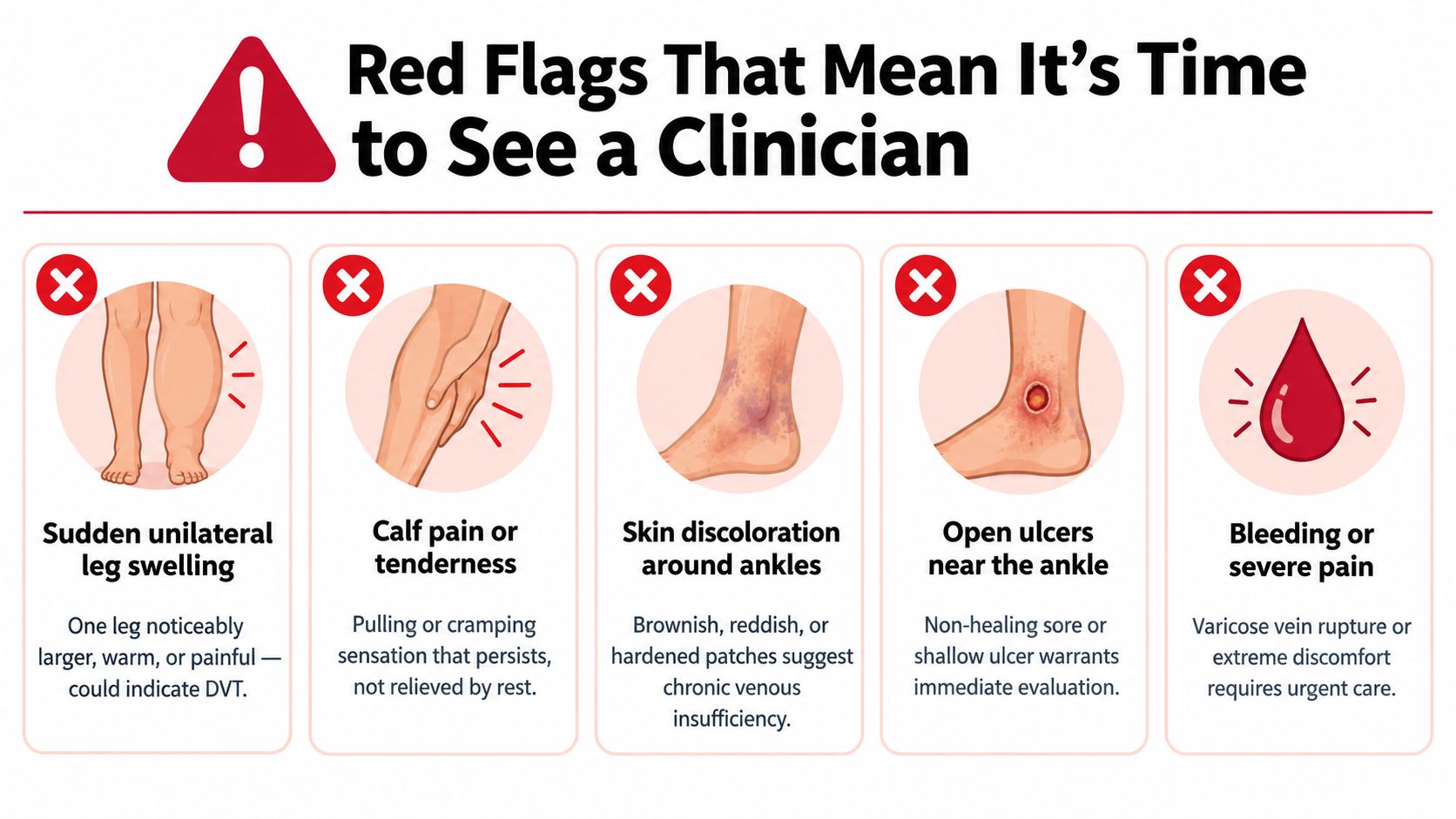
This visual is worth keeping in mind because routine has limits, and some symptoms need faster medical attention:
What to add weekly
- Longer walking sessions on several days
- Strength work that includes calves and core
- A weekly review of when symptoms were worst
- Travel planning if you know you'll be sitting or standing for long stretches
Small routines beat occasional effort. Vein comfort usually improves from repetition, not from one aggressive health push on the weekend.
If your routine makes symptoms more predictable and easier to settle, that's progress even if visible veins don't disappear.
Red Flags That Mean It's Time to See a Clinician
Self-care has a place. It also has a boundary. Some symptoms move out of the “watch and support” category and into the “get evaluated” category.
Symptoms that deserve prompt attention
- Sudden swelling in one leg
- Calf pain or tenderness that doesn't settle
- Warmth or redness over a vein
- Brownish or reddish skin change near the ankles
- Open sores or ulcers near the ankle
- Bleeding from a visible vein
- Shortness of breath along with leg symptoms
These signs can point to problems that supplements and home routines are not equipped to sort out.
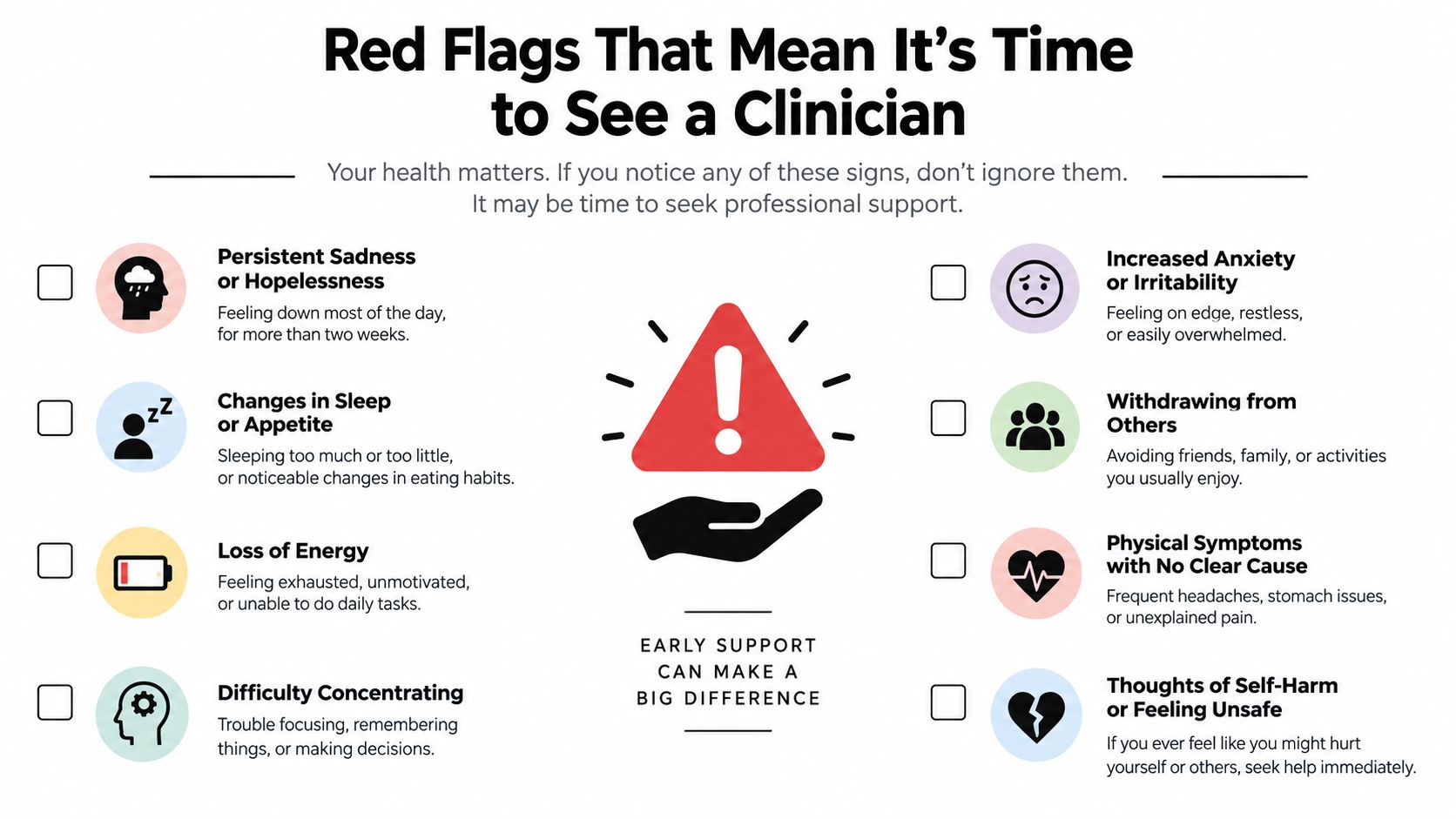
Why not to wait too long
Long-running medical literature shows venous disease exists on a wide spectrum. A major English-language review covering studies from 1942 onward reported varicose-vein prevalence ranging from under 1% to 73% in women and 2% to 56% in men, and later CEAP-based studies found about 60% to 70% of adults in the least severe classes, around 25% in C2-C3, and up to 5% in advanced C4-C6 disease. One paper also estimated varicose-vein incidence at about 2% per year, as summarized in this PubMed review of venous disease epidemiology.
The takeaway isn't to memorize the classification. It's to understand that vein problems can progress from mild symptoms to skin changes and ulcers in some people.
A simple triage mindset
Same-day care makes sense when swelling is sudden, one-sided, painful, or paired with redness, warmth, or breathing symptoms.
A routine appointment makes sense when symptoms are building over time, skin around the ankles is changing, visible veins are becoming more uncomfortable, or self-care no longer seems to hold things steady.
If you're comparing procedural options and want a patient-friendly overview, you can compare varicose vein treatments before a consultation.
Supportive tools still matter. They just shouldn't delay diagnosis when warning signs show up.
Putting It All Together for Long-Term Vein Comfort
The most useful way to think about circulation vein support is this: support helps function and comfort, while repair usually requires medical treatment.
That sounds simple, but it keeps you from asking the wrong job of the wrong tool. A walk helps differently than a flavonoid supplement. Leg elevation helps differently than a procedure. A multivitamin helps differently than compression. Once you stop expecting one item to do everything, your choices get much clearer.
The habits worth keeping
These are the habits that tend to age well:
- Move daily, especially with walking and calf activation
- Hydrate consistently, not just when symptoms flare
- Lift your legs in the evening if that's when heaviness peaks
- Manage sleep and body strain so your legs aren't under constant pressure
- Choose ingredients carefully, with more attention to evidence and less attention to marketing language
A realistic expectation that helps
You're not failing if your legs feel better before they look different. Symptom relief is still meaningful. Better evenings, less swelling, fewer “lead leg” days, and more tolerance for work, travel, or exercise all count.
For some people, that layered routine is enough for a long time. For others, it's the bridge that gets them to compression guidance, imaging, or a treatment plan. Either way, the honest model holds up: build the habits, use supplements as support rather than rescue, and let a clinician handle structural vein problems when needed.
NexiHerb LLC offers science-inspired supplements and practical wellness education for adults who want routines they can stick with. If you're building a smarter approach to daily circulation support, nutrient coverage, and overall wellness, visit NexiHerb LLC for products and articles designed to complement healthy habits, not replace them.