

The most popular advice about mushroom supplements is also the least useful: buy fruiting bodies and avoid mycelium. That shortcut confuses fungal identity with measured composition. A tissue name tells you which part of a fungus was harvested, not how much of a particular compound ended up in the capsule.
A better approach to fruiting body vs mycelium starts with the actual material. Species, growth substrate, extraction solvent, and laboratory assay can change the comparison, sometimes enough to reverse which sample has the higher measured concentration.
Table of Contents
- Fruiting Body vs Mycelium at a Glance
- How One Form Becomes the Other
- Composition Differences in Glucans and Ergosterol
- How Extraction Method Shifts the Results
- Cultivation Methods and Beta-Glucan Levels in Grain Products
- Reading Supplement Labels for Mushroom Material
- Choose by Your Goal and Check the Label First
Fruiting Body vs Mycelium at a Glance
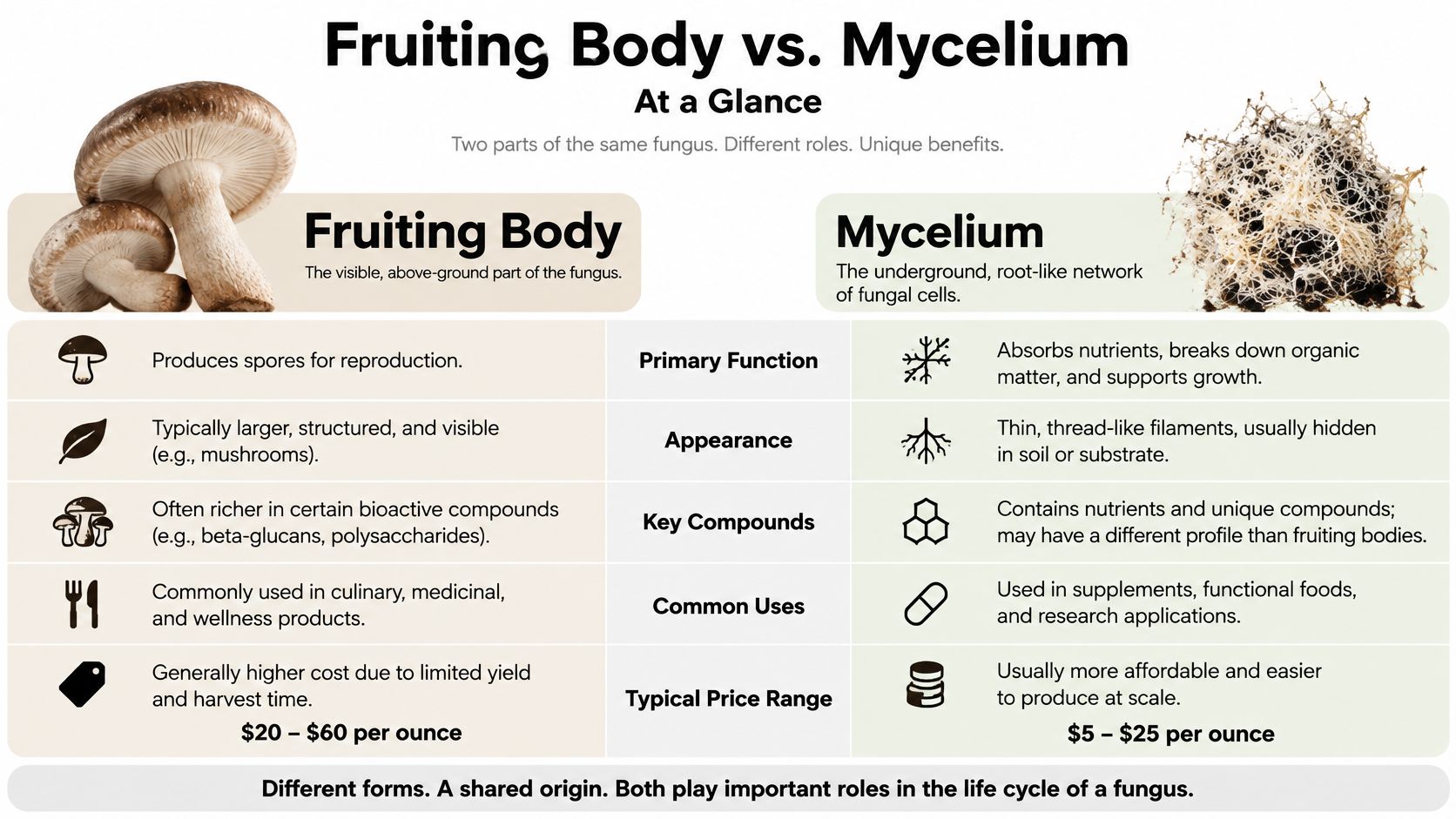
Mycelium is the vegetative network of microscopic hyphae that absorbs nutrients and spreads through a substrate. The fruiting body, also called a sporocarp, is the visible reproductive structure that produces and disperses spores.
Neither is a higher grade of the same ingredient. They're different structures with different biological jobs, and a label that says only mushroom doesn't establish which structure the manufacturer used.
Fruiting body and mycelium compared on six criteria
| Criterion | Fruiting body | Mycelium |
|---|---|---|
| Biological role | Reproductive structure that produces and disperses spores | Vegetative network that absorbs nutrients and spreads through a substrate |
| Visible form | The familiar mushroom, often with a cap and stem | Threadlike network of hyphae within the substrate |
| Developmental stage | Reproductive stage initiated under favorable conditions | Growth and propagation stage throughout colonization |
| Typical harvest or use | Harvested as a mushroom, then powdered or extracted | Grown on grain or another substrate, which may remain in the harvested material |
| Typical label term | Fruiting body, mushroom extract | Mycelium, myceliated grain |
| What to verify | Species, extraction method, beta-glucan assay | Species, extraction method, substrate share, beta-glucan assay |
The distinction is easier to recognize visually.
Separate identity from quality
A fruiting-body label answers a material-identification question. It doesn't establish the extract's concentration, demonstrate consistent manufacturing, or prove a wellness benefit.
Likewise, mycelium doesn't tell you whether the ingredient is separated fungal biomass or a powder containing its growth medium. Those aren't equivalent materials, even if both originate from the same species.
The useful comparison: Which structure, from which species, extracted by which method, and measured with which assay?
That question prevents a common shopping mistake: comparing a defined extract with an incompletely described fermented powder as though the tissue name were the only difference.
How One Form Becomes the Other
A mushroom's fruiting body develops from a fungal network that has already colonized its growing material. The Food and Agriculture Organization's mushroom cultivation guide describes the progression from germinating spores to hyphae, mycelium, and, under favorable conditions, a fruiting body.
Follow the growth sequence
- Spore germination. Under suitable conditions, a viable spore produces hyphae, microscopic filaments that begin vegetative growth.
- Hyphal growth. The filaments branch into a network that takes up nutrients from its surroundings.
- Substrate colonization. Mycelium spreads through the growing material. Established mycelium can also serve as spawn to inoculate another substrate.
- Fruiting initiation. Favorable growing conditions prompt the established fungus to begin reproductive development.
- Fruiting-body formation. The reproductive structure develops into the mushroom a grower can harvest.
- Spore release. Once mature, the fruiting body produces and disperses spores, restarting the cycle.
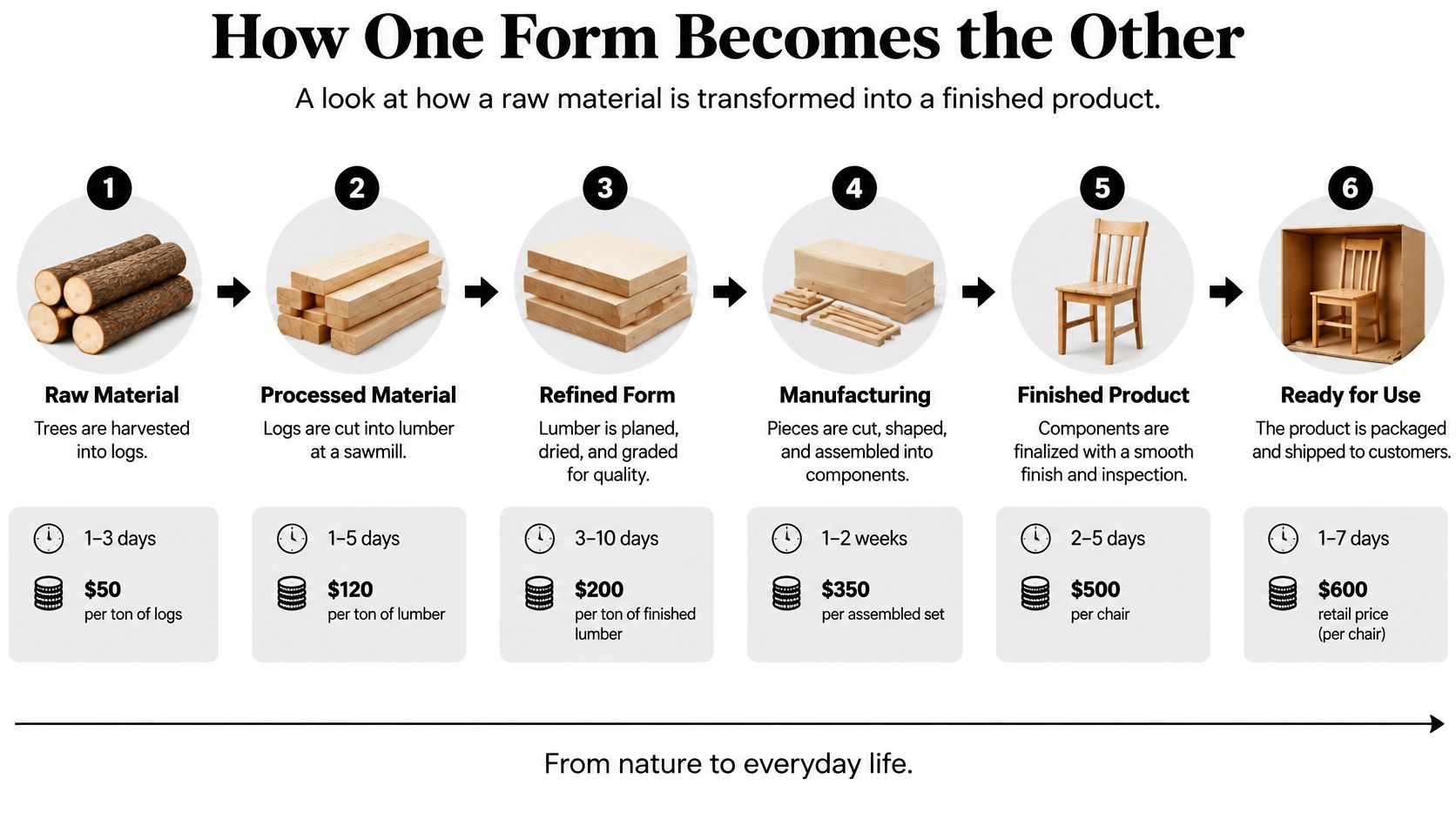
The graphic below shows the sequence from spore germination through fruiting and spore release.
Harvesting selects the material
The practical distinction comes down to which part of the cultivation is harvested and processed. Harvesting a fruiting body selects the reproductive structure. Harvesting a colonized grain preparation can collect both fungal mycelium and remaining substrate.
Cultivation and separation methods determine whether a mycelium ingredient includes its growth medium. The finished ingredient therefore needs to be described on its own terms, rather than inferred from the fungus's lifecycle.
The cultivation video offers another view of the growing process.
For supplement buyers, developmental stage identifies what was grown and harvested; it does not specify the ingredient's chemical composition. A label that names fruiting body, mycelium, or a defined combination makes the material clearer than a mushroom illustration alone.
Composition Differences in Glucans and Ergosterol
The clearest argument for fruiting bodies comes from some glucan measurements. The clearest argument against declaring them universally superior comes from comparing other compounds under different extraction conditions.
The composition review published in Molecules includes the following measured values: total glucans of 35.84% ± 4.16% in a fruiting-body sample versus 12.28% ± 1.24% in mycelial biomass, alongside the solvent-specific ergosterol findings and relative developmental glucan values summarized below.
Measured composition of fruiting body and mycelium
| Compound or measure | Fruiting body | Mycelium | Reading note |
|---|---|---|---|
| Total glucans, % of sample | 35.84% ± 4.16% | 12.28% ± 1.24% | About 2.9-fold higher in fruiting body in this analysis |
| Ergosterol, methanol extract, mg/100 g dry weight | 147.85 | 89.56 | Higher in fruiting body with methanol |
| Ergosterol, ethanol extract, mg/100 g dry weight | 57.21 | 178.67 | About threefold higher in mycelium with ethanol |
| Total dietary fiber | Lower in the cited comparison | Higher in the cited comparison | A fiber finding, not a universal tissue ranking |
| Relative developmental glucan values | Cap 161.7; stipe 199.6 | Mycelium baseline 100 | Mycelium:cap:stipe ratio of 100:161.7:199.6 |
Read the glucan finding narrowly
The fruiting-body sample had substantially more total glucans in that analysis. That's a meaningful compositional difference, but total glucans aren't interchangeable with a beta-glucan-specific result.
The developmental comparison also separates cap from stipe. Treating an entire fruiting body as chemically uniform can therefore hide differences within the mushroom itself.
Fiber adds another qualification. The cited fiber comparison found higher total dietary fiber in mycelia, while both materials contained beta-glucans alongside smaller contributions from chitin and other polysaccharides. A higher result for one carbohydrate measure doesn't establish a higher result for every carbohydrate fraction.
Notice the solvent reversal
The ergosterol comparison changes direction when the extraction solvent changes. Methanol favored recovery from the fruiting-body sample; ethanol favored recovery from mycelium.
That reversal doesn't mean the fungus changed identity or that either material became intrinsically better. It means the reported result belongs to a particular sample, extraction procedure, and reporting basis.
A headline percentage describes the tested preparation. It isn't a specification for every product made from that fungal structure.
For product comparison, keep the species, growing conditions, extraction method, and analytical method aligned. Without those controls, a precise-looking number can support an imprecise conclusion.
How Extraction Method Shifts the Results
More of a measured compound doesn't necessarily mean greater activity in a laboratory test. In a species-specific comparison summarized by a peer-reviewed review of mushroom fruiting bodies and mycelial cultures, fruiting bodies contained 0.061 mM phenolic compounds versus 0.026 mM in mycelium, yet the mycelial culture extract produced greater antioxidant activity in the tested assay, 46.4% versus 36.0%.
Those results measure different things. A phenolic concentration describes an analyzed chemical category; an antioxidant assay measures a response under its own experimental conditions. The latter isn't a direct reading of the former, and neither is a demonstrated health outcome in a person.
Solvents select different fractions
The same review describes fruiting bodies as commonly richer in phenolic and indole compounds, while in-vitro mycelia may contain more lovastatin and different polysaccharide structures. Similar total protein concentration and biological value don't make those metabolite profiles identical.
Aqueous extraction generally emphasizes polysaccharides. Ethanol and other solvents suited to less water-soluble compounds can recover different low-molecular-weight constituents, including terpenoids.
For context on how manufacturers discuss combined extraction approaches, Colorado Cultures' lion's mane breakdown is a useful companion resource. Treat a dual-extraction description as information about processing, not as a substitute for measured composition.
A preparation's format also matters when choosing between an extract and a whole powder. Our guide to functional mushroom powder provides additional product-format context.
Compare methods before comparing results
Use a matched-method rule:
- Match the solvent. Don't rank an aqueous preparation against an alcohol extract as though they recover identical fractions.
- Match the substrate or culture context. Separated cultured biomass and a grain-containing preparation need different interpretation.
- Match the validated marker assay. Confirm that both results measure the same constituent using a suitable method and reporting basis.
Keep species matched as well. A species-specific result can't establish a universal relationship across mushrooms.
Key insight: An antioxidant result from a particular assay ranks the tested extracts under those conditions, not fruiting bodies and mycelium for human health.
Cultivation Methods and Beta-Glucan Levels in Grain Products
Substrate deserves attention before shoppers compare beta-glucan percentages. A Menscore Wellness summary of an analysis reported in the International Journal of Molecular Sciences describes approximately 1% beta-glucan in rice-based grain-fermented mycelium products and approximately 5% in oat-based products in a 2025 analysis.
This is a secondary account, not the primary paper. It supports a limited product-base comparison, not a standard composition for all rice-grown or oat-grown ingredients.
Beta-glucan levels by product base, as reported in that summary
| Product type | Reported beta-glucan | Substrate or base | Reading note |
|---|---|---|---|
| Rice-based grain-fermented mycelium | About 1% | Rice grain | Check residual substrate disclosure; the percentage doesn't establish its share |
| Oat-based grain-fermented mycelium | About 5% | Oat grain | Higher in the reported comparison, but still a grain-based preparation |
| Fruiting-body extract | Not reported in this comparison | Harvested mushroom grown on wood or another substrate | Request a beta-glucan-specific assay with a stated basis |
Identify what entered the test
A laboratory analyzing a myceliated-grain powder measures the submitted preparation. Unless the manufacturer separates the fungal biomass, that preparation can include residual grain.
Consequently, beta-glucan percentage isn't the percentage of fungal biomass. You can't calculate the amount of mycelium just by reading the glucan result, nor can you infer the residual grain share from that result alone.
The grain base is a possible contributor to differences between products, but the reported comparison doesn't isolate substrate as the sole cause. Species, cultivation, processing, and assay conditions remain relevant.
Make the comparison usable
Check these details before treating a grain-fermented product as equivalent to a separated biomass ingredient:
- Substrate identification. Look for the named grain or culture medium, whether it remains in the ingredient, and any disclosed residual share.
- Reporting basis. Establish whether the beta-glucan percentage refers to dry material, the finished ingredient, or another defined sample basis.
- Harvest description. Distinguish a harvested mushroom from a colonized substrate and from mycelium recovered from culture.
Cultivators grow fruiting bodies for a mushroom harvest; they can also grow mycelium for propagation or ingredient manufacturing. Those production goals don't yield interchangeable samples.
If you're shopping because of immune-related marketing, keep ingredient verification separate from benefit claims. Our mushroom immune-support guide offers additional context, but a composition result alone doesn't establish a clinical effect.
Reading Supplement Labels for Mushroom Material
The same mushroom can produce different analytical results depending on its substrate, extraction solvent, and assay. Start with the ingredient panel, then check the technical documentation. A 2025 scientific review of mushroom beta-glucans identifies species, cultivation conditions, fruiting-body maturity, and fiber content as factors relevant to beta-glucan levels. Tissue category alone cannot explain a result.
Front-label imagery and broad extract claims do not identify the tested material or method. The table focuses on disclosures that help interpret a product's composition.
Label elements that show what a mushroom product contains
| Label element | Good disclosure | Red flag |
|---|---|---|
| Species name | Full Latin binomial, such as Ganoderma lucidum | Only mushroom blend or a common name |
| Material form | Fruiting body, mycelium, or both, stated clearly | Mushroom with no form given |
| Substrate | Grain or wood substrate disclosed, with its share if available | Silence on grain or substrate content |
| Extraction method | Water, ethanol, or dual extraction named | No extraction method stated |
| Beta-glucan assay | Beta-glucan-specific value with method and basis | Generic polysaccharides number only |
| Third-party testing | Batch-level identity, beta-glucan, starch, and contaminant results | Testing claim without batch or laboratory details |
Read identity before concentration
The Latin species name identifies the fungus the manufacturer intends to supply. The material declaration identifies the structure used. If both structures are present, a defined combination gives more information than an unspecified blend.
Substrate disclosure shows what accompanied the fungus into the finished ingredient. A mycelium product with little residual growth medium and a myceliated-grain powder may differ in composition, so their results should not be treated as equivalent without comparable specifications.
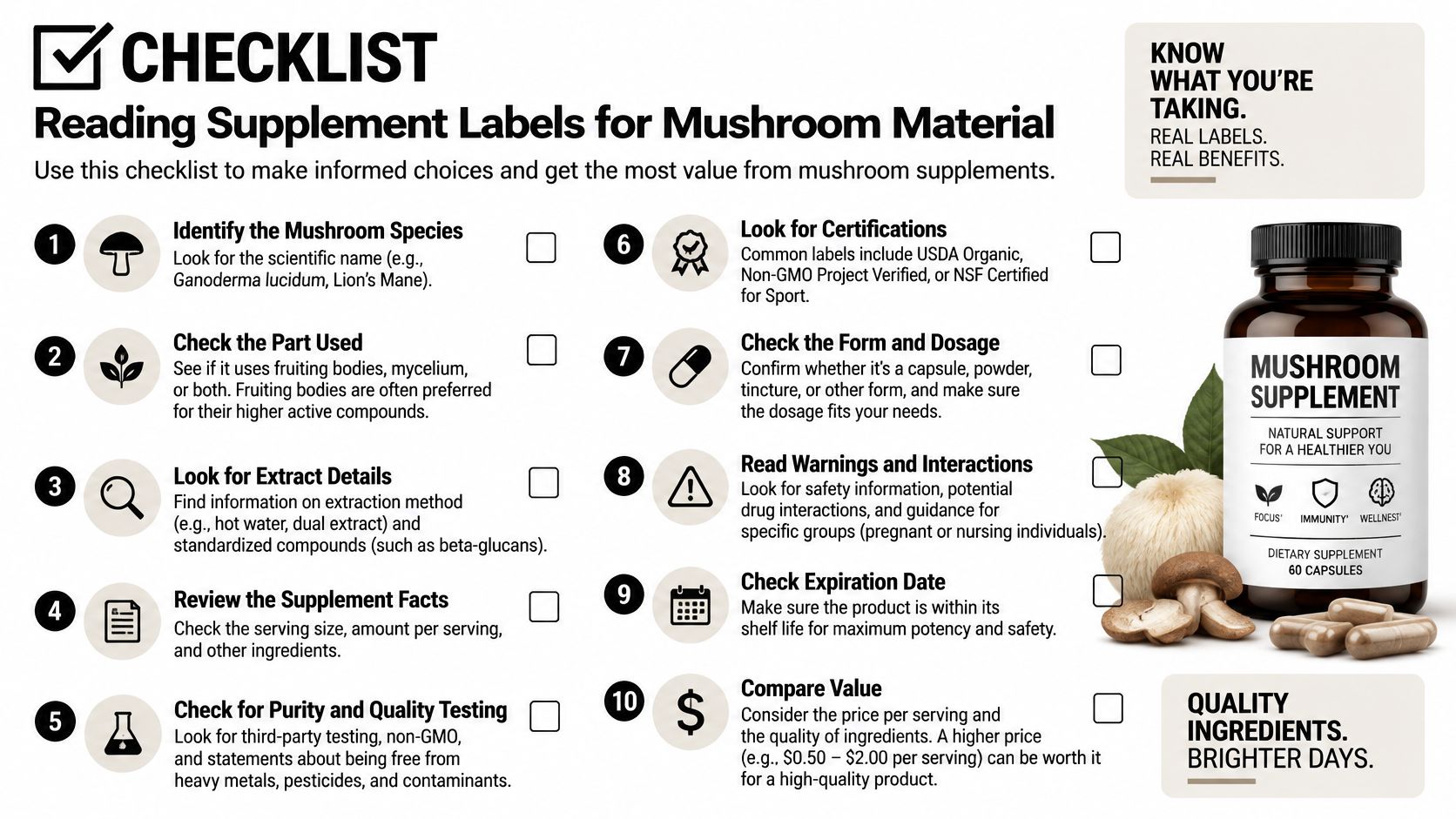
What the certificate covers
An extraction description explains how the ingredient was processed. An assay identifies what the laboratory measured. Neither substitutes for the other.
For testing documentation, check the laboratory name, sample identity, batch identifier, method, and reporting basis. A certificate describes its submitted sample; it does not establish that every capsule has identical composition. For broader advice, consult this guide to reading supplement labels. For mushroom ingredients, distinguish beta-glucans from a generic polysaccharide claim.
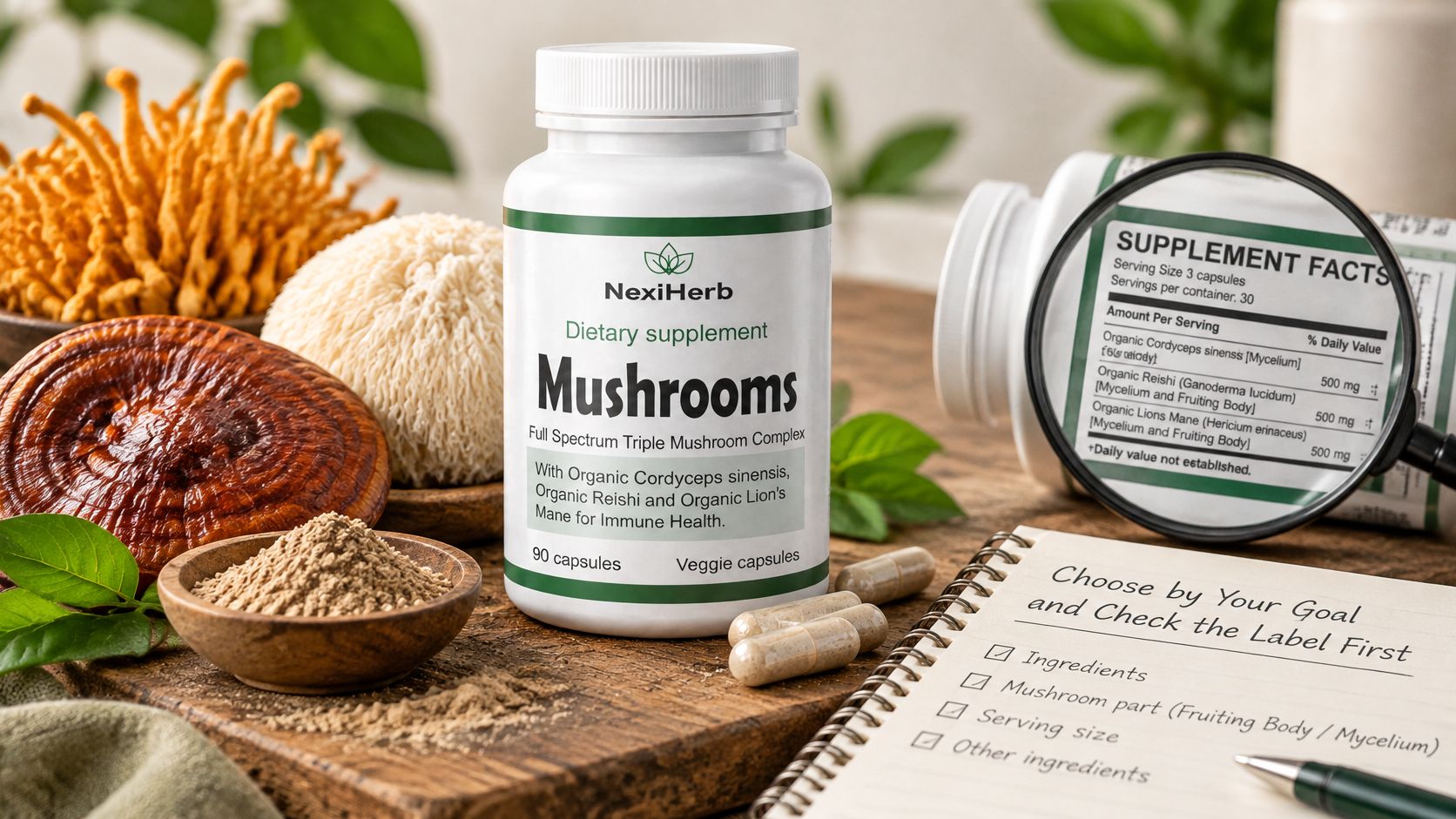
The NexiHerb Triple Mushroom Complex, Cordyceps, Reishi, and Lion's Mane, 90 caps contains those named ingredients in capsule form for adults. That product description identifies its ingredients and format, but does not establish tissue proportions, extraction solvents, or beta-glucan standardization.
Practical rule: Mark an undisclosed specification as unknown. Do not infer it from the brand, mushroom image, or product name.
Choose by Your Goal and Check the Label First
Choose a documented preparation, not a universal winner. For someone specifically seeking a fruiting-body ingredient, the sensible purchase is one that identifies the species, processing method, and relevant assay. For a budget shopper comparing grain-fermented powders, the priority is understanding the finished material before comparing bottle prices.
A cultivator or researcher has a different decision. Mycelium is the useful growth material for propagation, and substrate selection, culture conditions, and the intended harvest matter more than consumer rankings of tissue types.
Choose according to the question you need answered
- You want a defined fruiting-body preparation. Check that the label explicitly names the structure rather than relying on a mushroom photograph. Then assess whether the analytical documentation describes the product you're buying.
- You're comparing myceliated-grain powders. Look for fungal biomass and residual substrate disclosure. A cheaper bottle isn't necessarily better value if its composition can't be compared meaningfully.
- You're interested in a particular fungal compound. Look for evidence on the same species, material, and preparation. Don't substitute general enthusiasm about a mushroom for measurement of the constituent you want.
The terminology itself can confuse buyers. A 2025 industry-reported U.S. consumer survey covered by Nutraceuticals World found that respondents generally associated mushrooms with fruiting bodies, while many couldn't define fruiting body and didn't recognize myceliated grain as a mushroom.
That finding concerns consumer understanding, not chemical superiority. Familiarity with a visible mushroom doesn't establish its extract's quality, and unfamiliarity with mycelium doesn't make that fungal structure inferior.
The capsule product shown below illustrates a finished supplement format, not evidence of its tissue identity or assay results.
Make uncertainty part of the buying decision
A product can be clearly described yet unsuitable for your goal. It can also be attractively marketed but too poorly specified to evaluate. Those are different reasons to pass on a purchase.
Avoid translating composition findings into promises about energy, cognition, immunity, or disease. Our mushroom supplement isn't intended to diagnose, treat, cure, or prevent any disease, and adults should use it only as directed on the product label.
Before buying, make a side-by-side record of species, material form, extraction method, beta-glucan assay, and substrate for each candidate. Leave missing information visibly marked as undisclosed, then compare products whose specifications are sufficiently aligned. That's a stronger basis for choosing than deciding that every fruiting body is superior or every mycelium ingredient is equivalent.
NexiHerb LLC offers science-inspired dietary supplements, including mushroom-derived capsules for adults, alongside practical nutrition guides. Visit NexiHerb LLC to review ingredient descriptions and label directions, and use the comparison checklist before deciding which supplement fits your routine.