

You're midway through a set, your muscles feel full, and your skin is warm and flushed. That satisfying “pump” can make you wonder whether a nitric oxide support supplement would help you train harder, improve circulation, or make workouts feel better. The useful answer starts with understanding what nitric oxide does, then checking whether a product's ingredients and doses match your goal.
Nitric oxide is part of normal body function, not a shortcut to guaranteed performance or a treatment for circulation problems. Its effects depend on the ingredient, dose, person, and activity. Before buying, it's also important to consider medications and product quality, especially if a formula is marketed for sexual performance.
Table of Contents
- Why a Pump Feels So Good and Where NO Fits
- How Your Body Makes Nitric Oxide
- The Four Main Ingredient Types and What They Do
- What the Research Shows for Performance
- How to Read a Label Like a Buyer
- Dosing, Timing, and Simple Stacking Rules
- Safety, Interactions, and the Risk Most Guides Skip
- Your Pre-Purchase Checklist Before You Add to Cart
Why a Pump Feels So Good and Where NO Fits
You're working through a tough set. Blood flow to the active muscles increases, your muscles feel fuller, and your face may flush. That pump is a familiar training sensation, but it isn't a direct measure of how much strength or endurance you'll gain. One molecule involved in regulating blood vessels and cell signaling is nitric oxide, often shortened to NO.
NO is a short-lived gas made naturally in the body. It isn't a hormone, and it isn't a stimulant that switches on energy the way caffeine can. Instead, it acts as a local signal. In the cardiovascular system, one important effect is helping vascular smooth muscle relax, which allows blood vessels to widen. The discovery that NO functions as a cardiovascular signaling molecule was recognized with the 1998 Nobel Prize in Physiology or Medicine, awarded to Robert Furchgott, Louis Ignarro, and Ferid Murad (historical background on nitric oxide).
What the signal does
Think of blood vessels as adjustable pathways. When they widen, blood can move through them more easily, helping deliver oxygen and nutrients to tissues doing work. NO also helps cells communicate, which is why its role reaches beyond the brief sensation of a pump.
That doesn't mean every flush or muscle fullness comes from NO alone, or that a stronger pump guarantees a better workout. The sensation is one piece of the picture, not a performance score. A supplement might influence a pathway involved in blood flow, but the response can vary from person to person.
Training enjoyment matters, too. If you're interested in the broader experience of exercise and want options that reduce joint loading, this guide to runner's high without joint pain offers another perspective on making movement feel rewarding.
How Your Body Makes Nitric Oxide
A nitric oxide support supplement supplies ingredients that feed the body's NO-producing pathways. To judge a label, first identify which route those ingredients support: the enzyme-based route uses amino acids, while the dietary route starts with nitrate.
The enzymatic faucet
The body uses the amino acid L-arginine as a substrate, or working material, for enzymes including endothelial nitric oxide synthase, known as eNOS. This enzyme helps produce NO in the lining of blood vessels. L-citrulline supports the same route indirectly: the body can convert it to arginine, helping maintain the available supply.
This route works like a regulated faucet. Providing more raw material doesn't guarantee a predictable increase in NO because the body controls production. Health, diet, and other individual factors can affect the response. That explains why an ingredient's role in a pathway doesn't establish how much benefit a supplement will deliver.
For more background on this amino acid, see the overview of L-arginine.
The dietary nitrate reservoir
Nitrate from beetroot and leafy greens supplies a different route, the dietary reservoir. Some nitrate circulates through the body and becomes concentrated in saliva. Oral bacteria help convert nitrate into nitrite, which can then contribute to NO production.
The mouth is an active part of this process, so the pathway depends partly on its bacteria.
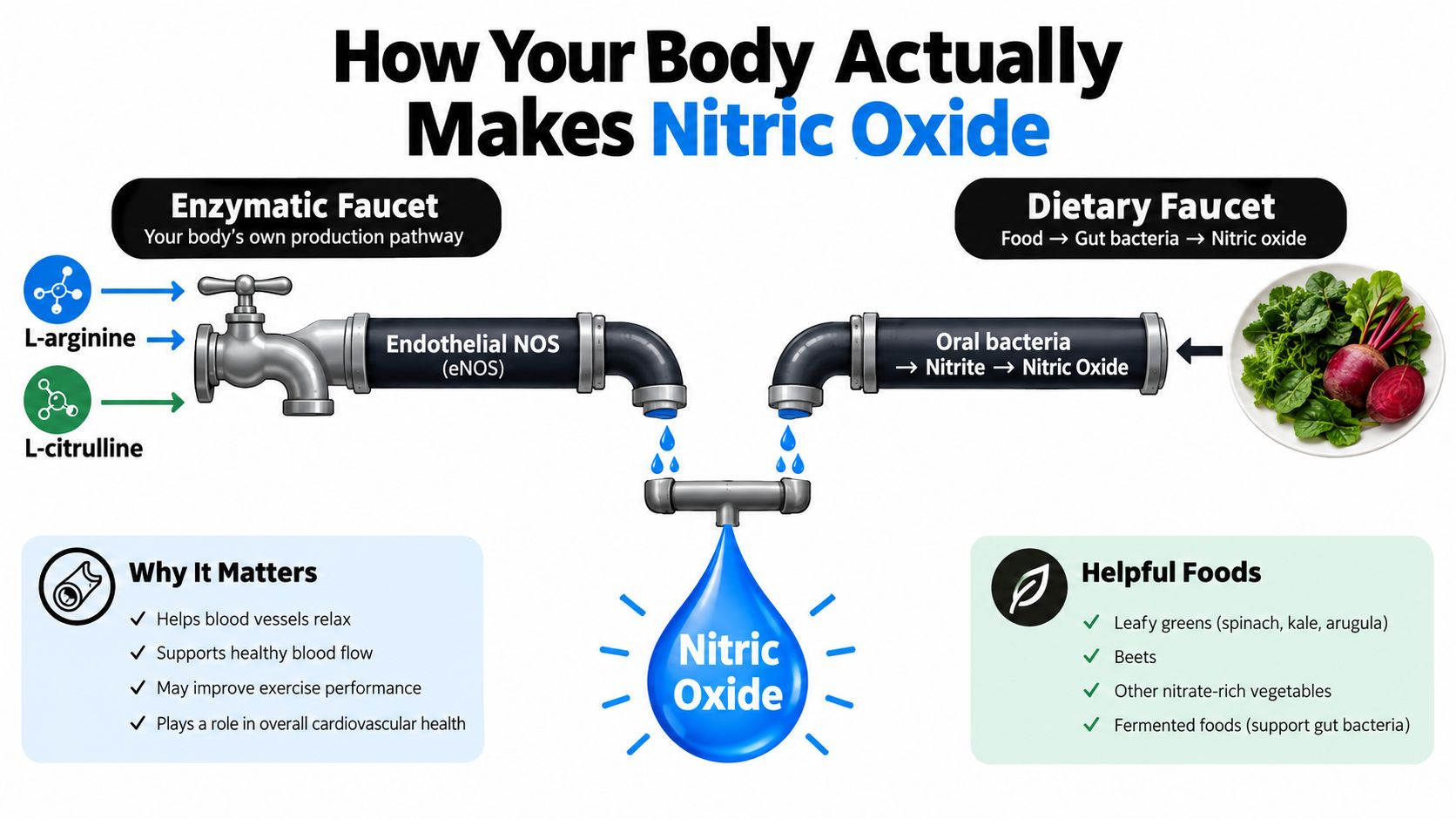
These routes are complementary, with different inputs. A beetroot powder and a citrulline dose therefore need different label checks: beetroot mass alone doesn't reveal nitrate content.
Understanding the route is a starting point for buying, not a safety clearance. Before choosing a formula, check medication compatibility and whether its ingredients are fully disclosed. A plausible NO mechanism cannot settle those questions or rule out undisclosed drugs.
The Four Main Ingredient Types and What They Do
A formula may combine ingredients that contribute through different routes, so the ingredient name alone does not show what a serving can provide. L-citrulline has a more consistent exercise-oriented evidence base than L-arginine. The kidneys can convert citrulline to arginine, increasing the amount of circulating arginine available. Beetroot nitrate follows the dietary route, while arginine silicate is a separate ingredient category. The evidence and practical dosing are not equally established for all four.
| Ingredient | Practical Dose | Evidence Strength | Best For |
|---|---|---|---|
| L-arginine | No single practical exercise dose established here | Less consistent than citrulline for exercise-focused use | People considering an amino-acid-based formula |
| L-citrulline or citrulline malate | About 3 g L-citrulline or 8 g citrulline malate, commonly studied before exercise | More consistent than arginine for exercise-oriented NO support | Training-focused users who want a clearly disclosed dose |
| Arginine silicate | No practical dose established here | Not enough verified dose information for a comparison | Buyers should check the exact ingredient form and dose |
| Dietary nitrate from beetroot | At least 400 mg nitrate, often taken before exercise | Possible performance support, but findings are mixed | People interested in the nitrate route |
The dose references for citrulline and nitrate come from a systematic review of nitric-oxide precursor supplementation. It also reported that acute citrulline doses up to 15 g were generally well tolerated in the reviewed literature. Larger amounts are not automatically better and may cause more gastrointestinal discomfort. For beetroot, standardized nitrate content is more informative than the weight of the root powder. A review of beetroot nitrate and blood pressure describes nitrate amounts commonly used in research and reports modest blood-pressure changes. Those findings do not make beetroot a treatment for high blood pressure.
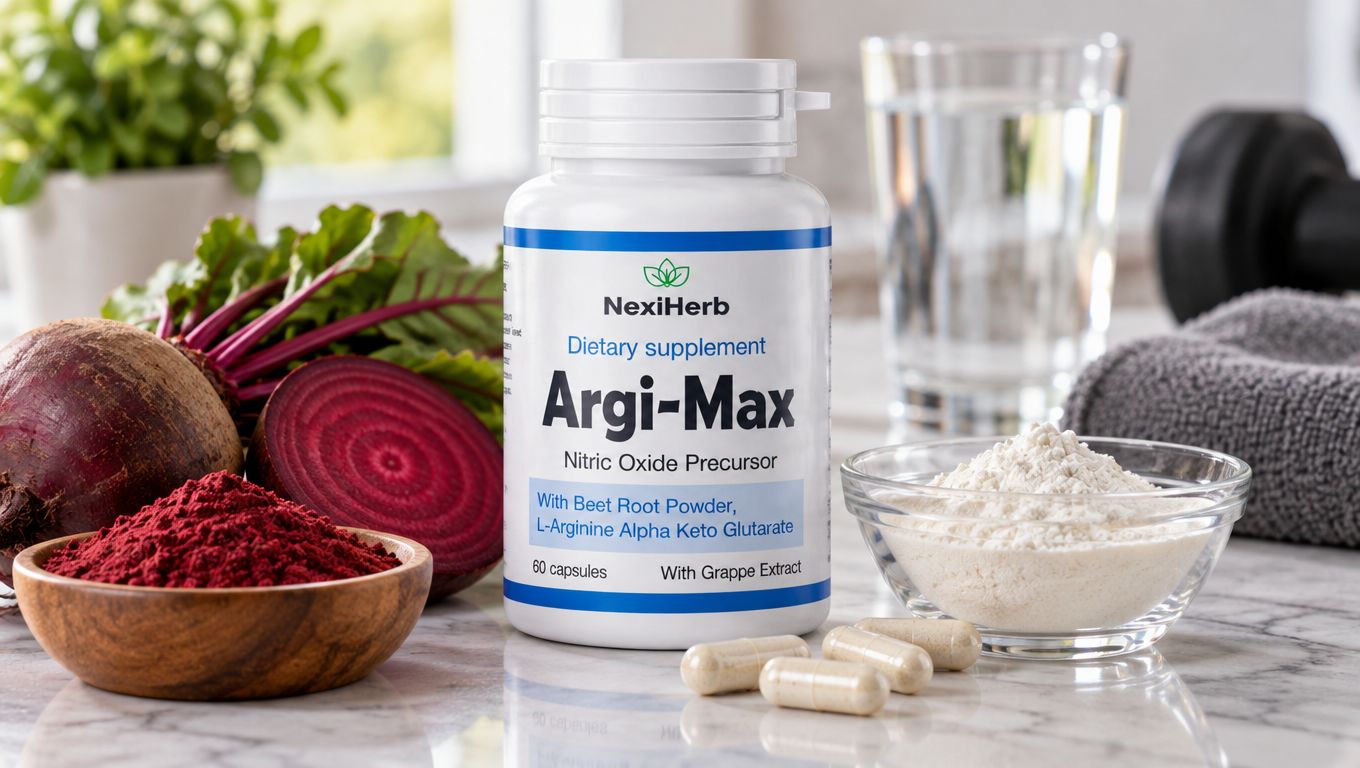
The dietary route also depends on the ingredient form and, for nitrate conversion, oral bacteria. This guide to beet juice powder offers more detail on beetroot products. A capsule can combine ingredient families, but the quantities still need to be checked. For example, Argi-Max NexiHerb L-Arginine, L-Citrulline-DL-Malate, and beet root powder lists 400 mg each of L-arginine HCL, L-arginine alpha keto glutarate, and L-citrulline-DL-malate, plus 100 mg beet root powder per two-capsule serving. These amounts are not equivalent to the research benchmarks in the table, and the product information does not specify standardized nitrate content. A label can name a pathway without showing how closely its serving matches studied amounts.
What the Research Shows for Performance
Suppose a supplement helps you keep cycling for longer in a lab test. That does not automatically mean you will finish a race faster or feel less tired. The evidence for nitrate-based support suggests possible, modest benefits for some exercise outcomes, rather than a universal boost.
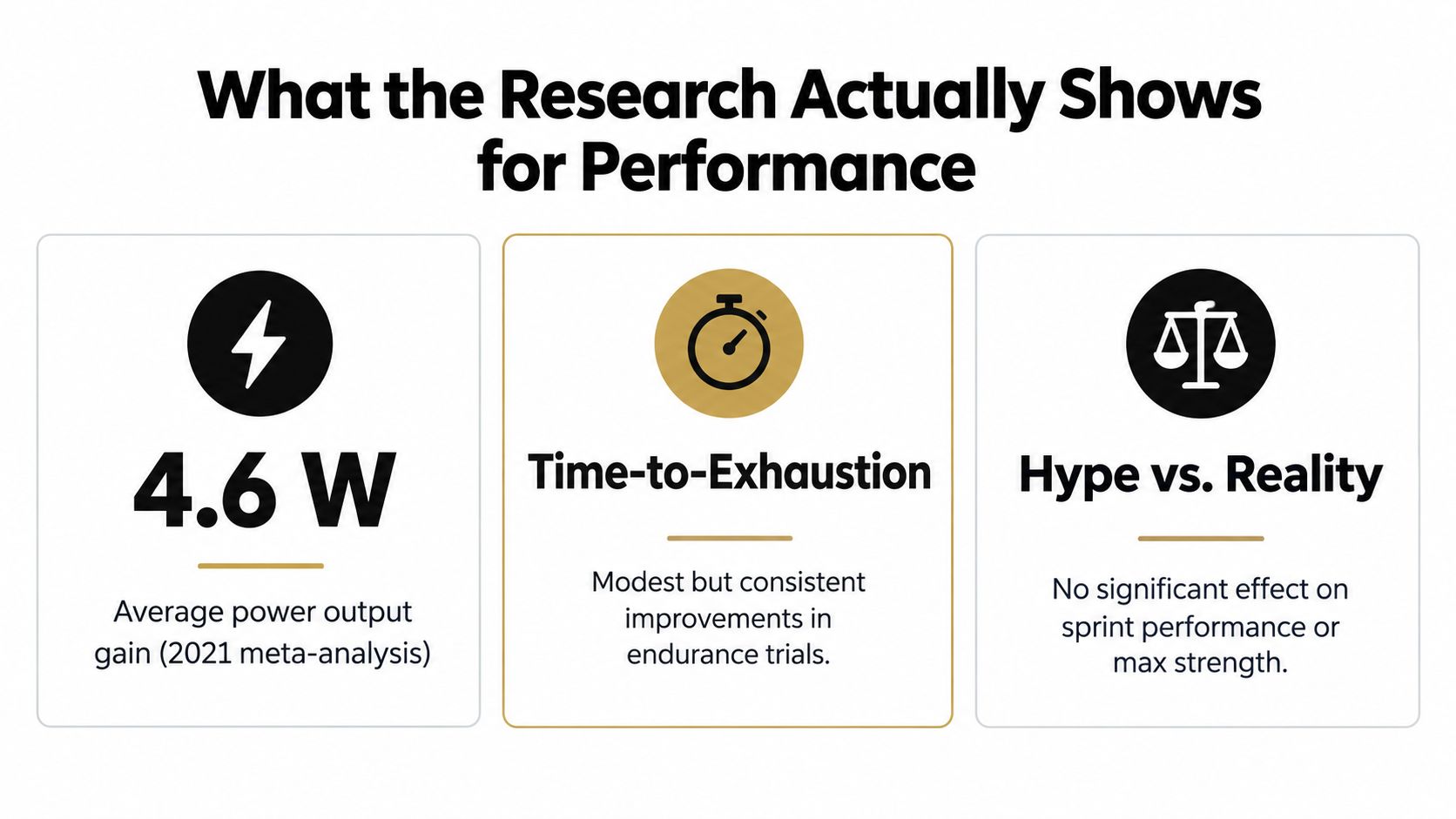
A 2021 systematic review and meta-analysis reported average changes of 4.6 watts in power output, 25.3 seconds in time to exhaustion, and 163.7 meters in distance traveled across the endurance-exercise studies it examined (2021 review and meta-analysis of dietary nitrate). The review did not find significant improvements in perceived exertion, time-trial performance, lactate generation, or maximal oxygen uptake. The findings vary by outcome.
A broader umbrella review published in 2025 synthesized 20 systematic reviews, covering 180 primary studies and 2,672 unique participants. For time-to-exhaustion tasks, it reported a standardized mean difference of 0.33, with a 95% confidence interval of 0.19–0.47. Results were stronger when supplementation reached at least 6 mmol of nitrate per day, approximately 372 mg, for more than three days. These are group averages, not a promise that one person will notice a measurable change.
Match the outcome to the claim
Time to exhaustion measures how long someone can continue a task before stopping. It does not, by itself, show faster race times, a higher VO2max, or exercise that feels easier. Research findings have not shown consistent gains across these outcomes. Claims of guaranteed stamina, better circulation, or sexual performance need the same careful scrutiny.
Study results also apply to the ingredients and amounts tested. A proprietary blend may conceal individual ingredient amounts, while a beetroot product may not state its nitrate content. That makes it difficult to tell whether a product resembles the research protocol. Evidence for one ingredient or outcome does not establish that every nitric oxide support supplement will work the same way.
Performance also depends on training, nutrition, and fluid intake. This athlete hydration guide explains how hydration fits into an athlete's routine.
The measured takeaway: nitrate may help with certain sustained-exercise outcomes, but research does not establish it as a guaranteed performance drug or treatment. A supplement can complement a sound routine, not replace it.
How to Read a Label Like a Buyer
Read a supplement label as if you're checking a recipe: identify each active ingredient, then confirm how much the serving contains. "Citrulline blend" isn't enough to judge a formula if the label hides individual amounts. The distinction between citrulline and citrulline malate matters too, because the total weight of the combined ingredient isn't necessarily the amount of citrulline itself.
For beetroot, look for standardized nitrate content. A label that names beetroot powder but doesn't disclose nitrate content can't be compared directly with research protocols based on nitrate dose. If the formula combines amino acids and plant ingredients, check each entry separately instead of assuming the blend provides a studied amount of every component.
A practical label check
- Active amounts: Confirm the amount of each ingredient per serving, not just the total weight of a blend.
- Ingredient form: Check whether the label says L-citrulline or citrulline malate, and whether it clarifies the citrulline amount.
- Nitrate detail: Look for a stated nitrate amount or standardization when beetroot is part of the formula.
- Quality information: Look for clear manufacturer and quality-control information, including relevant third-party testing where available.
- Claims: Treat drug-like promises about sexual performance or rapid results as a reason to pause, not as proof of effectiveness.
A capsule can be convenient, while a powder may make larger doses easier to take. Either way, format doesn't tell you whether the active dose is appropriate. For more label-reading guidance, use this supplement-label checklist.
Products aimed at male wellness may contain ingredients that don't function as a conventional NO formula. For example, All Night NexiHerb - Advanced Herbal Formula for Male Vitality & Daily Wellness is described as a botanical blend that includes 20 mg of L-arginine per capsule alongside other herbal ingredients. That listing alone doesn't establish that it matches an exercise-focused citrulline or nitrate protocol.
Dosing, Timing, and Simple Stacking Rules
Timing depends on the ingredient. The research reviewed for exercise use commonly places citrulline about one hour before training, while dietary nitrate is generally taken about two hours beforehand. Those windows are practical starting points, not guarantees that you'll feel a difference.
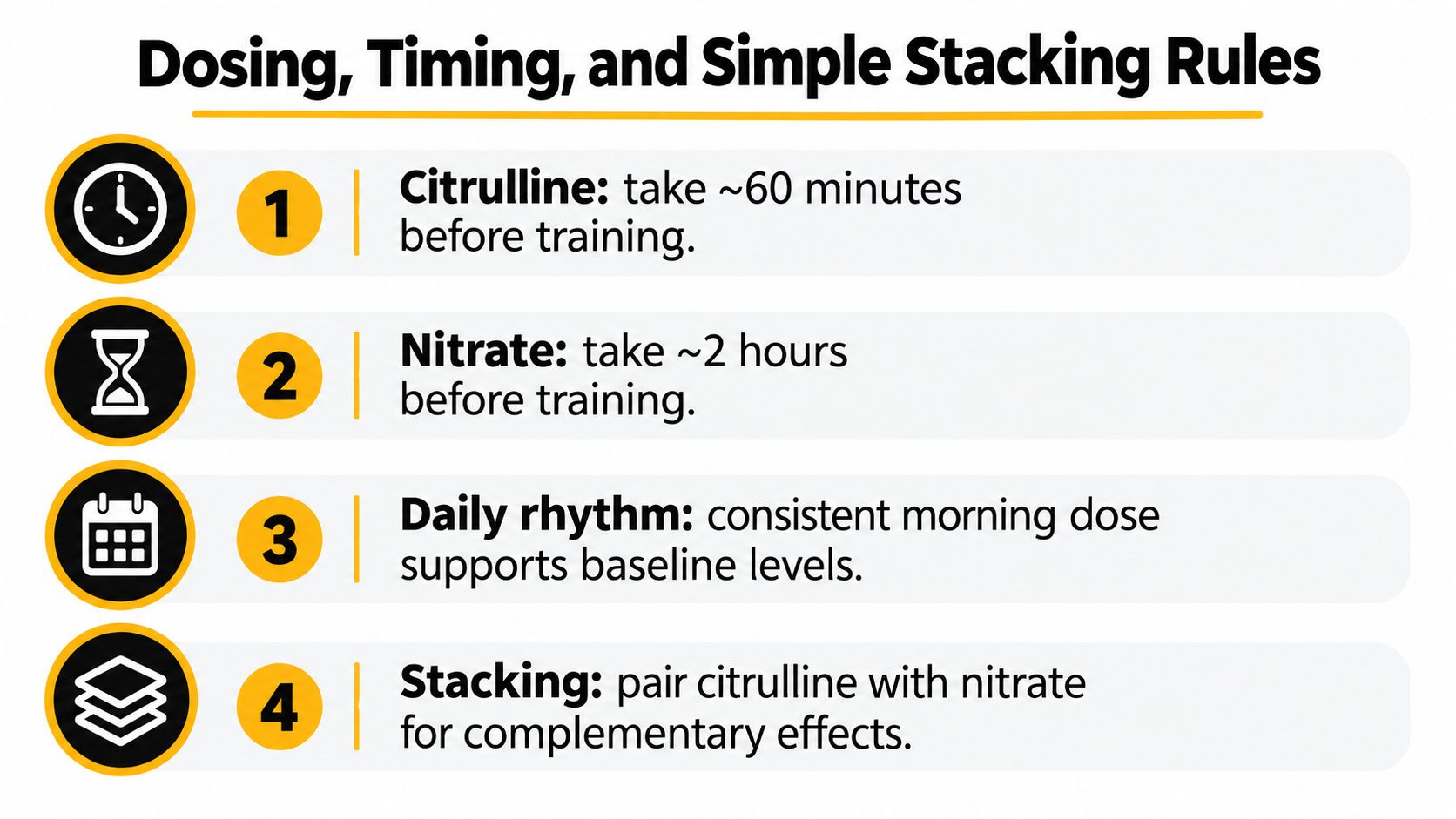
For nitrate, consistent use may matter more than treating it as a last-minute pre-workout. Research showing stronger results used repeated supplementation over multiple days, rather than a single isolated dose. On a rest day, follow the product label and your planned routine; don't add extra servings just because you aren't training.
Caffeine and creatine can be part of a training routine, but they work through different mechanisms. Caffeine may make effort feel more manageable for some people, while creatine supports a separate strength-related pathway. Pairing them with an NO support supplement doesn't establish special synergy, and stacking more products can make it harder to identify what helps or causes side effects.
A sample training day
If a clinician or pharmacist has confirmed that a supplement is appropriate for you, use the label's serving directions and choose one ingredient route to evaluate at a time. For a citrulline product, take the labeled serving before training within the usual pre-exercise window. For a nitrate product, plan the serving earlier; don't assume beetroot powder provides a research-relevant nitrate amount unless the label states it.
Keep your food, hydration, and training routine steady while you assess how you respond. Changing several supplements at once makes it difficult to tell what's responsible for a change in performance or how you feel.
Safety, Interactions, and the Risk Most Guides Skip
A product marketed as “natural” can still affect blood vessels and interact with medication. Anyone taking blood-pressure medicine, nitrate medication, or erectile-dysfunction drugs should speak with a pharmacist or clinician before using a nitric oxide support supplement. Vasodilating effects can add together, and hidden sildenafil or tadalafil in sexual-enhancement products can cause severe hypotension when combined with nitrates or other vasodilators (pharmacy guidance on supplement safety).
That warning matters particularly for men's-wellness products promising drug-like sexual effects. The same pharmacy guidance notes concerns about performance products containing undisclosed prescription drugs, controlled substances, or other ingredients. Don't assume a product is equivalent to a straightforward amino-acid or beetroot formula just because it's sold as a supplement.
Your mouth can affect the nitrate route
Dietary nitrate depends partly on oral bacteria to convert nitrate to nitrite. Routine use of strong antibacterial mouthwash may theoretically reduce that conversion, so the oral microbiome is a relevant consideration when evaluating nitrate products. Don't stop a prescribed oral-care routine on your own; ask a dental professional or clinician if you're unsure what's appropriate.
Nitrate supplements generally have a favorable safety profile in the reviewed literature, but gastrointestinal discomfort can occur. Beetroot-derived nitrate may also add to blood-pressure-lowering effects, so medication history and low blood pressure deserve attention, not an afterthought.
Stop and get advice: If you develop dizziness, faintness, or severe gastrointestinal symptoms, stop taking the supplement and contact a health professional. Share the product label and your medication list with a pharmacist or clinician before trying another formula.
Your Pre-Purchase Checklist Before You Add to Cart
Before adding a product to your cart, make a quick decision based on goal, ingredient, label, and safety. Do you want exercise support, or are you looking for something to address a health concern? Supplements don't treat disease, and circulation symptoms deserve discussion with a clinician.
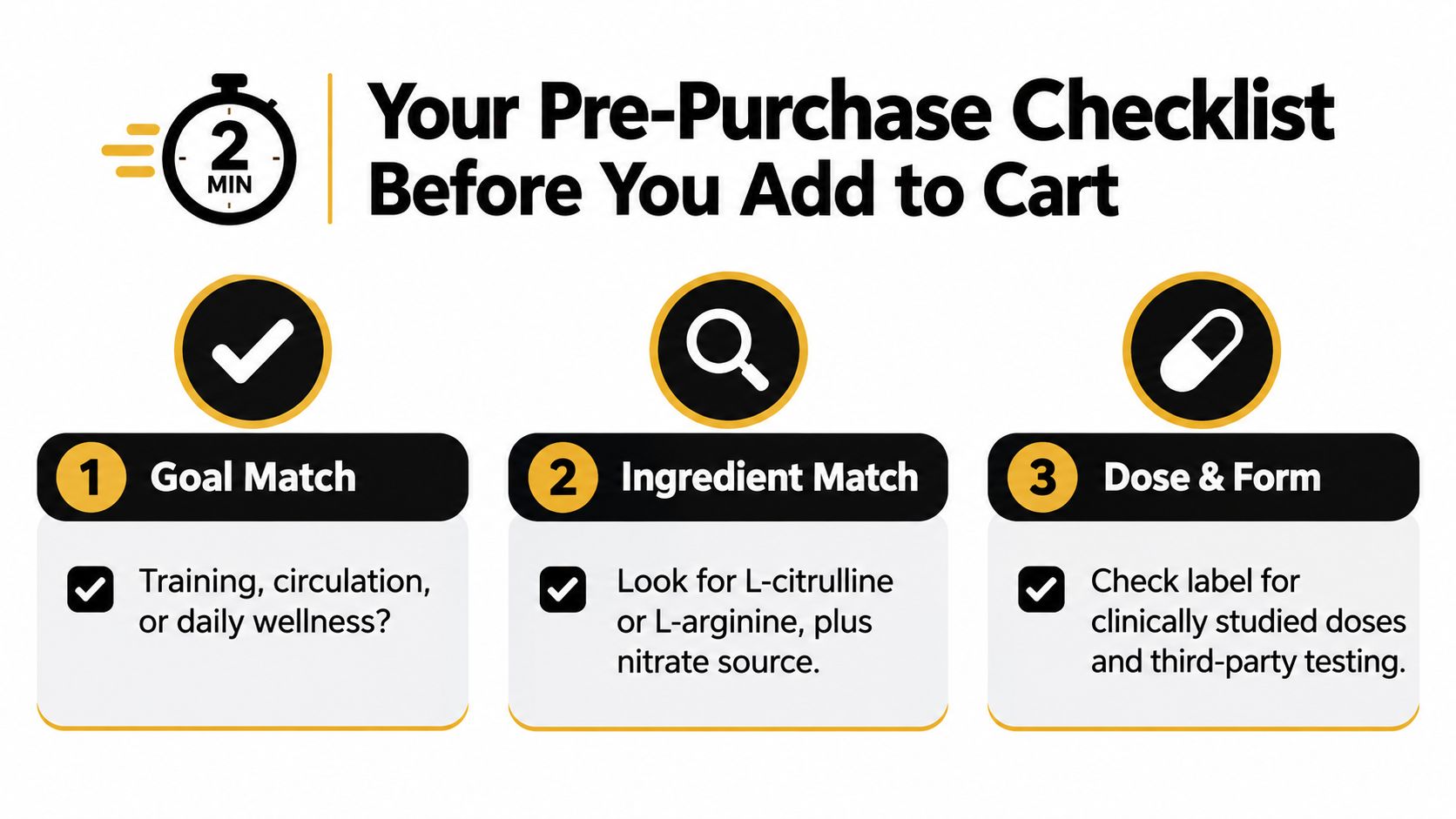
- Match the ingredient to your goal: Decide whether an amino-acid route, dietary nitrate, or both fit what you're trying to support.
- Check dose transparency: Confirm each active amount and, for beetroot, whether nitrate content is stated.
- Review quality and claims: Look for clear labeling and meaningful quality information; be wary of hidden blends and drug-like promises.
- Run the safety check: Consider blood pressure, medications, and prior reactions. If anything is uncertain, ask a pharmacist before buying.
A supplement may complement consistent training, sleep, and a varied diet, but it won't replace them. Your decision can be yes, no, or “not yet, I'll ask my pharmacist first.”
NexiHerb LLC offers dietary supplements that include amino-acid and plant-based formulas, alongside nutrition guides for everyday wellness and active routines. If you're comparing ingredient labels and want to explore those options, visit NexiHerb LLC.