

The advice to take amino acids immediately after your workout sounds more certain than the evidence warrants. A supplement taken at the right minute isn't automatically more useful than a complete protein meal eaten before training. The better question is whether you're trying to build muscle, reduce soreness, or improve your next performance, because those aren't interchangeable outcomes.
When deciding whether to take amino acids before or after workout sessions, start with your meals and your goal. The strongest practical recommendation isn't a universal timing rule. It's to identify what your current eating routine is missing before adding another supplement.
Table of Contents
- Before or After Your Workout at a Glance
- What the Muscle Research Actually Shows
- When Taking Amino Acids Before Training Helps
- Recovery Gains From Taking Amino Acids After Training
- BCAAs Versus Complete Protein for Timing Decisions
- Matching Amino Acid Timing to Your Goal and Routine
- Pick Your Timing and Confirm Your Protein Base
Before or After Your Workout at a Glance
For muscle development, neither timing window is a consistent winner. Before-training intake makes the most practical sense when you haven't eaten for several hours. After-training intake may be more relevant when you're specifically interested in soreness, although feeling less sore doesn't establish that you've built more muscle or recovered your performance.
Before vs after workout timing comparison
| Factor | Before workout | After workout |
|---|---|---|
| Best-supported use | Supplying amino acids during a session when there's been a long gap since eating | Supporting post-session protein recovery, with separate BCAA evidence concerning soreness |
| Dose used in research | An essential-amino-acid drink combined with carbohydrate | An essential-amino-acid drink combined with sucrose, or complete protein in separate comparisons |
| Muscle protein evidence | Greater net muscle protein synthesis in a small acute comparison | A strong synthesis response in an early controlled trial, without a consistent advantage over pre-workout protein |
| Soreness evidence | Limited direct timing evidence | Some evidence favoring post-exercise BCAAs, not a universal finding |
| Best-fit situation | Early-morning training without breakfast or a long gap since the last meal | A planned recovery meal, particularly after demanding or unfamiliar training |
The distinction between amino-acid availability and workout fuel matters. The pre-workout experiments used amino acids alongside carbohydrate, so they don't establish that amino acids alone replace a pre-session meal or improve exercise performance.
Likewise, a soreness finding for BCAAs doesn't apply automatically to every product sold under the amino-acid label. Essential-amino-acid mixtures, isolated BCAAs, whey, and other amino-acid blends aren't nutritionally equivalent.
Practical rule: Treat timing as a secondary decision. Establish a dependable protein intake and training routine before optimizing the position of a supplement.
Start with your last meal
If you've already eaten a substantial protein-containing meal before training, don't assume that finishing your workout creates an immediate nutritional emergency. If you skipped breakfast and will delay lunch, pre-workout intake addresses a more obvious gap.
The popular claim that you must catch a narrow anabolic window is too rigid. A useful first action is to record what you ate and how long before training you ate it. That tells you more about your likely need for a supplement than the clock on the gym wall does.
What the Muscle Research Actually Shows
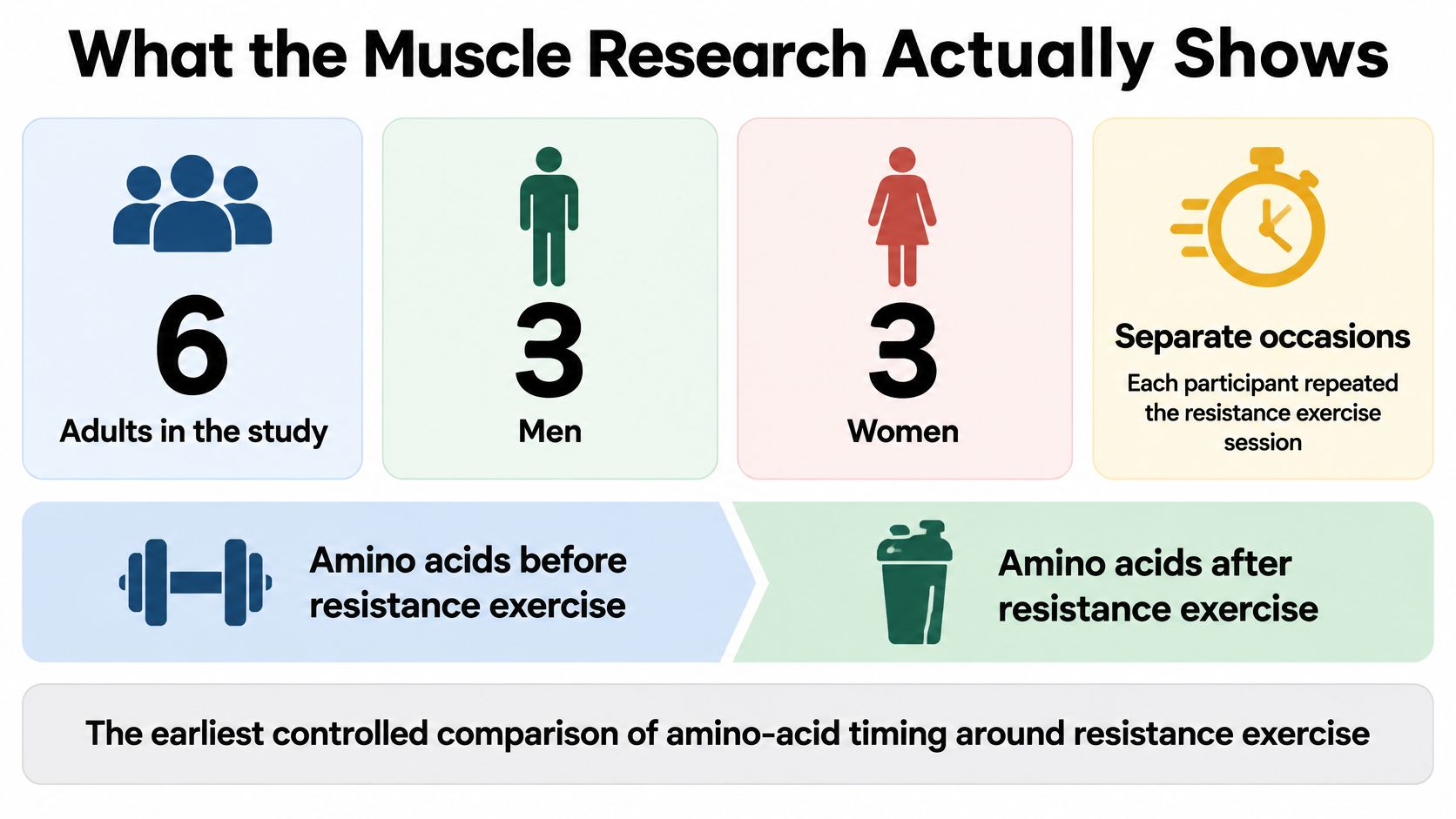
An early controlled experiment provides a useful starting point because its methods reveal both the promise and the limits of amino-acid timing. In the 2000 Journal of Applied Physiology study, six adults, three men and three women, completed resistance exercise on separate occasions and received either a flavored placebo or 6 g of essential amino acids plus 35 g of sucrose, administered one or three hours after exercise; muscle-protein synthesis increased approximately 400% compared with pre-drink values in both nutrient-timing conditions.
That's an important physiological response. It shows that exercised muscle can respond strongly when essential amino acids become available well after the session ends. It doesn't support the idea that missing an immediate post-workout drink means losing the opportunity to stimulate protein synthesis.
The study's main features are summarized visually below. The experiment described here compared different post-exercise feeding times, not a direct pre-versus-post intervention.
A synthesis response isn't a muscle-gain forecast
Muscle-protein synthesis describes the production of muscle proteins during the measurement period. It's relevant to adaptation, but an acute increase isn't the same as a demonstrated increase in muscle size over a training program.
Several distinctions prevent overinterpretation:
- The comparison was with pre-drink values. The headline increase wasn't a measured advantage over a complete meal or another long-term nutrition strategy.
- The intervention combined nutrients. Participants received essential amino acids and sucrose after exercise, so the outcome shouldn't be presented as the effect of an unrelated amino-acid capsule.
- The sample was small. Including men and women doesn't make the result representative of every age, training background, or dietary pattern.
- The outcome was short-term physiology. The experiment didn't establish a corresponding percentage increase in muscle growth, strength, or recovery speed.
The numerical response is therefore best understood as evidence of biological responsiveness, not a promise printed on a supplement label.
A large short-term change in protein synthesis can demonstrate that an intervention works biologically without establishing how much muscle someone will gain.
The practical reading is reassuring rather than urgent. Providing essential amino acids during recovery can support muscle protein anabolism, and the response doesn't disappear because you didn't drink something immediately after your final repetition.
When Taking Amino Acids Before Training Helps
The clearest case for pre-workout amino acids is a session that starts without a recent meal. Say you train before breakfast and won't eat until after your commute. In that situation, taking essential amino acids beforehand is a way to supply amino acids during exercise, not a proven shortcut to better lifting performance.
A controlled comparison summarized in this review of nutrient timing and resistance exercise used 6 g of essential amino acids plus 35 g of carbohydrate immediately before or immediately after training; the pre-exercise condition produced greater net muscle protein synthesis and improved whole-body protein balance. The proposed explanation was greater amino-acid delivery to working muscle during the session.
That supports a specific position: pre-workout intake can be useful when amino-acid availability would otherwise be limited. It doesn't establish that every fed lifter needs another drink, or that the immediate synthesis advantage produces greater muscle growth over time.
Build a routine around the actual gap
Choose the simplest option that fits your appetite and schedule:
- If breakfast is practical, eat a small protein-containing meal, such as yogurt with fruit or tofu with toast, before leaving for the gym.
- If solid food is inconvenient, consider an essential-amino-acid drink rather than assuming that a BCAA-only product provides the same nutritional coverage.
- If you already ate a balanced meal, don't add a supplement solely because its label says pre-workout.
- If the session is especially demanding, consider the whole meal, including carbohydrate, rather than treating amino acids as your entire fueling strategy.
The study tested immediate intake, but it doesn't define a universal countdown for meals. Give solid food enough time to feel comfortable during your session, and avoid turning a laboratory protocol into a rigid rule for breakfast.
For portable plant-based snack ideas, you can browse vegan jerky for pre-gym fuel through Louisville Jerky Co.’s guide. Check the actual snack's protein content and ingredients rather than assuming that every vegan snack supplies an equivalent amino-acid profile.
The strongest reason to choose the before window is therefore a dietary gap, not the promise of a superior anabolic effect for everyone. At your usual training time, how long has it been since your last protein-containing meal?
Recovery Gains From Taking Amino Acids After Training
You finish an unfamiliar leg session and feel sore afterward. If a supplement reduces that soreness, you may feel more comfortable walking downstairs. That doesn't necessarily mean you can produce more force, have built more muscle, or have avoided an injury.
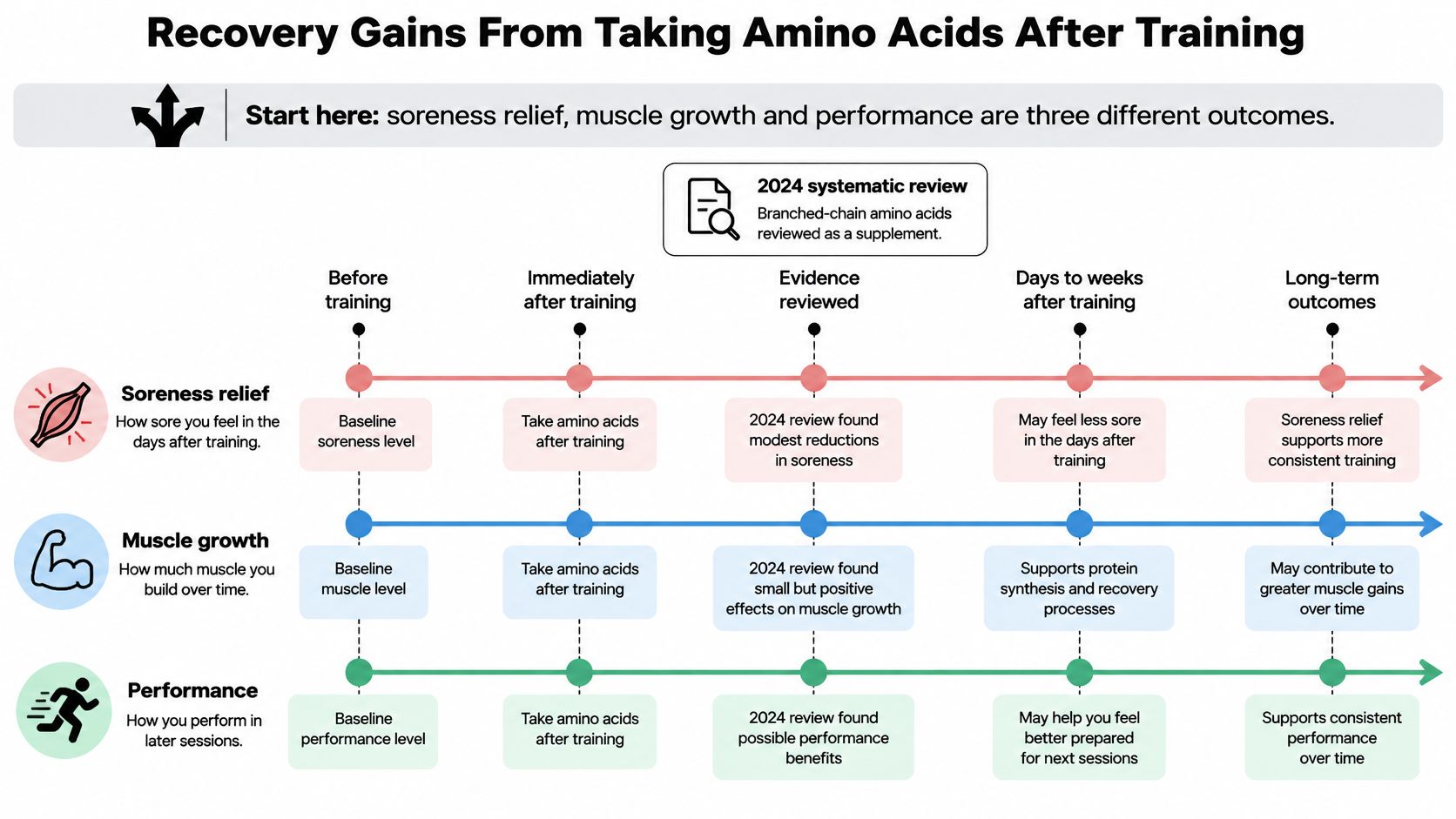
Soreness relief, muscle growth, and performance recovery are separate outcomes. The 2024 systematic review in Sports Medicine - Open found that BCAAs reduced delayed-onset muscle soreness from 24 to 96 hours after exercise, but didn't improve lactate dehydrogenase, a separate muscle-damage marker. That disagreement between outcomes is precisely why feeling better shouldn't be treated as proof of complete recovery.
The visual below separates the outcomes that supplement discussions often combine.
Follow recovery rather than guessing from discomfort
A practical recovery log can follow the session without claiming that everyone's soreness follows an identical schedule.
| Recovery stage | What to record | What it can tell you |
|---|---|---|
| End of training | Exercises, unfamiliar movements, and perceived difficulty | The training stress that preceded symptoms |
| Following morning | Soreness during a consistent movement, such as standing from a chair | How uncomfortable the muscles feel |
| Subsequent days | Whether soreness improves and normal movement returns | The course of perceived recovery |
| Next comparable session | Load, repetitions, and session difficulty | Whether performance has returned |
There's no basis here for assigning everyone the same precise soreness peak. A consistent record is more useful than an assumed deadline.
A broader systematic review of oral BCAA supplementation describes possible soreness benefits but inconsistent effects on strength, endurance, and body composition. Its evidence summary also includes a post-exercise timing advantage for soreness and inflammatory outcomes in a direct comparison, which should be interpreted as a finding from that intervention rather than a rule for all training.
Post-workout BCAAs are therefore a soreness-focused option, not a demonstrated replacement for a complete recovery diet. Whether they add meaningful value when someone already eats sufficient high-quality protein remains uncertain.
For a practical explanation of how these outcomes differ, use our guide to amino acids for muscle recovery. Track discomfort and workout performance separately, and don't use reduced soreness alone as permission to increase training stress.
BCAAs Versus Complete Protein for Timing Decisions
The assumption that BCAAs can stand in for protein causes a bigger decision error than choosing the wrong side of a workout. BCAAs supply leucine, isoleucine, and valine, not the full essential-amino-acid complement needed to build muscle protein.
A complete protein strategy and a BCAA strategy therefore answer different nutritional questions. The former supplies building materials broadly; the latter supplies a restricted subset and has a more plausible role in the soreness discussion.
Amino acid and protein sources compared for training timing
| Source | Typical amount in research | Amino acids covered | Practical use |
|---|---|---|---|
| Essential-amino-acid drink | A small measured EAA dose | All essential amino acids | Sessions without a recent meal |
| Whey protein | About 20 g in the comparison cited below | Complete protein | Flexible protein intake around training |
| BCAA-only supplement | No universal dose established by the cited summaries | Leucine, isoleucine, and valine only | A soreness-focused supplement, not a protein substitute |
| Complete protein meal | A meal-sized serving of high-quality protein | All essential amino acids | The daily dietary foundation |
In the American Journal of Physiology comparison of whey timing, approximately 20 g of whey immediately before or one hour after resistance exercise produced an anabolic response at both times, without a significant difference in amino-acid uptake or muscle-protein synthesis when assessed from ingestion.
That finding helps explain why an advantage observed with free-form amino acids shouldn't automatically become advice for someone eating complete protein. The form of the nutrient and the comparison being made matter.
Read the formula before interpreting the timing
Our guide to essential amino acids versus branched-chain amino acids can help distinguish completeness from marketing terminology. A product described as amino acids may not be an EAA formula, BCAA formula, or protein source.
For example, Argi-Max NexiHerb L-Arginine, L-Citrulline-DL-Malate, and beet root powder is an adult capsule supplement containing amino acids and plant-based ingredients. Its listed formula isn't a complete EAA mixture or a complete protein meal, so the EAA and whey experiments don't establish equivalent muscle-building effects for it.
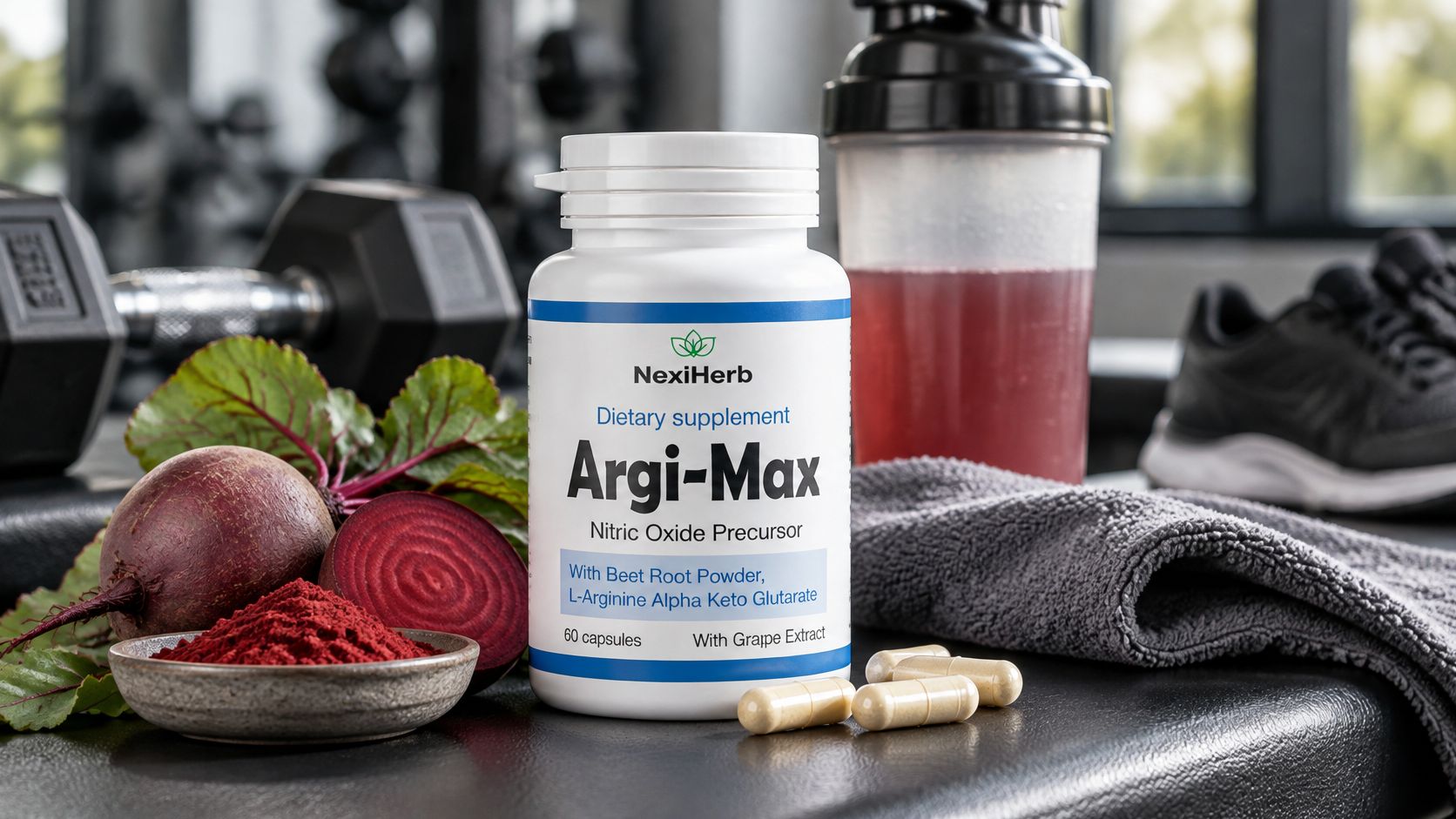
Check the category first: Evidence about one amino-acid formulation isn't evidence about every supplement containing an amino acid.
Supplements should complement a varied diet and healthy lifestyle, not replace a balanced diet. If you choose isolated BCAAs for convenience or possible soreness relief, don't count them as your complete protein meal.
Matching Amino Acid Timing to Your Goal and Routine
Choose a window only after identifying your goal, meal pattern, and likely nutritional gap. Someone who eats reliably around resistance training faces a different decision from someone who trains without breakfast or restricts food while dieting.
Amino acid timing by goal and routine
| Goal or situation | Suggested timing | Reason |
|---|---|---|
| Muscle growth with adequate daily protein | A consistent, convenient window with a complete protein meal near training | No dependable reason to prioritize minute-level timing |
| Training fasted or after a long gap | Consider essential amino acids before training | Makes amino acids available during the session |
| Soreness after heavy or unfamiliar training | Consider post-exercise BCAAs if soreness is the specific target; keep normal protein meals | Soreness evidence shouldn't be confused with growth evidence |
| Mostly plant-based or low-protein diet | Review protein across meals and supplement actual gaps | Protein quantity and amino-acid coverage need assessment first |
| Endurance or cutting phase | Individualize intake around meals and sessions with a qualified professional | Resistance-exercise findings don't settle these situations |
A 2002 American Journal of Physiology study gave healthy volunteers 6 g of essential amino acids at one and two hours after resistance exercise and measured muscle protein balance using phenylalanine tracing. The result supported net muscle protein accumulation during recovery, establishing that a relatively small EAA intervention can have a measurable effect without establishing a universal supplement requirement.
Apply the evidence to the person, not just the workout
For a lifter with dependable meals, the useful adjustment may be no adjustment at all. Keep the meal pattern that's easy to maintain rather than introducing another product solely to move protein closer to the final set.
For someone who trains without eating, the decision is different. Pre-session essential amino acids can address availability, but the rest of the day still needs actual meals.
A plant-based eater should assess the foods and quantities they consume rather than assume that plant-based automatically means inadequate. If intake is low, moving a small supplement from after training to before training won't answer the larger dietary question.
Know where confidence falls
The most direct timing experiments discussed here concern resistance exercise and acute protein metabolism. They don't justify identical recommendations for endurance athletes, older adults, women across different life stages, or people with chronically low protein intake.
Energy restriction adds another consideration: an amino-acid timing adjustment doesn't replace a review of overall food intake. If your week includes dieting, long endurance sessions, or repeated missed meals, choose the individualized row rather than borrowing a protocol designed for a different population.
The useful conclusion isn't that timing never matters. It's that timing matters most when it solves a specific problem your routine creates.
Pick Your Timing and Confirm Your Protein Base
Use a decision order that starts with food and ends with a checkable routine.
- Confirm your protein foundation. Review your main meals for complete protein sources or a planned combination of protein-rich foods. If you're restricting calories, Venus Health Co.’s discussion of higher protein needs when cutting provides context for a personalized nutrition review.
- Record the last balanced meal. Write down what you ate and when your workout began. Don't infer a nutritional gap just because you didn't use a shake.
- Address fasted training deliberately. Consider a pre-session meal or EAA product when there's a long gap, rather than defaulting to a BCAA-only formula.
- Match recovery choices to the outcome. If soreness is your concern, record soreness. If performance is your concern, record what you can do at the next comparable session.
- Keep the routine stable while evaluating it. Avoid changing training, meals, and supplements simultaneously, because you won't know which change mattered.
This checklist summarizes the order of decisions.
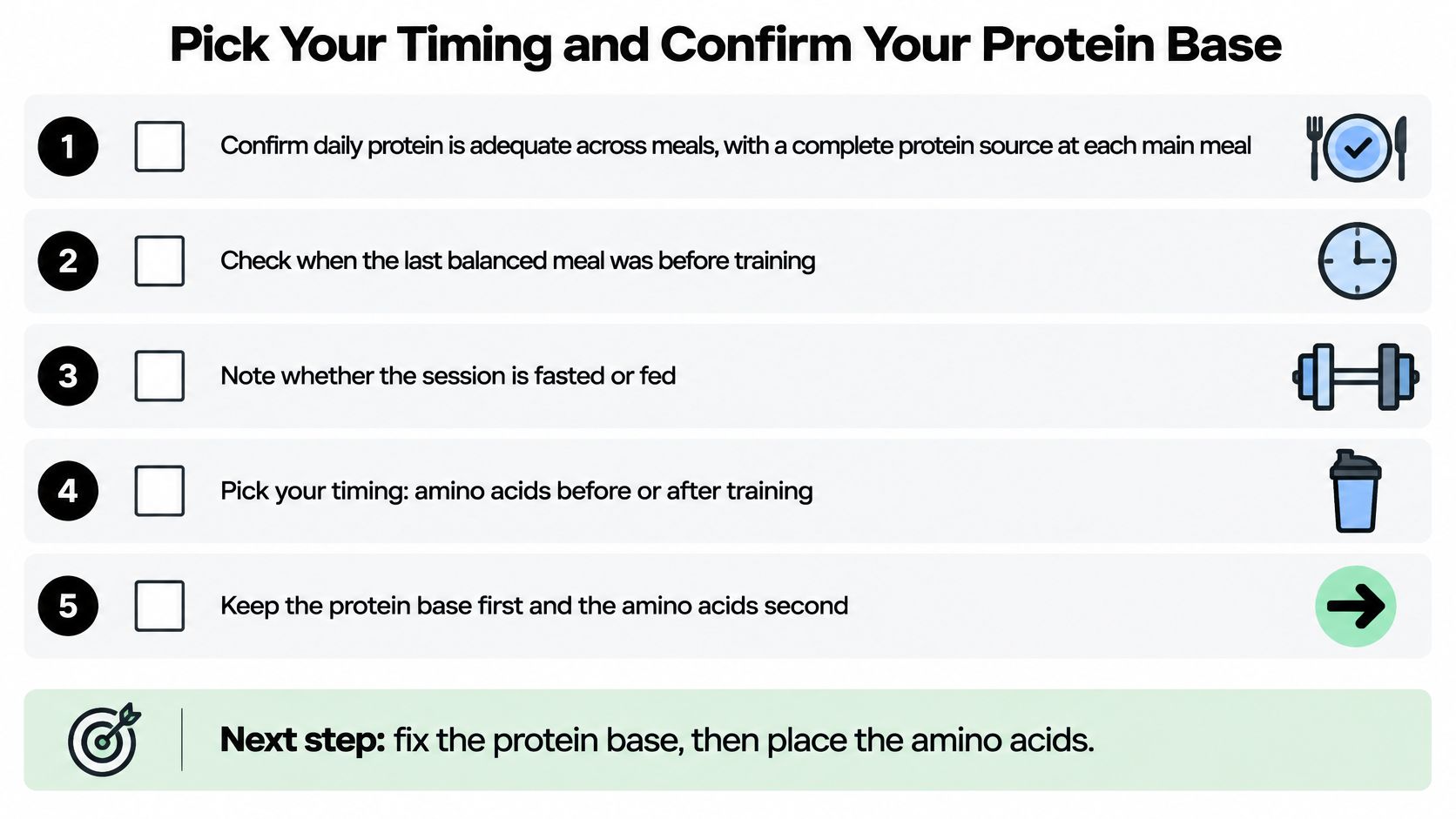
Make the next action concrete
If you're still unsure which product category addresses your gap, compare amino-acid supplements versus protein powder before buying. We ask anyone who is pregnant, breastfeeding, has a medical condition, or takes medication to consult a healthcare professional before using an amino-acid product.
At your next usual training time, write down the hours since your last protein-containing meal and select the matching situation in the goal table. Fix an identifiable dietary gap before trying to optimize the minute of supplementation.
NexiHerb LLC offers dietary supplements, including amino-acid formulas, alongside nutrition guides that help explain their place in a balanced routine. Visit NexiHerb LLC to review ingredient labels and educational resources, then choose only what complements your meals, training schedule, and specific goal.