

You're standing in front of a shelf with two bottles that look almost identical. Both say vegan, both promise complete nutrition, and both use words such as “whole-food,” “fermented,” and “methylated.” One costs far more, but neither label makes it obvious whether it covers the nutrients a plant-based diet is most likely to miss.
That's the problem with choosing the best plant-based multivitamin. The front of the bottle sells an identity. The Supplement Facts panel tells you whether the formula deserves your money. This guide gives you a practical way to judge any product by its nutrient coverage, ingredient forms, transparency, and fit for your diet, rather than by brand reputation or packaging.
Table of Contents
- Why Choosing a Plant Based Multivitamin Feels Overwhelming
- What Makes a Multivitamin Truly Plant Based
- The Nutrients That Matter Most on a Plant Based Diet
- How to Read a Plant Based Multivitamin Label
- A Practical Framework for Comparing Formulas
- Matching the Right Formula to Your Goals
- Safety, Interactions, and Smart Use
- Your Next Steps and Common Questions
Why Choosing a Plant Based Multivitamin Feels Overwhelming
The category is crowded, and the language is loose. “Plant-based” isn't enough information by itself. A product may use a cellulose capsule and still contain nutrients whose sourcing is unclear. Another may contain a broad list of vitamins but omit iodine or provide no meaningful support for vitamin D.
Marketing claims overlap constantly. Vegan, vegetarian, whole-food, fermented, clean-label, and methylated each describe something different, yet packaging often places them side by side as though they mean the same thing. They don't. “Methylated” may refer to only one B vitamin, while “whole-food” may describe a small blend rather than the source of every active ingredient.
Dosing creates a second problem. Some formulas spread modest amounts across many nutrients. Others place a very large amount of B12 on the label while giving little attention to iodine, vitamin D, iron, or zinc. A long ingredient list can therefore look impressive while leaving the most relevant gaps unresolved.
Price adds more noise. A more expensive bottle may offer better testing or more carefully selected forms, but price alone doesn't prove that the formula covers your needs. A less expensive product can be the stronger choice if its label is transparent and its priority nutrients are present in suitable forms.
Practical rule: Ignore the claims on the front until you've checked the nutrients, forms, doses, capsule materials, and quality controls on the back.
Use this sequence when comparing bottles:
- Identify your likely gaps. Start with B12, vitamin D, iodine, iron, zinc, and omega-3s.
- Check the chemical form. Look for methylcobalamin, methylfolate, lichen-derived D3, algae DHA or EPA, and chelated minerals where appropriate.
- Confirm the amount. A nutrient can appear on the label without being supplied at a useful level.
- Inspect the inactive ingredients. Capsule shells, carriers, and flow agents matter if animal-free sourcing is part of your standard.
- Look for verification. Independent quality controls carry more weight than “premium” or “clean” printed on the bottle.
The right mindset is simple: judge the formula, not the front panel.
What Makes a Multivitamin Truly Plant Based
A plant-based multivitamin should use non-animal sources for its active ingredients and should also avoid animal-derived capsule materials, carriers, and excipients. That standard is stricter than finding the word “vegan” on the front.
Some nutrients have sourcing distinctions that deserve close attention. Vitamin D2 can come from fungi, while vegan vitamin D3 is commonly sourced from lichen or algae. Omega-3 ALA comes from plants such as flax, but it isn't the same as long-chain DHA or EPA from algae. Vitamin B12 may be produced through fermentation or manufactured synthetically, so “plant-based” doesn't automatically mean every ingredient came directly from a plant.
The capsule also matters. Cellulose, pullulan, and HPMC are common plant-compatible capsule materials. Gelatin is animal-derived. Excipients deserve a quick review too, because a formula can have a vegetarian shell while leaving the origin of other ingredients unclear.
The sourcing details that separate formulas
Look for explicit statements such as “no animal-derived ingredients” or a credible vegan certification. For vitamin D3, lichen or algae sourcing is a useful label signal. For omega-3, algae-derived DHA or EPA is the relevant plant-based form. For B12, methylcobalamin is a form commonly selected in vegan-focused formulas.
The goal isn't to reject every synthetic nutrient. A synthetic nutrient can still be suitable for a vegan formula. The goal is to establish whether the manufacturer has clearly disclosed the origin and form of the ingredients that matter to you.
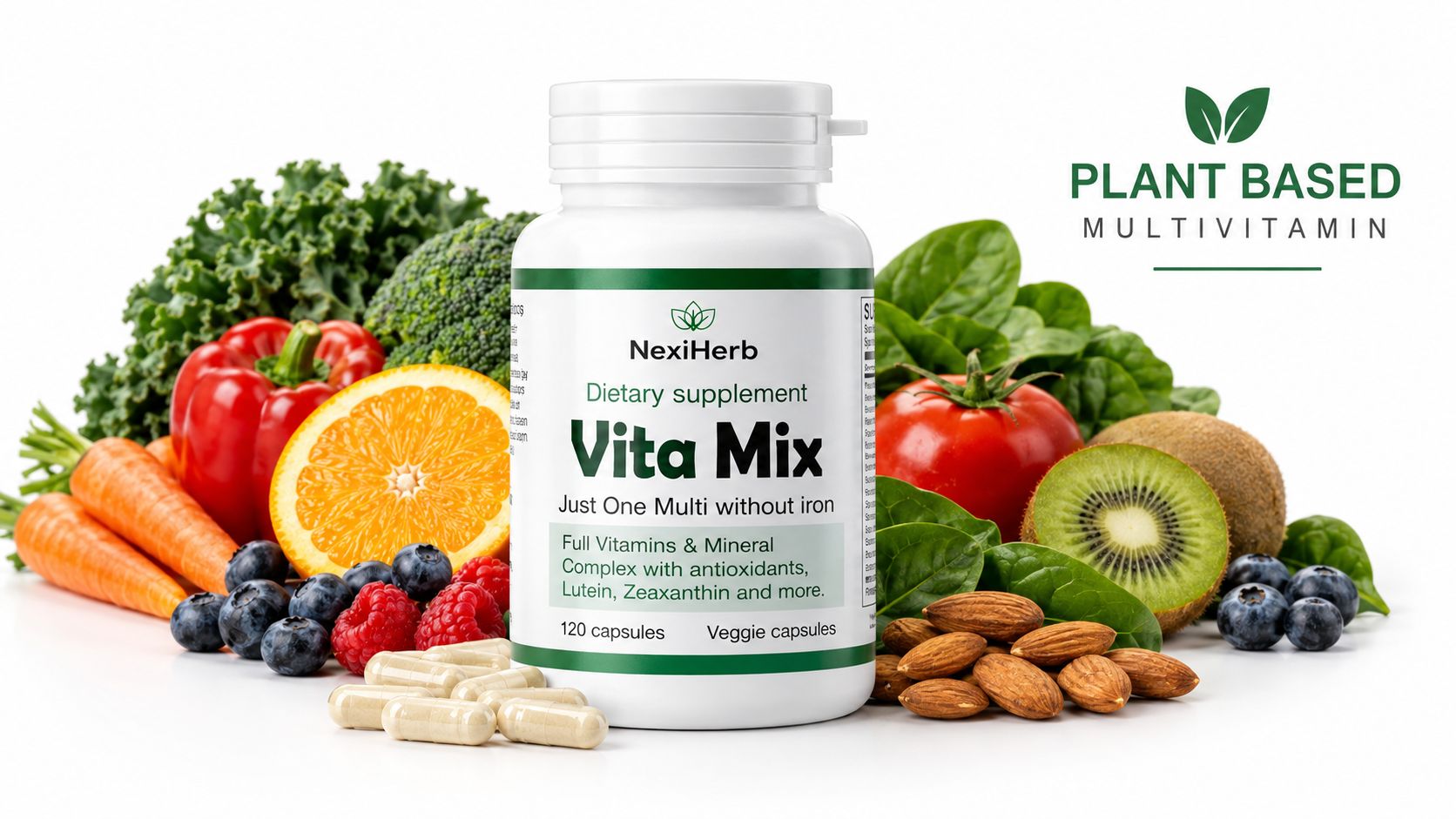
Vita Mix NexiHerb Multivitamin & Mineral Dietary Supplement is described as a daily multivitamin and mineral supplement with a vegetarian cellulose capsule, vitamins, minerals, folate as L-5-MTHF, and plant-derived compounds such as lutein and zeaxanthin. Its label should still be reviewed ingredient by ingredient if you require confirmation that every active and inactive ingredient meets a strict vegan standard.
| Feature | Truly Plant-Based | Vegan-Labeled | Standard |
|---|---|---|---|
| Active ingredients | Sources and forms are disclosed, with no animal inputs | May be vegan, but sourcing detail varies | May include animal-derived sources |
| Vitamin D | Lichen or algae D3 is a clear signal | May use D2 or vegan D3 | May use lanolin-derived D3 |
| Omega-3 | Algae DHA or EPA, if included | May contain only plant ALA or no omega-3 | May contain fish or krill oil |
| Capsule | Cellulose, pullulan, or HPMC | Usually gelatin-free, but verify the label | Gelatin may be used |
| Excipients | Animal-free carriers and processing aids | Transparency varies | Animal-derived materials may appear |
| Verification | Vegan certification or explicit sourcing detail | Front-label claim may be the main evidence | Conventional quality controls |
A product can be vegetarian without being fully vegan, and a product can be vegan without being especially well formulated. Ethical consistency and nutritional adequacy are separate checks. You need both.
The Nutrients That Matter Most on a Plant Based Diet
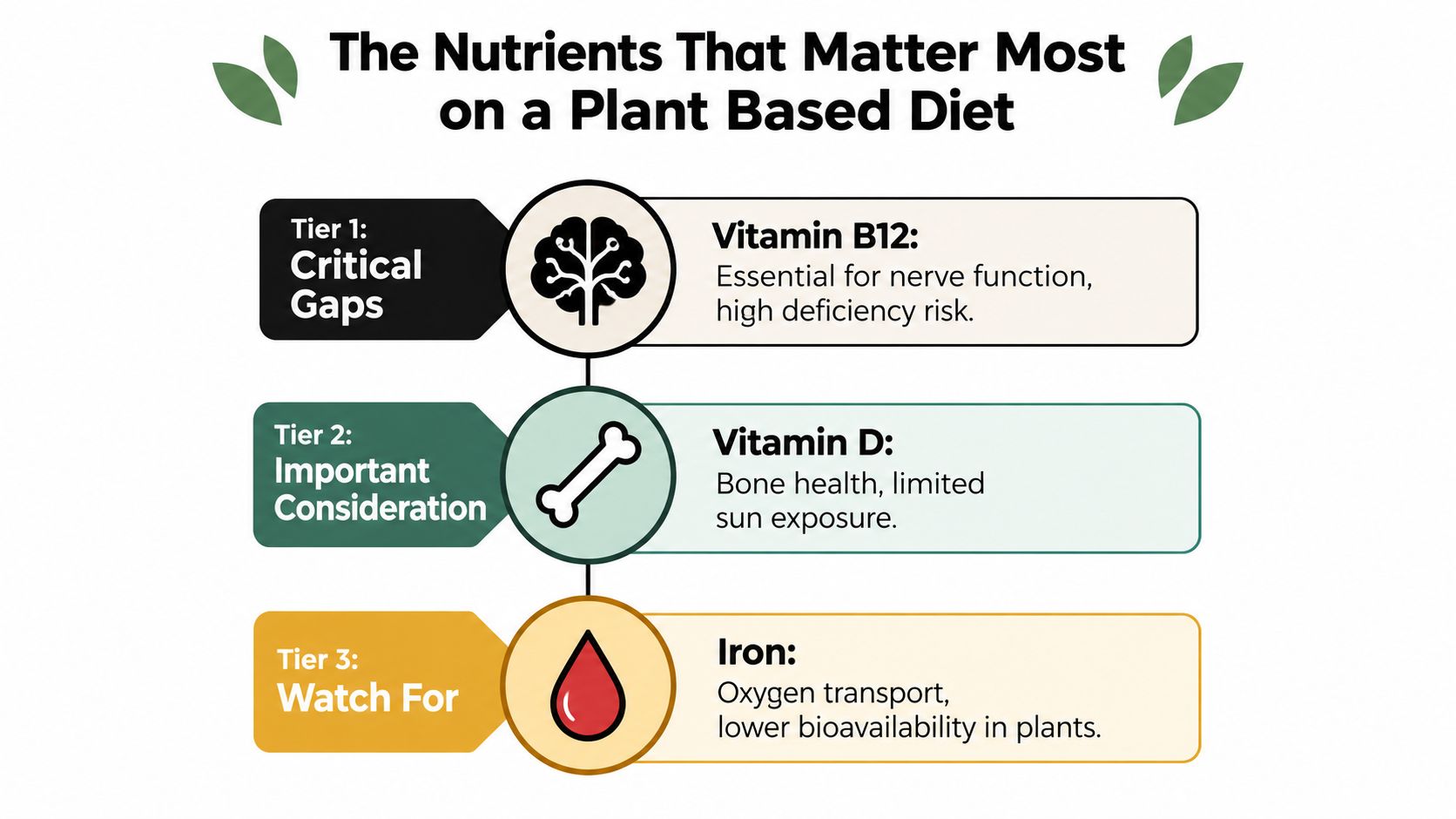
Plant-based eating usually improves fiber, vitamin E, vitamin K, folate, and iron intake. The gaps show up elsewhere. A 2020 systematic review of vegan diets points to lower intake of vitamin B12, vitamin D, and iodine among vegans compared with omnivores. The right multivitamin should be built around those gaps, not padded with a generic label full of extras.
Tier one, the nutrients I check first
Vitamin B12 sits at the top. Reliable plant foods do not provide enough of it, so the label needs a clear dose and a clear form. Methylcobalamin is common, and any formula worth buying should spell out the form instead of hiding behind vague wording. A huge B12 number means little if the product skips iodine or vitamin D.
Vitamin D comes next. A plant-based formula should state whether it uses D2 or vegan D3, and vegan D3 should come from lichen or algae. If the source is buried or missing, skip it. Vitamin D is fat-soluble, so taking it with a meal that includes fat is the smarter routine.
Iodine is the nutrient too many formulas ignore. Check for a measured amount and a named source, such as potassium iodide. Kelp sounds natural, but a clearly labeled iodine ingredient is easier to trust than loose seaweed language.
Tier two, nutrients that depend heavily on the individual
Iron matters when intake is low, blood loss is present, or labs show weak stores. Plant-based iron is not as well absorbed as heme iron, so more is not automatically better. Look for a disclosed amount and a tolerable form such as iron bisglycinate, then let diet and bloodwork decide whether you need it.
Zinc can run low in some plant-based diets, especially when meals lean hard on phytate-rich foods. The label should name the form and the amount. If zinc is buried in a blend, you cannot judge it properly.
Long-chain omega-3s are often missing from multivitamins. If you want DHA or EPA, look for algae oil. Flax, chia, and hemp provide ALA, but that does not replace a product that supplies algae-derived DHA or EPA.
Calcium, selenium, and riboflavin still belong on your radar. Whether a multivitamin needs much calcium depends on the rest of your diet. Selenium and riboflavin depend on food choices and the formula's coverage. For a broader routine review, see this guide to daily vitamins you should take. Readers comparing women's options can also use the Feed Mom & Me vegan multivitamin guide.
A separate product such as D3+K2 NexiHerb 10,000 IU of vitamin D3 + 120 mcg of Vitamin K2 is not a substitute for a multivitamin. It delivers vitamin D3 and K2 in a dedicated capsule, so treat it as a separate high-dose option rather than part of your daily multi decision.
How to Read a Plant Based Multivitamin Label
Turn the bottle around. The first question is not how many ingredients appear. It's whether the label gives you enough information to judge the formula.
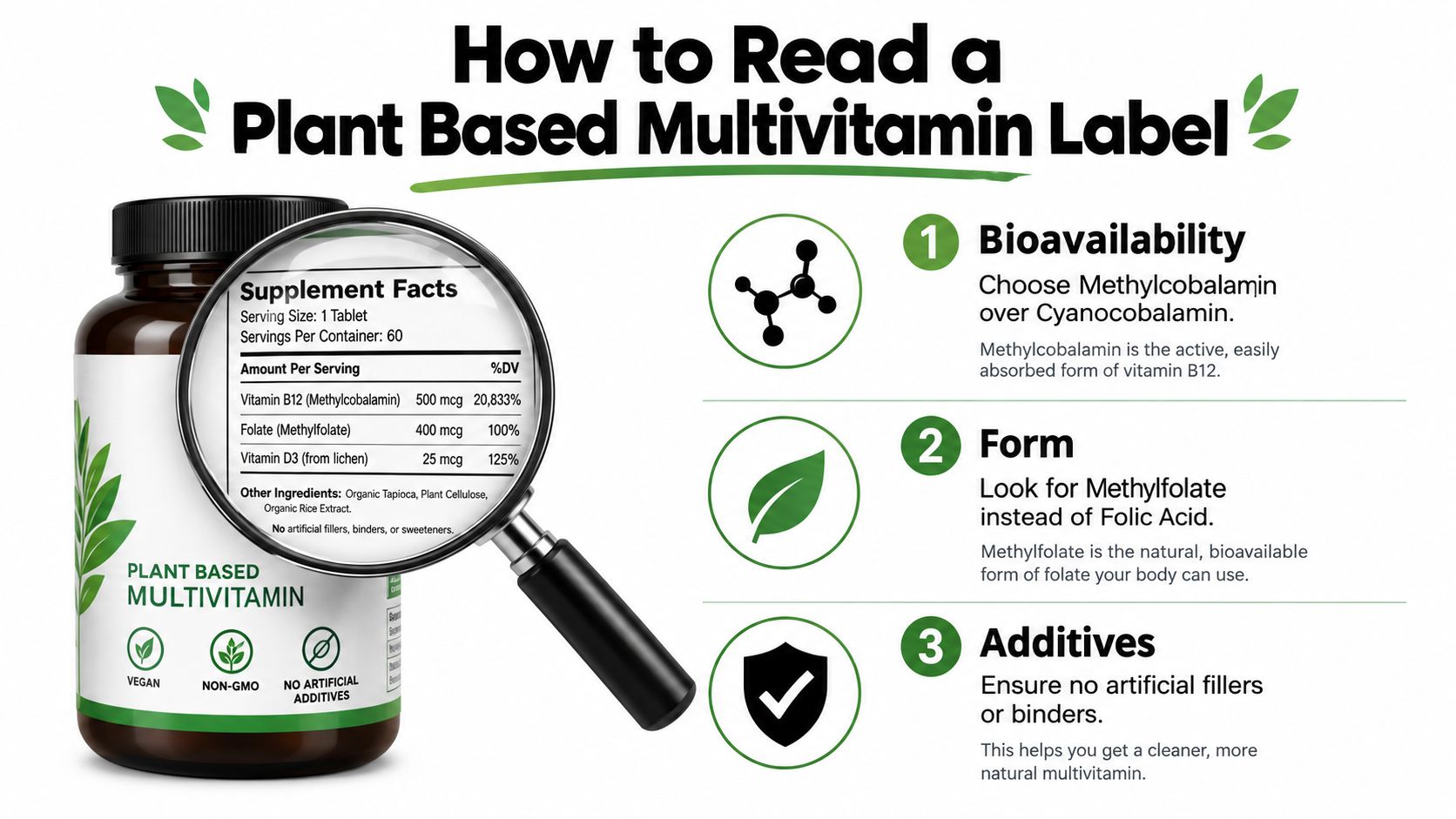
Start with forms. Methylcobalamin and methylfolate are common choices in plant-based formulas because they're active or readily usable forms. For minerals, bisglycinate and citrate often deserve more attention than generic oxides, especially when digestive tolerance matters. The label should identify the actual form instead of using a broad term such as “mineral complex.”
A fast label audit
Check the priority nutrients before scanning the extras:
- B12: Is the form disclosed, and is the amount meaningful for your routine?
- Vitamin D: Is it D2 or D3, and does the label identify a vegan D3 source?
- Iodine: Is it included, measured, and clearly named?
- Iron and zinc: Are the forms and amounts visible, or hidden in a blend?
- Omega-3: Does the product provide algae DHA or EPA, or only plant ALA?
- Folate: Does it list methylfolate or 5-MTHF rather than only folic acid?
- Quality controls: Does the company identify independent testing or a recognized certification?
A Daily Value percentage is a reference point, not a complete verdict. Less than 100% doesn't automatically mean the product fails, because your diet may supply the rest. A high percentage doesn't automatically mean the product is better, especially when it comes from a nutrient you don't need in a concentrated dose.
What to ignore
Be skeptical of proprietary blends that conceal individual amounts. “Whole-food fermented” can sound reassuring, but it doesn't tell you whether B12, iodine, or vitamin D is adequately supplied. A colorful gummy may be easier to take, yet convenience doesn't compensate for missing nutrients or added ingredients you don't want.
For a useful primer on reading supplement labels correctly, focus on serving size, active forms, amounts, and other ingredients. You can also use this practical guide to how to read supplement labels.
Use the video below as a visual supplement to the label audit, not as a replacement for checking the actual product panel.
The best two-minute test is this: cover the front of the bottle, read the active ingredients, circle the plant-based diet priorities, and reject any product that makes those priorities difficult to verify.
A Practical Framework for Comparing Formulas
A good comparison system should work on any shelf, regardless of brand, packaging, or price. I use four criteria, with the greatest emphasis on whether the formula covers the nutrients most likely to matter for the person taking it.
Score the label by decision value
| Criterion | Weight | Formula A | Formula B | Winner |
|---|---|---|---|---|
| Priority nutrient coverage | 40 | Includes B12 and vitamin D, but omits iodine | Covers B12, vitamin D, iodine, and zinc | Formula B |
| Form and bioavailability | 25 | Uses disclosed active forms for several nutrients | Uses clear forms throughout, including methylated vitamins and chelated minerals | Formula B |
| Independent quality controls | 20 | Testing information is unclear | Provides recognizable third-party verification | Formula B |
| Allergen and ingredient transparency | 15 | Capsule and excipients are fully listed | Capsule is clear, but several carriers are not explained | Formula A |
| Overall judgment | 100 | Strong transparency, incomplete coverage | Better nutritional fit, slightly less detail on carriers | Depends on priority |
The weights aren't sacred. They're a starting point. If you already receive iodine from food and need to avoid a particular excipient, transparency may outrank coverage. If you're correcting a known nutrient gap, coverage should dominate.
Use quality seals as evidence, not decoration
Look for independent programs such as USP, NSF, Informed Sport, or credible vegan verification. These programs don't make a formula automatically right for your diet, but they can provide useful evidence about identity, contents, contaminants, or manufacturing controls. A company that merely says “tested” without explaining who tested the product gives you less to work with.
The same logic applies to “clean-label” positioning. Fewer additives can be desirable, but not if the formula removes a nutrient you need or uses a form that's difficult to evaluate. A useful AloeCure plant supplement guide can provide broader context on evaluating plant-based products, but your final decision should still come from the individual label.
For a brand-agnostic checklist, review this guide on how to choose a multivitamin. The winner is the formula that solves your nutritional problem with the least ambiguity.
Matching the Right Formula to Your Goals
There's no universal winner. The best plant-based multivitamin for an endurance athlete may be a poor choice for someone who already has high iron stores. The longest ingredient list isn't the goal. The goal is to close the gaps that matter for your body, diet, and routine.
| User Profile | Top Priority Nutrients | Dominant Criterion | Key Label Check |
|---|---|---|---|
| Endurance athlete | B12, iron, zinc, vitamin D, electrolytes from the wider diet | Priority coverage | Confirm iron and zinc amounts instead of assuming the label is performance-focused |
| Men seeking general vitality | B12, vitamin D, zinc, selenium, active B vitamins | Appropriate dosing and absence of unnecessary iron | Check whether iron is included and whether zinc and B vitamins are clearly disclosed |
| Older adult | B12, vitamin D, vitamin K, calcium, zinc | Form and absorption considerations | Look for clearly identified B12 and vitamin D forms |
| Budget-focused shopper | B12, vitamin D, iodine, zinc, selected minerals | Cost per meaningful gap covered | Compare the label, not capsule count or branding |
Endurance athletes
Training increases the importance of consistency, but it doesn't justify blindly taking every high-dose product. Review B12, vitamin D, iron, and zinc first. Iron deserves special caution because supplementation should match dietary intake and laboratory findings, not just the fact that you exercise.
The key label check is iron transparency. If the amount and form are hidden, move on.
Men focused on vitality
A men's formula often makes more sense when it emphasizes zinc, selenium, and useful B-vitamin forms without automatically adding iron. “Vitality” on the front isn't evidence of a better formula. It's a prompt to inspect the panel.
Maxi Vir NexiHerb Herbal Dietary Supplement – Botanical Blend for Male Wellness & Vitality Support is a separate botanical dietary supplement for adult men, with ingredients including muira puama, ginger, cnidium, tribulus, maca, and ginseng. Its label lists a gelatin capsule, so it shouldn't be treated as a plant-based multivitamin or assumed to meet a strict vegan standard.
The single most important check for this group is whether the formula supplies the requested minerals in disclosed amounts and avoids unnecessary overlap with other supplements.
Older adults
Older adults should pay particular attention to B12 and vitamin D forms, along with the person's overall calcium and vitamin K intake. A formula designed for this group should be easy to take consistently and should not rely on a proprietary blend to explain its main nutrients.
The decisive label question is whether B12 and vitamin D are clearly identified by form and amount.
Budget shoppers
Budget buyers should calculate cost per covered gap, not cost per capsule. A cheap product that omits iodine, vitamin D, or B12 may be poor value, while a more modest formula can work well if it covers the nutrients you need and your diet supplies the rest.
The key check is simple: circle the priority nutrients, then compare only the products that cover the largest number of those gaps with transparent labeling.
Safety, Interactions, and Smart Use
Supplement safety is mostly about avoiding predictable mistakes. A multivitamin should fit around your medications, diet, laboratory results, and health conditions rather than being added without review.
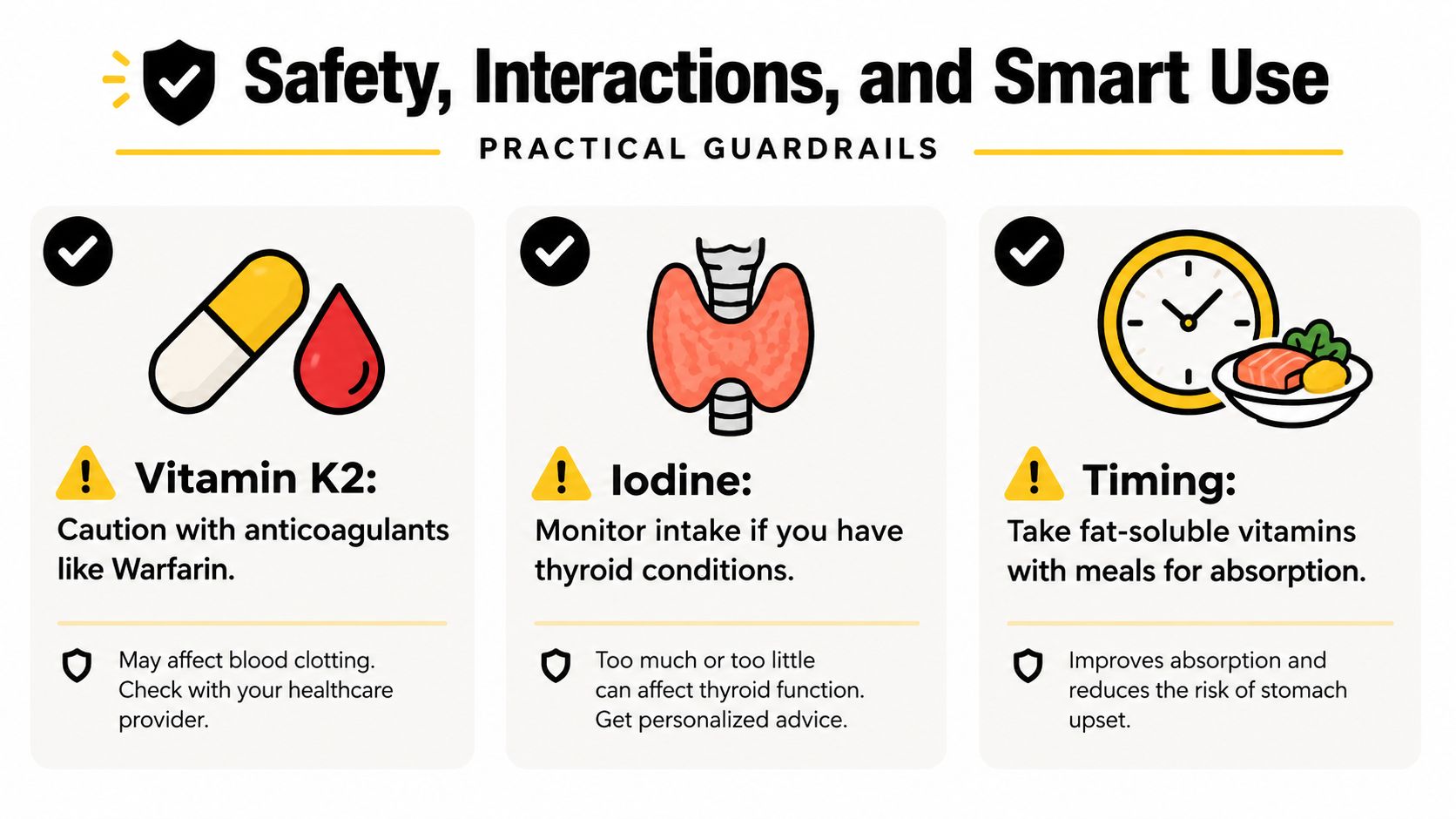
Vitamin K2 deserves attention if you take anticoagulants such as warfarin. Iron and calcium can interfere with some thyroid medicines and antibiotics when taken too close together. Iodine also needs care if you have a thyroid condition, because more isn't automatically better.
Build a routine that improves tolerance
Take fat-soluble vitamins A, D, E, and K with a meal that contains some fat. B-complex vitamins can feel stimulating for some people, so morning or midday is usually more practical than late evening. Iron may absorb better away from food, but taking it with food can be easier on the stomach. Follow the product directions and prioritize tolerability, because an ideal formula is useless if you stop taking it.
Separate minerals from medications when a pharmacist or clinician recommends it. Probiotics and digestive enzymes may also need their own timing depending on the product.
Safety checkpoint: If you take medication, don't guess about interactions. Give your pharmacist the complete Supplement Facts panel, including inactive ingredients.
Baseline testing can make the decision more precise. B12, ferritin, vitamin D, and a thyroid panel may help identify whether you need a general multi, a targeted nutrient, or no additional supplement. Recheck according to professional advice so you don't continue a high-dose product without confirming that it remains appropriate.
Pregnancy, childhood, kidney disease, thyroid disease, anticoagulant use, and complex medication schedules all justify professional guidance before starting. Tell your clinician about every supplement you use, including gummies, powders, and single-nutrient products.
Your Next Steps and Common Questions
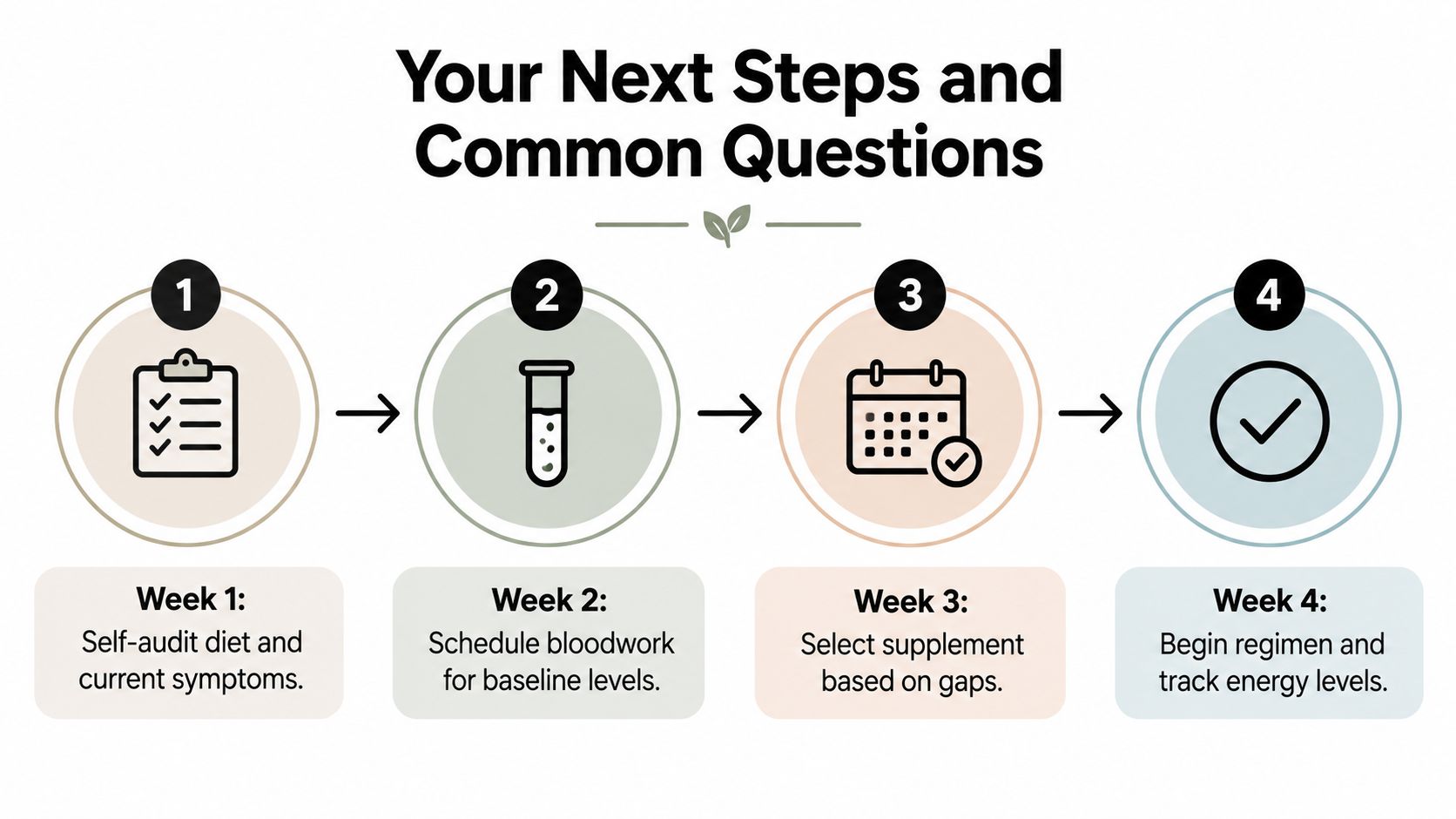
Use a simple four-week process rather than buying the first bottle that says “complete.”
- Week one, audit your routine: Write down your main foods, current supplements, medications, symptoms, and reason for wanting a multivitamin. Arrange appropriate baseline bloodwork if your clinician recommends it.
- Week two, shortlist formulas: Choose three products and compare B12, vitamin D, iodine, iron, zinc, omega-3 coverage, forms, capsule materials, and testing.
- Week three, choose one formula: Start only one new multivitamin so you can identify changes in digestion, energy, sleep, or symptoms.
- Week four, review the fit: Decide whether the product covers your actual gaps, creates unwanted overlap, or should be replaced with a more targeted approach.
Common questions
Can a plant-based multivitamin replace missing nutrients?
It can help fill dietary gaps, but it doesn't replace a varied diet or laboratory-guided treatment for a deficiency. It also may not provide meaningful DHA or EPA unless algae oil is specifically included.
What's the difference between methylated B12 and cyanocobalamin?
They're different forms of B12. Methylcobalamin is commonly selected in plant-based formulas, while cyanocobalamin is another established form. Judge the complete formula rather than treating one word as proof of quality.
Do men and women need different formulas?
Sometimes their needs differ, especially around iron, but sex-specific packaging isn't enough evidence. Compare the actual nutrient panel and your personal diet.
When should you notice benefits?
That depends on whether you had a meaningful gap, how consistently you take the product, and what else affects your symptoms. Don't use a sudden subjective change as proof that a formula is correcting a deficiency.
How can you verify USP, NSF, or Informed Sport claims?
Search the certifier's own directory and match the exact product name, not just the manufacturer. A logo on a bottle deserves verification.
Are gummies effective?
They can work when they provide appropriate nutrients in useful forms, but many contain fewer nutrients or added sweeteners than capsules. Read the panel instead of assuming the format is superior.
The best choice is the product that prioritizes your nutrient gaps, discloses its forms, and fits your routine, not the product with the loudest brand name.
NexiHerb LLC offers daily multivitamins, targeted nutrients, omega-3 products, and botanical supplements designed to complement balanced diets and everyday wellness routines. Review the clear product information at NexiHerb LLC and compare each formula against the nutrient-gap framework before choosing.