

You've just finished a workout, but the result feels underwhelming. Your muscles worked, yet you didn't feel the “pump” promised by a pre-workout label. Or perhaps you're moving through the afternoon with cold hands, low energy, or a sense that circulation isn't as comfortable as it used to be. These experiences can have many explanations, and they don't automatically mean you need a supplement.
That's where the question what is nitric oxide supplement becomes useful. Nitric oxide is a short-lived signaling molecule your body makes naturally. It helps regulate blood-vessel tone, but a product labeled for nitric oxide support isn't a standardized treatment or a guarantee of better exercise, circulation, or sexual performance. The meaningful questions are simpler: Which ingredient does it contain, at what dose, and what outcome does the evidence support?
Table of Contents
- What You Might Experience Without Support
- How Your Body Naturally Creates Nitric Oxide
- L-Citrulline vs L-Arginine Key Differences
- What Research Says About Real Benefits
- How to Choose and Use NO Supplements Safely
- Common Misconceptions About NO Support
- Who Should Consider NO Supplements
What You Might Experience Without Support
You finish a demanding session and feel unusually flat the following day. Your workout wasn't necessarily poor, but the expected sense of muscular fullness or sustained energy never arrived. On another day, you get through the morning and then hit an afternoon slump that coffee doesn't solve. Cold fingers and toes can also become more noticeable, especially in winter.
None of these experiences proves that nitric oxide availability is low. Sleep, hydration, food intake, training load, stress, temperature, medications, and underlying health can all influence how you feel. Still, the pattern can prompt a reasonable question about how blood vessels regulate circulation.
Nitric oxide is one of the body's natural signaling molecules. Cells lining the arteries produce it, and it moves into nearby vascular smooth-muscle cells, where it reduces contraction and promotes vasodilation, meaning blood vessels widen. This is why nitric oxide support often appears in discussions about exercise blood flow and sexual health. For broader lifestyle context, readers exploring natural boosters for sexual health should still separate general wellness support from products that make disease or guaranteed performance claims.
The important distinction is this: a sensation such as a workout pump is a consumer experience, while nitric oxide production is a biochemical event. One doesn't automatically prove the other.
How Your Body Naturally Creates Nitric Oxide
Your body creates nitric oxide through more than one route. The first is an enzymatic pathway. In this process, nitric-oxide synthase uses the amino acid L-arginine to produce nitric oxide in and around blood-vessel lining cells. Nitric oxide then diffuses into nearby vascular smooth muscle and activates soluble guanylate cyclase. That increases cyclic GMP, a messenger that encourages the muscle to relax and the vessel to widen.
The second route begins with dietary nitrate. Foods such as beetroot and leafy greens supply nitrate, which can enter the nitrate–nitrite–nitric oxide pathway. Oral bacteria help convert nitrate to nitrite, and the body can then convert nitrite into nitric oxide under suitable conditions. L-citrulline and L-arginine support the amino-acid route, while beetroot and leafy greens support the dietary nitrate route, so these ingredients shouldn't be treated as interchangeable. This distinction is also relevant when learning about managing arterial insufficiency, which requires medical evaluation rather than self-treatment with supplements.
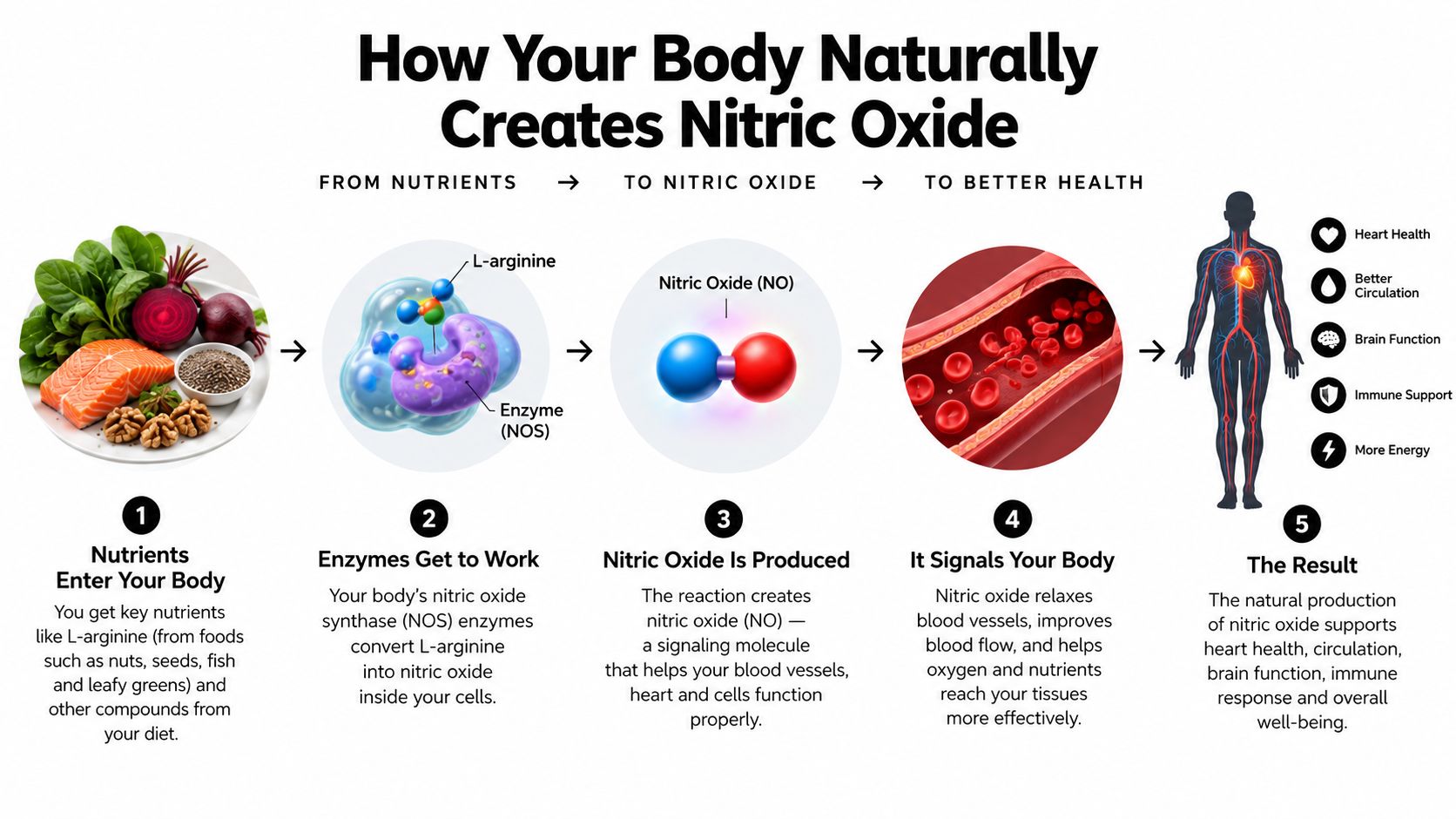
Why products use precursors
Nitric oxide itself is chemically unstable and short-lived. A capsule containing intact nitric oxide wouldn't provide a practical way to maintain a useful supply in the body. Manufacturers therefore use precursors, substances the body can process into nitric oxide or into molecules involved in its production.
This is why labels may feature L-citrulline, L-arginine, citrulline malate, beetroot, or nitrate-rich plant ingredients. The name “nitric oxide supplement” describes the intended mechanism, not a single active compound. The Nobel Prize recognized the cardiovascular signaling role of nitric oxide when Robert F. Furchgott, Louis J. Ignarro, and Ferid Murad received the 1998 Nobel Prize in Physiology or Medicine on October 12, 1998. That milestone established an important biological foundation, but it doesn't prove that every commercial formula improves performance or wellness.
For a more ingredient-focused overview, see natural nitric oxide boosters. A product example is Nitric-Ox NexiHerb, Dietary Supplement, a capsule formula containing beet root extract, grape seed extract, and coenzyme Q10. Its listed serving is two capsules, and the product is intended for adult use. The label also states that it isn't intended to diagnose, treat, cure, or prevent disease.
Here's a visual explanation of the pathway in motion:
Nitric oxide signaling has roles beyond vessel relaxation, including effects on platelet and leukocyte activity, vascular smooth-muscle growth, neurotransmission, and immune defense. Those roles explain the scientific interest, but they also make simplistic marketing claims inappropriate. A supplement may influence one biological marker without producing a noticeable or clinically meaningful outcome.
L-Citrulline vs L-Arginine Key Differences
L-citrulline and L-arginine are often placed beside each other on supplement shelves because both can contribute to the body's nitric oxide pathway. They aren't identical, however. L-arginine is the direct substrate used by nitric-oxide synthase, while L-citrulline is converted into L-arginine through the urea-cycle pathway.
The difference matters after swallowing a supplement. Oral L-arginine is substantially metabolized in the intestine and liver before it reaches circulation. L-citrulline generally avoids more of that initial breakdown, so it can raise circulating arginine more efficiently. That explains why a product containing citrulline may produce a different blood-level response from one containing the same general category of amino acid.
| Ingredient | Primary route | Practical interpretation |
|---|---|---|
| L-arginine | Directly supplies substrate for nitric-oxide synthase | The straightforward route, but oral absorption and performance results can be limited |
| L-citrulline | Converts into L-arginine through the urea cycle | Often raises circulating arginine more efficiently |
| Citrulline malate | Combines citrulline with malate | Commonly studied before exercise, but results still depend on the protocol and person |
What the evidence says about arginine
The U.S. National Institutes of Health Office of Dietary Supplements reports that arginine studies examined 2 to 20 grams per day, yet overall evidence showed little to no improvement in aerobic or anaerobic exercise performance (NIH Office of Dietary Supplements). In many trials lasting 1 to 28 days, arginine also failed to meaningfully increase nitric oxide concentration, blood flow, or exercise metabolites among trained athletes.
That doesn't mean arginine has no biological activity. It means a biochemical role shouldn't be confused with a reliable athletic benefit. A formula can contain a plausible precursor and still fail to produce a noticeable result.
For readers considering combination formulas, arginine and citrulline together offers useful context, but combining ingredients doesn't automatically overcome uncertain dosing, absorption, or evidence.
What Research Says About Real Benefits
The most responsible answer is conditional. A nitric oxide supplement may alter blood levels of arginine or nitric-oxide-related metabolites, but that change doesn't consistently translate into more strength, better endurance, faster recovery, or improved sexual function. Results depend on the ingredient, dose, timing, training status, diet, vascular health, and outcome being measured.
Resistance training has produced some of the more encouraging findings for citrulline. A review found that L-citrulline may increase repetitions to failure by approximately 6.4%, described as about three additional repetitions in some protocols. The review proposed a minimum effective dose near 3 grams of L-citrulline, while studies commonly used about 8 grams of citrulline malate approximately one hour before exercise (resistance-training review). These figures describe study protocols, not a universal recommendation or guaranteed result.
Exercise outcomes are not all alike
The same review characterized evidence for strength and power as equivocal and found limited support for L-arginine alone. That distinction matters because “better workout” can mean several different things. More repetitions in a specific fatigue protocol isn't the same as greater maximum strength, improved endurance, or long-term muscle growth.
Endurance findings are less persuasive. A meta-analysis in young healthy adults found no significant improvement in time to exhaustion or time-trial performance after acute citrulline use, with pooled standardized effects close to zero. In plain language, a short-term rise in a nitric-oxide-related marker doesn't reliably make someone run, cycle, or exercise longer.
Evidence rule: Ask whether a study measured a biochemical marker or a meaningful outcome you actually care about.
Circulation and sexual-health discussions require similar caution. Nitric oxide contributes to vascular smooth-muscle relaxation, so the mechanism is biologically relevant to blood flow. But a supplement's mechanism doesn't establish that it treats erectile dysfunction, arterial disease, fatigue, or cardiovascular illness. Those concerns deserve assessment by a qualified clinician.
Dietary nitrate products, including beetroot preparations, are another distinct category rather than a different name for citrulline. A beet juice powder guide can help explain the food-based route, but consumers should still inspect the actual label and avoid assuming that every beet product supplies a studied amount of nitrate.
How to Choose and Use NO Supplements Safely
Start with the label, not the front of the container. “Nitric oxide support” can refer to amino acids, nitrate-rich plants, botanical extracts, or a mixture of several ingredients. As a 2025 physiology review explains, L-citrulline and L-arginine supply amino acids for nitric-oxide synthase, while beetroot and leafy greens provide dietary nitrate for a separate conversion pathway.
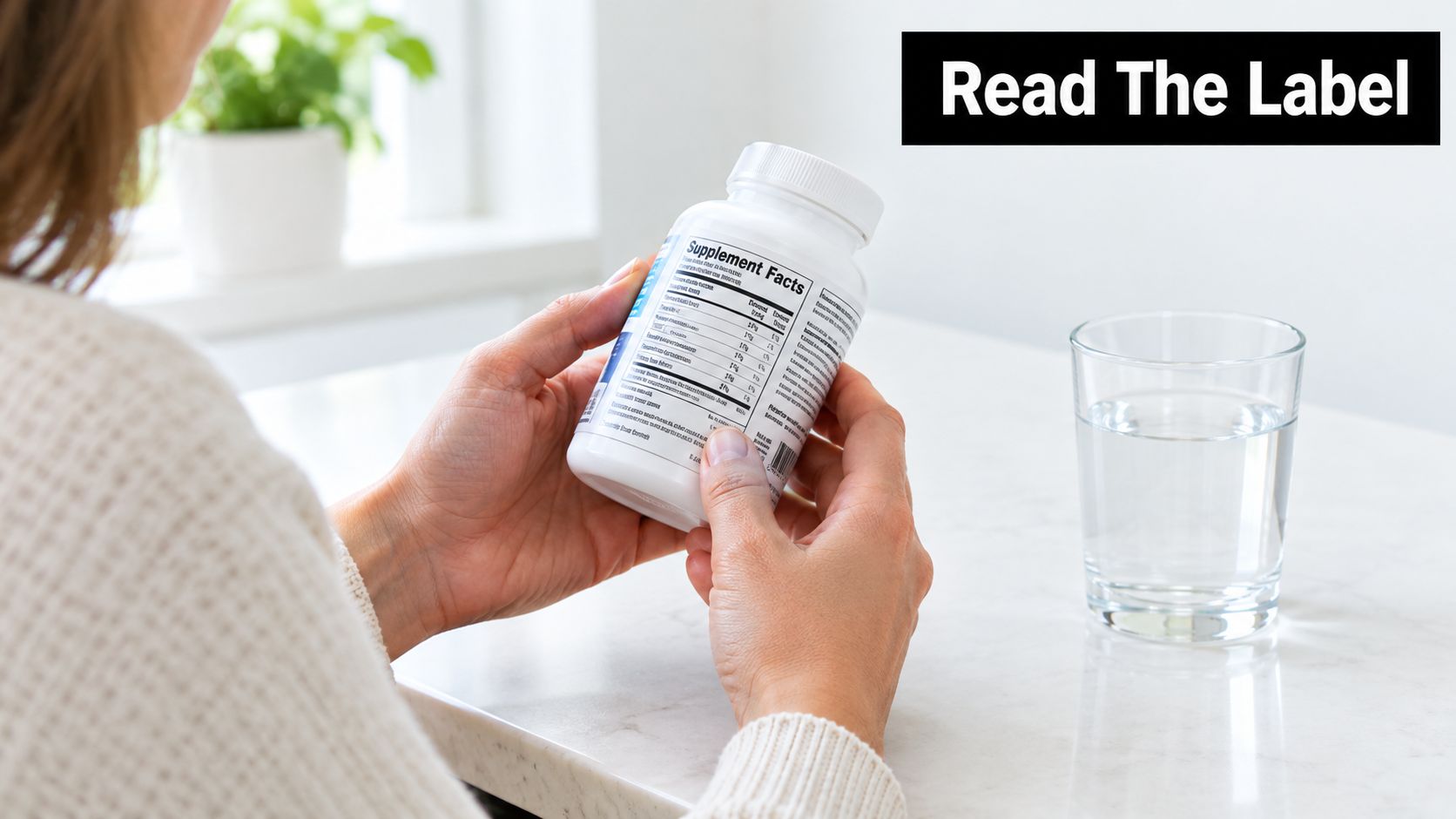
Read the Supplement Facts panel
Look for the actual quantity of the featured ingredient per serving. A proprietary blend may list several compounds without showing how much of each one is present, making comparison with research difficult. Also check whether the label specifies beetroot extract, beetroot powder, or nitrate content. Those terms don't mean the same thing.
Third-party testing can provide additional information about identity and contaminants, but it doesn't prove that a formula works for your goal. A transparent label is useful because it lets you compare the product with the ingredient and dose used in research.
Match the product to the intended use
For exercise, look for a clearly disclosed amount of citrulline or citrulline malate, then compare it with studied protocols. Don't treat the protocol figures described earlier as a prescription. The appropriate choice depends on your health, other supplements, medications, and tolerance.
For food-based nitrate support, consider whether the product identifies its botanical source and provides meaningful labeling information. A supplement can be convenient, but foods such as leafy greens and beetroot also fit into a broader dietary pattern. Neither route guarantees a noticeable workout or circulation change.
Use timing and caution together
Many exercise studies administer citrulline malate before training, but timing doesn't rescue an underdosed or poorly disclosed formula. Follow the product label rather than escalating on your own. NIH information describes arginine safety as dose-dependent: up to 9 grams per day was generally described as safe and well tolerated for several days or weeks, while 9 to 30 grams per day was more often associated with nausea, diarrhea, and slightly reduced blood pressure (NIH exercise supplement guidance). Long-term safety at high doses beyond 3 months remains uncertain.
Speak with a pharmacist or clinician before use if you take blood-pressure medicines or other cardiovascular treatments, have low blood pressure, or have cardiovascular, kidney, or gastrointestinal concerns. Get advice before surgery, during pregnancy, or when managing multiple conditions. Stop and seek guidance if you develop troubling symptoms rather than adding another product to counter them.
Common Misconceptions About NO Support
A gym-goer may choose a beetroot drink expecting the same effect as a citrulline capsule. These products use different biochemical routes, so their labels and evidence require separate evaluation.
Myth one, every nitric oxide product is the same. L-arginine and L-citrulline provide amino acids used in nitric oxide production. Beetroot and leafy greens provide nitrate, which follows the nitrate–nitrite–nitric oxide pathway. An increase in a related metabolite does not prove that the consumer will notice better circulation, endurance, or recovery.
Myth two, more nitric oxide automatically means better performance. A supplement can change a blood marker without improving power, stamina, or recovery. NIH reports little to no overall improvement in aerobic or anaerobic exercise performance from arginine, despite research using different doses.
Myth three, “natural” means risk-free. Plant-derived ingredients can still affect blood pressure, digestion, and medication response. Reported adverse effects of arginine and citrulline include gastrointestinal symptoms, headache, heartburn, palpitations, and nausea (NIH Office of Dietary Supplements arginine safety summary).
Myth four, side effects always signal danger. Beetroot can turn urine or stool red, a harmless effect that may alarm users. The color change does not show that the supplement is working. New, painful, persistent, or concerning discoloration warrants medical advice.
Safety first: “Natural” describes an ingredient's origin, not its effects on medication use, blood pressure, kidney function, or individual risk.
Combination formulas make cause and effect harder to identify. If a product contains amino acids, extracts, stimulants, and minerals, a headache, palpitation, stomach upset, or blood-pressure change could come from several ingredients. A clearly labeled, single-ingredient product makes personal evaluation easier, though it is not automatically effective or suitable.
Who Should Consider NO Supplements
After noticing slower workouts or wanting better exercise blood flow, an otherwise healthy adult may consider a carefully defined trial of an NO supplement. A reasonable test might involve a clearly labeled citrulline product and one outcome, such as how resistance training feels. Follow the serving directions, avoid stacking similar products, and accept that no noticeable benefit may appear. A biochemical change does not guarantee stronger performance or better recovery.
Adults interested in dietary nitrate can start with foods such as leafy greens and beetroot. Food supports the normal diet and avoids assuming that a capsule is necessary. Anyone choosing a supplement should compare the named ingredient and serving information rather than relying on the phrase “nitric oxide.”
Situations that call for professional advice
A pharmacist or clinician should review the plan first if you:
- Use blood-pressure or cardiovascular medicines: Added blood-pressure lowering may be unsuitable or require monitoring.
- Have low blood pressure: A circulation-oriented product may worsen an existing concern rather than provide a benefit.
- Have cardiovascular disease: Chest discomfort, breathlessness, fainting, or unusual exercise intolerance require medical evaluation, not self-treatment.
- Have kidney or gastrointestinal concerns: Ingredient tolerance and medication handling may differ.
- Are preparing for surgery, pregnant, or breastfeeding: Safety information may be limited, making professional guidance appropriate.
- Take several supplements: A complex formula makes interactions and side effects harder to identify.
Nitrate-rich beetroot juice has shown blood-pressure-lowering potential in research. A 2025 meta-analysis reported average reductions of about 7 mmHg systolic and 6 mmHg diastolic versus placebo (2025 systematic review of beetroot juice and blood pressure). The finding does not make beetroot a treatment, but it explains why medication overlap and pre-existing low blood pressure deserve attention.
The clearest candidate for NO support is an adult with a defined objective, realistic expectations, a transparent product, and no obvious safety barrier. Persistent symptoms that suggest vascular disease should be assessed before self-treatment. Supplements can complement food, movement, sleep, and medical care, but they cannot replace them.
NexiHerb LLC offers science-inspired dietary supplements, including amino-acid, botanical, and nitric oxide formulas. Its product information helps adults compare ingredients and serving directions. Visit NexiHerb LLC to review the catalog, and discuss medication or health concerns with a pharmacist or clinician.