

You're halfway through the workday. The desk is still covered with tasks, your screen seems harder to focus on, and your eyes keep drifting toward the window. The coffee you poured earlier is cooling beside your keyboard, yet another meeting feels unusually difficult to follow.
If you're asking, “Why do I get tired in the afternoon?”, the first answer may be more reassuring than you expect. Afternoon sleepiness is often a predictable biological signal, not evidence that you're lazy, undisciplined, or lacking motivation. Your body's internal timing system naturally creates a period of lower alertness, and short sleep, meals, caffeine habits, and long periods of sitting can make that dip feel much stronger.
Table of Contents
- The Familiar 2 p.m. Slump
- How Your Internal Clock Creates the Afternoon Dip
- Sleep, Food, and Caffeine: What Amplifies the Dip
- Quick Fixes You Can Use in the Next Ten Minutes
- Daily Habits That Shrink the Dip Over Time
- When Afternoon Tiredness Warrants a Doctor Visit
- Supplement Categories That Support Everyday Energy
- Building Your Personal Energy Action Plan
The Familiar 2 p.m. Slump
At first, the change can be easy to dismiss. You answer one email, reread the same paragraph, and notice that your attention is wandering. Then your shoulders drop, your eyelids feel heavy, and a task that seemed simple in the morning suddenly requires deliberate effort.
This experience is common because alertness doesn't remain level throughout the day. After morning wakefulness rises, many people experience an early-to-mid-afternoon decline called a circadian dip. It can happen after lunch, but lunch isn't the whole explanation. The dip can occur even when someone has eaten lightly.
That distinction matters. If you blame every afternoon slump on food, you might keep changing your lunch while overlooking the stronger influence of an irregular or inadequate sleep schedule. If you blame yourself, you may respond with guilt instead of useful information.
A predictable dip is a body signal, not a character judgment.
Think of the afternoon dip as similar to hunger. Hunger tells you that your body may need fuel, although it doesn't tell you exactly what to eat. Afternoon sleepiness tells you that your alertness system is temporarily shifting, although it doesn't automatically mean you need coffee or a supplement.
A mild dip that appears at roughly the same time, improves with movement or light, and doesn't interfere with safety may be ordinary biology. A sudden, severe, or persistent need to sleep is different. That pattern deserves closer attention, especially if it continues despite adequate sleep.
The useful question isn't only, “How do I force myself to stay awake?” It's also, “What is this tiredness telling me?” Once you separate the normal circadian signal from the factors amplifying it, you can choose a more targeted response.
How Your Internal Clock Creates the Afternoon Dip
Your daily alertness depends on two interacting systems. A simple analogy makes them easier to understand.
One system builds sleep pressure
Imagine a battery that gradually drains while you're awake. In the brain, the sleep-promoting chemical adenosine builds during wakefulness. The longer you stay awake, the greater the pressure to sleep becomes.
Sleep reduces that pressure. A full night gives the system more recovery than a short or disrupted night, so the same afternoon schedule can feel very different depending on what happened previously.
The other system sets the timing
Your circadian clock acts more like a dimmer switch that adjusts alertness according to the time of day and light exposure. It helps coordinate sleepiness, wakefulness, hormone release, body temperature, and other functions across a roughly 24-hour cycle.
In the morning, circadian signals support wakefulness. Later, those wake-promoting signals weaken for a period, creating a valley in alertness. At night, the circadian system supports sleep more strongly. In the afternoon, the change is usually smaller, but it can still be noticeable.
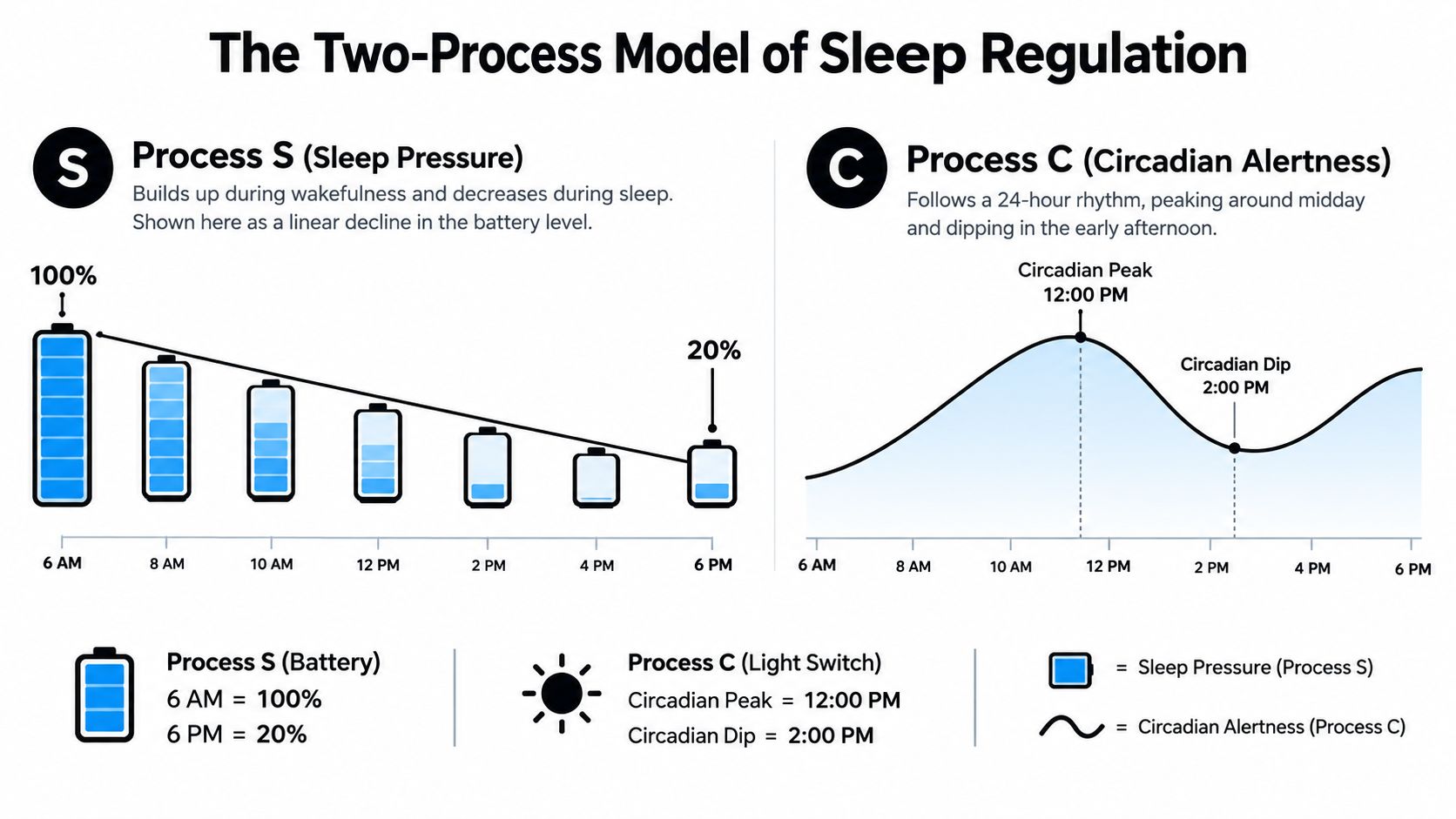
The afternoon experience comes from the interaction between these systems. Your sleep pressure has been rising since morning, while your circadian alerting signal temporarily becomes less supportive. When the two effects overlap, quiet work, repetitive reading, and long meetings can suddenly feel difficult.
A shorter night makes the battery drain more noticeable because you begin the day with less recovery. Travel, shift work, and inconsistent schedules can also move the timing of the dip because your internal clock no longer lines up neatly with the local day.
Controlled research has found a mid-afternoon increase in sleep propensity, while objective performance changes can be less consistent. In other words, you may feel sleepier before your work output collapses. A study of well-rested participants found that a brief afternoon nap and bright-light exposure reduced fatigue and improved aspects of cognitive flexibility, with bright light producing comparable benefits for task-switching accuracy (controlled research on circadian fatigue and alertness).
That's why the goal shouldn't be to eliminate every trace of afternoon sleepiness. The more realistic goal is to keep the dip mild enough that it doesn't control your workday.
Sleep, Food, and Caffeine: What Amplifies the Dip
Circadian biology may create the afternoon valley, but everyday conditions influence how steep it feels. After a short night, you start the day with less recovery in reserve. The normal afternoon slowdown can then feel less like a gentle slope and more like a sudden drop in battery power.
The Centers for Disease Control and Prevention sleep data reported that 30.5% of adults slept fewer than seven hours in a 24-hour period in 2024. The same source notes earlier national data showing 35% of U.S. adults reported insufficient sleep duration in 2020. Sleep needs differ, yet regularly sleeping fewer than seven hours leaves many people with less recovery before the natural afternoon dip arrives.
Sleep quality also changes the picture. Repeated awakenings, an inconsistent schedule, pain, breathing problems during sleep, and late-night work can leave you tired even when the clock shows enough time between bedtime and waking. A full night in bed does not always provide a full night of restorative sleep.
Lunch can add another layer
The circadian dip is not just a reaction to eating. A large or carbohydrate-heavy meal may intensify the sensation by adding digestive demands and post-meal changes in glucose and insulin. A very heavy lunch can also leave you physically uncomfortable, which makes sleepiness harder to ignore.
A steadier approach is to build meals around foods you digest comfortably, including a protein source, fiber-rich foods, and a moderate amount of carbohydrate. This is not a universal prescription, and carbohydrates are not automatically a problem. It gives you a repeatable way to test whether meal size or composition contributes to your afternoon fatigue.
Hydration is another variable to observe. Forgetting to drink, exercising, sweating, or spending time in heat can make tiredness feel worse. Regular fluid intake is more sensible than trying to correct every afternoon slump by rapidly drinking a large amount of water.
Caffeine can create a delayed trade-off
Caffeine may improve alertness for a while, but using it reactively every afternoon can hide an underlying sleep problem. If a late coffee interferes with nighttime sleep, the next day's sleep pressure may be stronger. The immediate lift can therefore borrow energy from tomorrow.
People who enjoy tea or matcha can use this guide to matcha caffeine to understand how a familiar drink fits into their overall caffeine routine. The useful question is whether the drink's timing supports sleep, not whether one beverage is simply good or bad.
Some medicines also cause drowsiness. Check the label for daytime sleepiness warnings, and ask a pharmacist or prescriber before changing a medication.
| Factor | Typical Effect on Afternoon Energy |
|---|---|
| Short or disrupted sleep | Makes normal sleep pressure feel stronger |
| Large or carbohydrate-heavy lunch | May intensify post-meal sluggishness |
| Irregular fluid intake | Can add fatigue, especially with heat or exertion |
| Late caffeine | May provide short-term alertness while affecting nighttime sleep |
| Sedating medication | Can contribute to daytime drowsiness |
| Prolonged sitting | Makes low alertness and monotony more noticeable |
If you are reviewing wellness products, Maxi Berberine+ NexiHerb Berberine Extract Ceylon cinnamon and Milk Thistle is described as a dietary supplement containing berberine extract, Ceylon cinnamon, turmeric, milk thistle, artichoke, and black pepper extracts in capsule form. It is intended for adult use as part of a balanced lifestyle and is not intended to diagnose, treat, cure, or prevent disease. It should not replace sleep, regular meals, or medical assessment.
Quick Fixes You Can Use in the Next Ten Minutes
When the slump hits, start with a small intervention that changes your physical state rather than immediately reaching for another product.
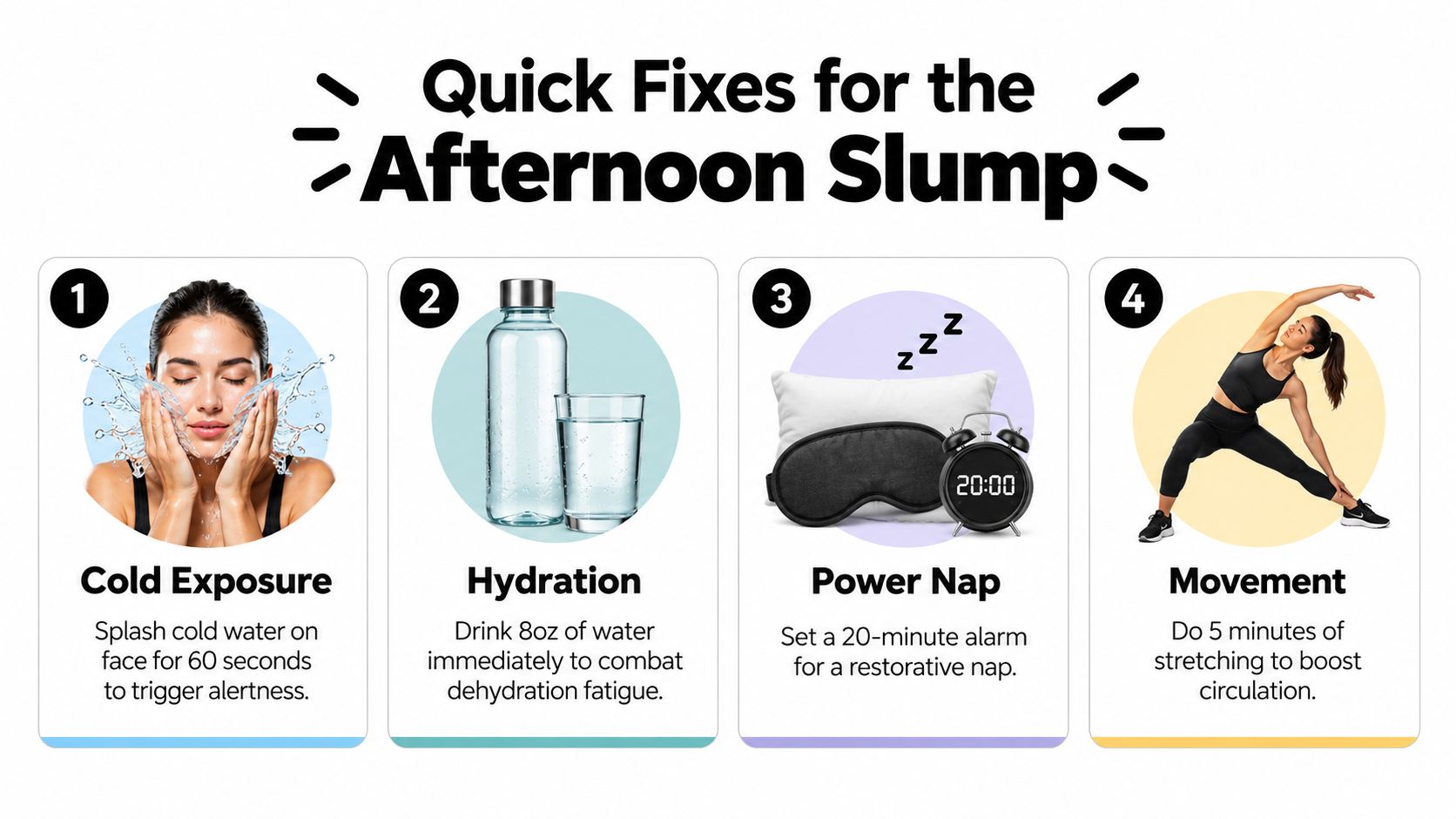
First, stand up and move. Walk through the building, climb stairs if that's safe for you, or complete a brief active task. Movement raises stimulation and interrupts the combination of sitting, monotony, and low alertness.
Then change your posture. A short sequence of standing, shoulder rolls, gentle trunk movement, and leg stretches can relieve the physical heaviness that comes from staying in one position. You're not trying to complete a workout. You're giving your nervous system a stronger wakefulness cue.
Natural daylight can help too. Step outdoors or move near a bright window for a few minutes, preferably earlier rather than later in the afternoon. Bright light supports alertness, but exposure close to bedtime may make it harder for some people to fall asleep.
Use a nap as a controlled reset
If you have a suitable place to rest, a brief nap can reduce sleepiness without turning into an unplanned hour of sleep. Set an alarm before closing your eyes and decide in advance what cue will get you moving when it rings, such as standing immediately or walking to get water.
For practical guidance on choosing a short nap window, see how long a power nap should be. A nap is an option, not a requirement, and it shouldn't be used to ignore severe daytime sleepiness.
If you choose caffeine, use it earlier rather than waiting until late afternoon. Your personal sensitivity varies, but a late dose can work against the nighttime sleep that protects tomorrow's alertness. For more non-caffeine strategies, the NexiHerb guide to energy without caffeine offers additional lifestyle context.
Argi-Max NexiHerb L-Arginine, L-Citrulline-DL-Malate, and beet root powder is another dietary supplement option described as a capsule blend containing amino acids and beet root powder for adults seeking a convenient addition to a balanced wellness routine. It isn't a substitute for addressing inadequate sleep or persistent fatigue.
Daily Habits That Shrink the Dip Over Time
You probably can't remove the biological afternoon dip completely, and you don't need to. A better target is a shorter, milder period of sleepiness that doesn't disrupt your priorities.
Anchor the morning
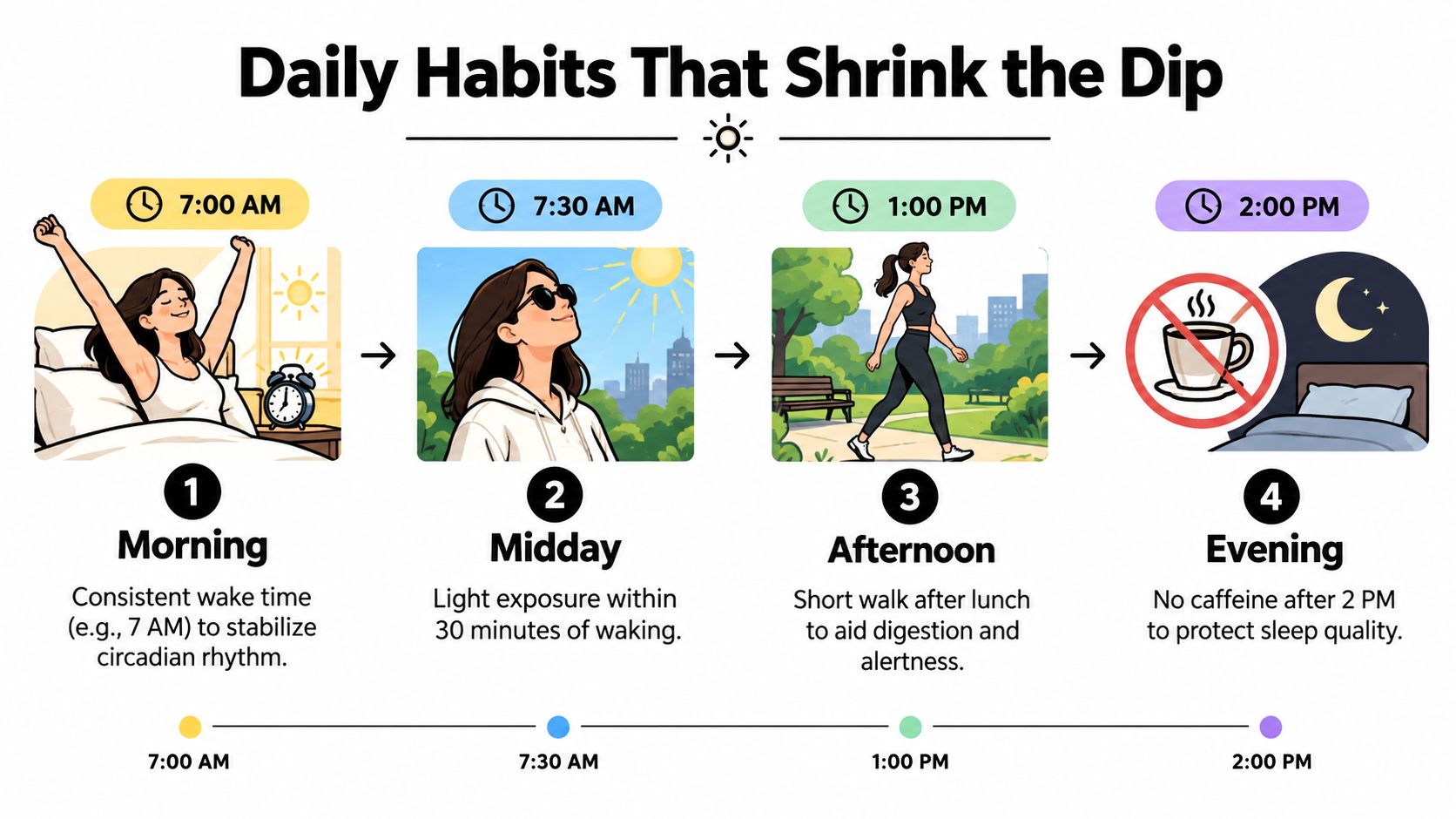
Wake at a consistent time, including on days off when practical. A stable wake time gives your internal clock a dependable starting point. Morning outdoor light soon after rising provides another strong timing cue, while regular movement helps prevent the day from becoming one long stretch of sitting.
Eat a breakfast that keeps you satisfied, then make lunch balanced and moderate rather than unusually large. Use your own response as feedback. If one meal repeatedly leaves you sluggish, adjust its size or composition and compare how the next afternoon feels.
Protect the night
Treat caffeine as a scheduled input rather than an emergency response. Keep the final dose early enough that it doesn't interfere with falling asleep, and remember that a coffee that helps today may make tomorrow harder if it disrupts your night.
Create a wind-down routine that lowers stimulation before bed. Dimmer light, fewer work demands, and a consistent sequence can help your brain transition from active problem-solving toward sleep. Keep fluids reasonably steady during the day instead of trying to catch up late at night.
Distribute movement
Short bouts of walking or stretching throughout the day are easier to sustain than relying on one evening workout to undo hours of inactivity. A brief walk after lunch can also give you a transition between eating and focused work.
Aim to shrink the dip, not wage war against your biology.
Track the pattern for several days. Note your sleep, lunch, caffeine, movement, and afternoon alertness. You're looking for a routine that makes the dip predictable and manageable, not a perfect schedule that collapses after one busy day.
When Afternoon Tiredness Warrants a Doctor Visit
A normal dip is usually limited, predictable, and connected to the time of day. It may improve when you move, get light, change tasks, or continue into the later afternoon. That pattern is different from feeling exhausted from morning until night or struggling to stay awake despite giving yourself enough opportunity to sleep.
The CDC notes that adults who usually sleep fewer than seven hours reported difficulty performing daily activities because of sleepiness or tiredness at rates up to 50% higher than adults sleeping seven to nine hours (CDC sleep guidance). If adequate sleep opportunity doesn't improve your alertness, don't keep escalating coffee, naps, or supplements without looking for another explanation.
| Signal | Normal Afternoon Dip | See a Clinician |
|---|---|---|
| Timing | Appears in a familiar early-afternoon window | Happens throughout the day or begins suddenly |
| Sleep | Improves with consistent, adequate sleep | Continues despite adequate sleep opportunity |
| Awareness | You feel sleepy but can stay safely engaged | You unintentionally doze during activities |
| Night symptoms | No major breathing concerns | Loud snoring, gasping, or witnessed breathing pauses |
| Safety | Doesn't affect driving | Makes driving or other safety-sensitive tasks difficult |
| Other symptoms | No unexplained health changes | Persistent low mood, palpitations, brain fog, or unusual weakness |
Medical contributors can include sleep disorders, medication effects, mood conditions, thyroid problems, and nutrient deficiencies. You don't need to diagnose yourself, but you can make an appointment more useful by recording bedtime, wake time, naps, caffeine, fatigue timing, and any nighttime breathing concerns.
The distinction between ordinary sleepiness and excessive daytime sleepiness is often missed. A primary-care study cited in this discussion of afternoon fatigue and excessive sleepiness reported frequent daytime sleepiness and noted that many people with sleep-apnea symptoms had not discussed them with a clinician.
If you feel yourself becoming drowsy while driving, stop and find a safe alternative. No productivity technique makes impaired driving safe.
For readers investigating energy concerns alongside thyroid-related questions, the NexiHerb thyroid and energy guide can provide general wellness context, but persistent symptoms require a healthcare professional's assessment.
Supplement Categories That Support Everyday Energy
Supplements can complement a strong baseline, but they can't replace sleep, food, movement, or evaluation of a medical problem. The most useful category depends on the pattern behind your tiredness.
B12 and iron are connected to energy metabolism and red blood cell production. Food sources include animal products, fortified foods, beans, leafy greens, and other iron-containing foods. Supplementing iron without confirming a need can be inappropriate, so discuss testing with a clinician.
Magnesium is involved in many body processes and is often considered in routines focused on sleep and muscle relaxation. Nuts, seeds, legumes, and whole grains provide dietary magnesium.
Electrolytes help maintain fluid balance and nerve function. They may be relevant when heat, heavy sweating, or prolonged exercise changes fluid needs, but ordinary afternoon tiredness doesn't automatically mean you need an electrolyte product.
Adaptogens and omega-3s are broad wellness categories rather than instant afternoon fixes. Adaptogenic herbs are commonly used in stress-support routines, while omega-3 fats can come from oily fish, certain seeds, and algae-based foods.
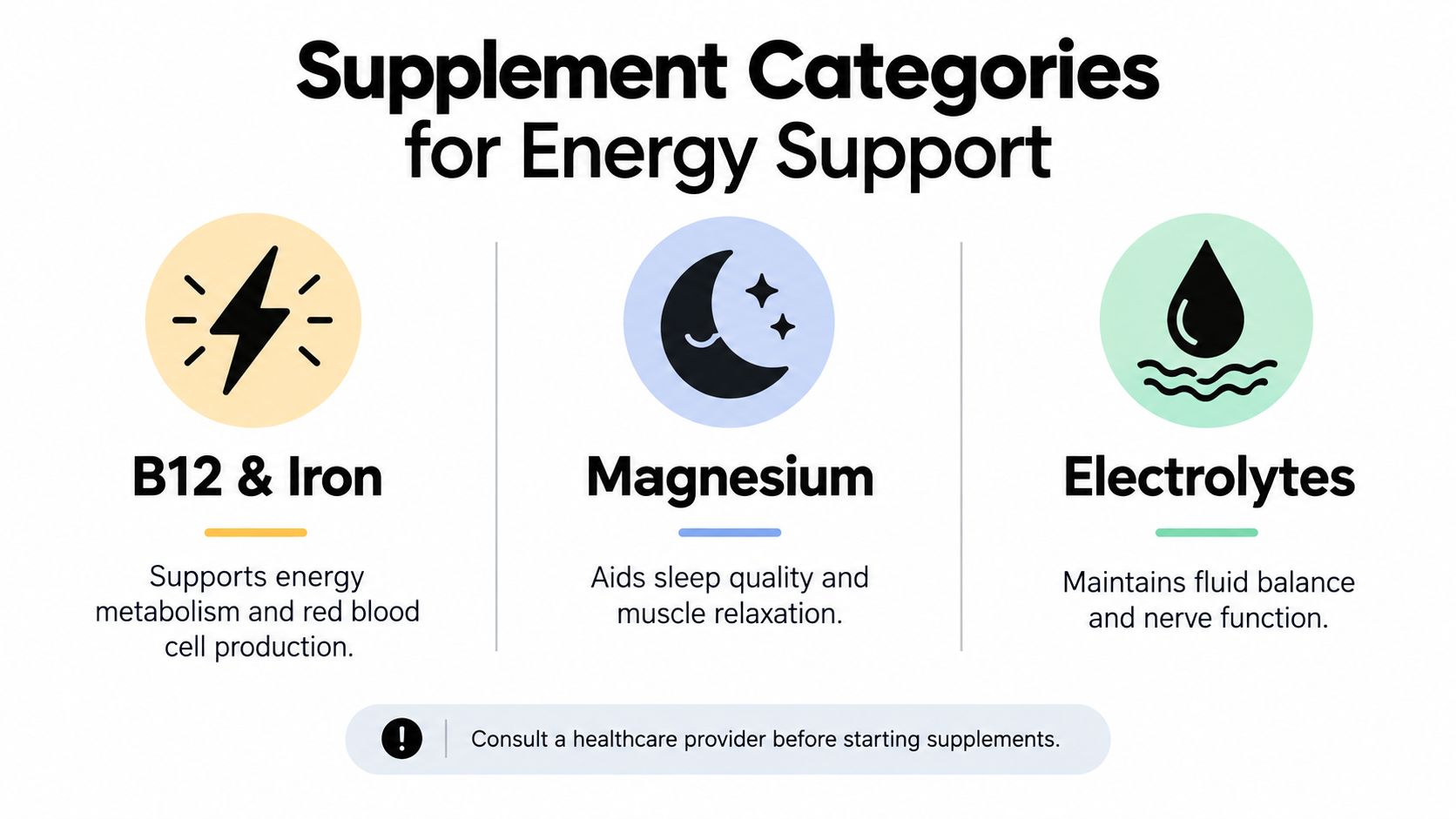
Read labels carefully and check ingredients with a pharmacist or clinician if you take medication, have a health condition, are pregnant, or are considering a high-dose product. The NexiHerb overview of supplements for fatigue can help you understand categories, but it shouldn't be used to diagnose the cause of persistent sleepiness.
Building Your Personal Energy Action Plan
Start with observation, not a complete lifestyle overhaul. For one week, record your sleep timing, afternoon fatigue, lunch pattern, caffeine timing, and whether movement or daylight changes how you feel.
Then use a simple decision path:
- Predictable and mild: Keep your wake time steady, improve nighttime sleep opportunity, maintain normal hydration, and use caffeine earlier.
- Clearly linked to short sleep: Address sleep duration and consistency before adding supplements or more stimulants.
- Stronger after specific meals: Test portion size and meal balance rather than removing an entire food group.
- Worsening or accompanied by symptoms: Arrange a clinical evaluation, especially if you doze unintentionally or feel unsafe driving.
Change one major variable at a time. That turns your routine into a practical experiment and helps you identify what affects your afternoons.
NexiHerb LLC offers dietary supplements across categories such as multivitamins, amino acids, herbal blends, omega-3s, and everyday energy support, positioned as additions to a balanced lifestyle. Visit NexiHerb LLC to explore its wellness catalog and nutrition guides, then choose products that fit your routine rather than using them to replace sleep or medical care.