

Yes, amino acids can produce ATP, but they're a secondary fuel, not a quick, stimulant-like energy boost. Protein provides about 4 kcal per gram, though the body's net usable energy is lower after it processes and disposes of nitrogen.
That distinction matters because “energy” can mean calories, fuel used by working tissues, or feeling more awake. Amino acids can contribute to the first two without producing the third, so a supplement claim needs to be judged by what it promises.
Table of Contents
- Calories, Fuel and Feeling as Separate Energy Outcomes
- How the Body Turns Amino Acids Into Fuel
- How Much Energy Amino Acids Supply and When It Matters
- Which Amino Acids Affect Energy and How
- What the BCAA Fatigue Studies Actually Show
- Tyrosine and Tryptophan for Alertness, Mood and Sleep
- Building Your Routine Before You Buy an Amino Acid Supplement
Calories, Fuel and Feeling as Separate Energy Outcomes
Protein supplies calories, but the body doesn't use amino acids as directly as it uses carbohydrate. Removing their nitrogen and safely disposing of it takes metabolic work, which lowers the net energy available. And even when amino acids are burned, that doesn't mean you'll feel a sudden lift in alertness.
Use this short test when you see “energy” on a supplement label or in a product description:
| Meaning | What amino acids actually do | How to test the claim |
|---|---|---|
| Calories | Protein provides about 4 kcal per gram, with a lower net yield after deamination, nitrogen disposal and urea production. | Does the claim concern calories on a label? |
| Fuel use | Glucogenic amino acids can become pyruvate or Krebs-cycle intermediates. Muscle and heart can oxidize BCAAs toward ATP. | Does the claim concern which fuel working tissues burn? |
| Felt energy | Amino acids aren't equivalent to carbohydrate or caffeine for immediate alertness. Recovery or lean-tissue support is a different benefit. | Does the claim concern how awake a person feels? |
The nutrition reference on protein-derived energy describes these as distinct outcomes: calories, metabolic fuel and subjective feeling. Under ordinary fed conditions, carbohydrate and fat generally supply most energy. Amino-acid oxidation becomes more relevant when energy availability is low or exercise is prolonged, but that metabolic contribution isn't the same as feeling more alert.
Amino acids may support recovery and help maintain lean tissue. Those are useful outcomes, but they don't show that a supplement will make you feel more awake. If fatigue is your main concern, a guide to supplements often considered for fatigue can help frame the question, but the cause of fatigue matters more than the word “energy” on a label.
Practical rule: before you buy, ask whether the promise is about calories, fuel choice or how you feel. Each claim needs different evidence.
How the Body Turns Amino Acids Into Fuel
An amino acid is like a packaged meal: it contains a carbon structure the body can use, along with nitrogen that must be handled separately. Before its carbon can feed energy pathways, the body transfers or removes the amino group.
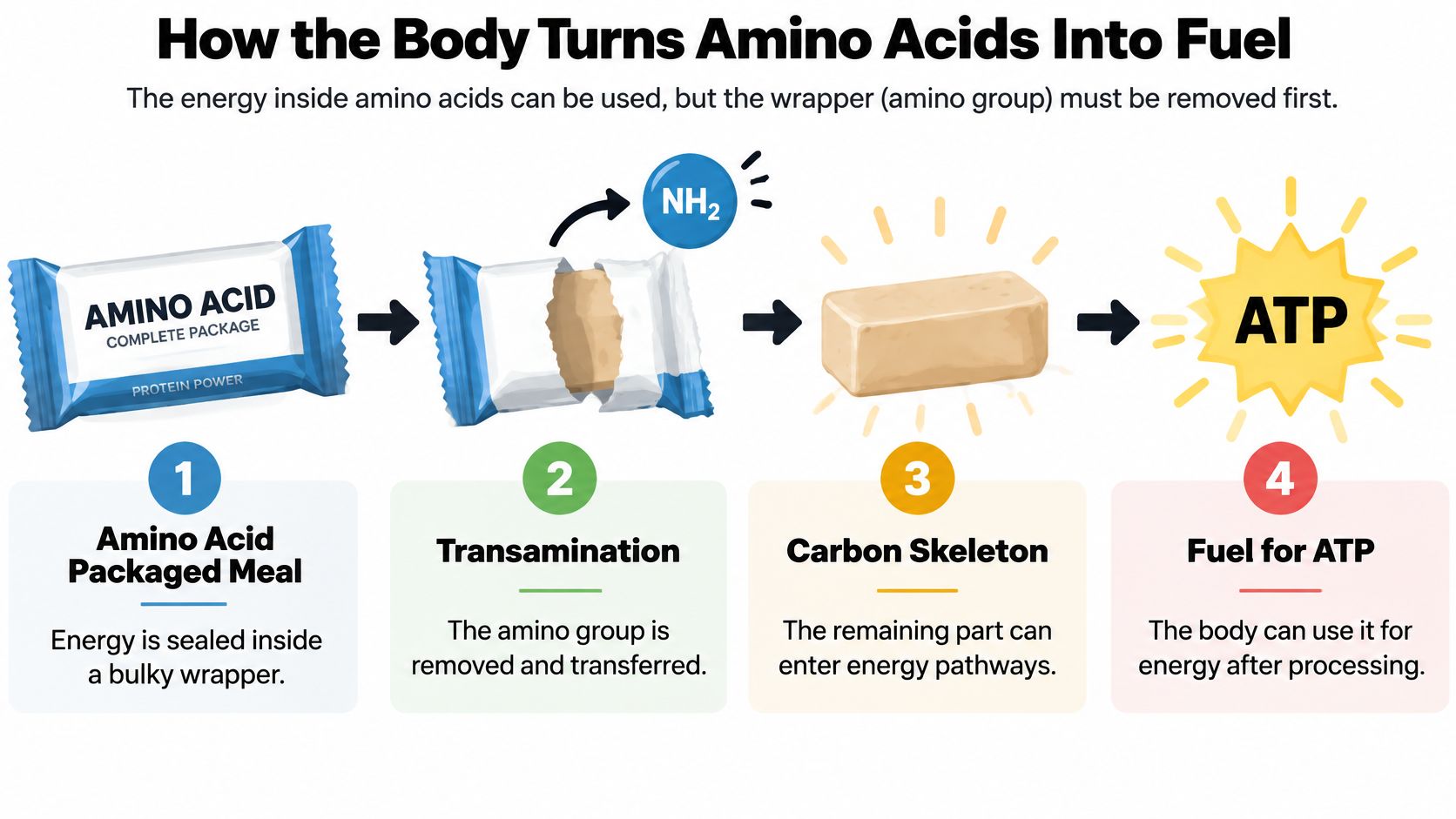
Step one removes or transfers the nitrogen
During transamination, the amino group moves from the amino acid to another molecule. This leaves a carbon skeleton that the body can route into energy-producing pathways. Nitrogen still needs to be processed safely.
Step two routes the carbon skeleton
The route depends on the amino acid's structure. Its carbon skeleton may become pyruvate, acetyl-CoA or an intermediate of the citric acid cycle. Each feeds into energy metabolism at a different point.
Step three produces carriers that help make ATP
Inside mitochondria, these compounds are oxidized, producing NADH and FADH₂. The carriers deliver energy to the electron-transport chain, which supports ATP production. The citric acid cycle itself makes one ATP equivalent per turn; most usable ATP comes later through oxidative phosphorylation.
Nitrogen disposal also takes energy. The body principally converts nitrogen into urea, and making urea costs the cell extra ATP. This helps explain why amino-acid oxidation is less direct than carbohydrate oxidation. The biochemistry summary of energy metabolism/20:_Energy_Metabolism/20.S:Energy_Metabolism(Summary)) describes the liver's role: oxidative conversion of amino acids to glucose accounts for approximately one-half of the liver's daily oxygen consumption.
This pathway becomes more relevant when protein intake exceeds immediate needs, carbohydrate availability falls, or energy demand rises. The body can then use more amino-acid carbon for energy or glucose production, though amino acids remain a secondary fuel.
How Much Energy Amino Acids Supply and When It Matters
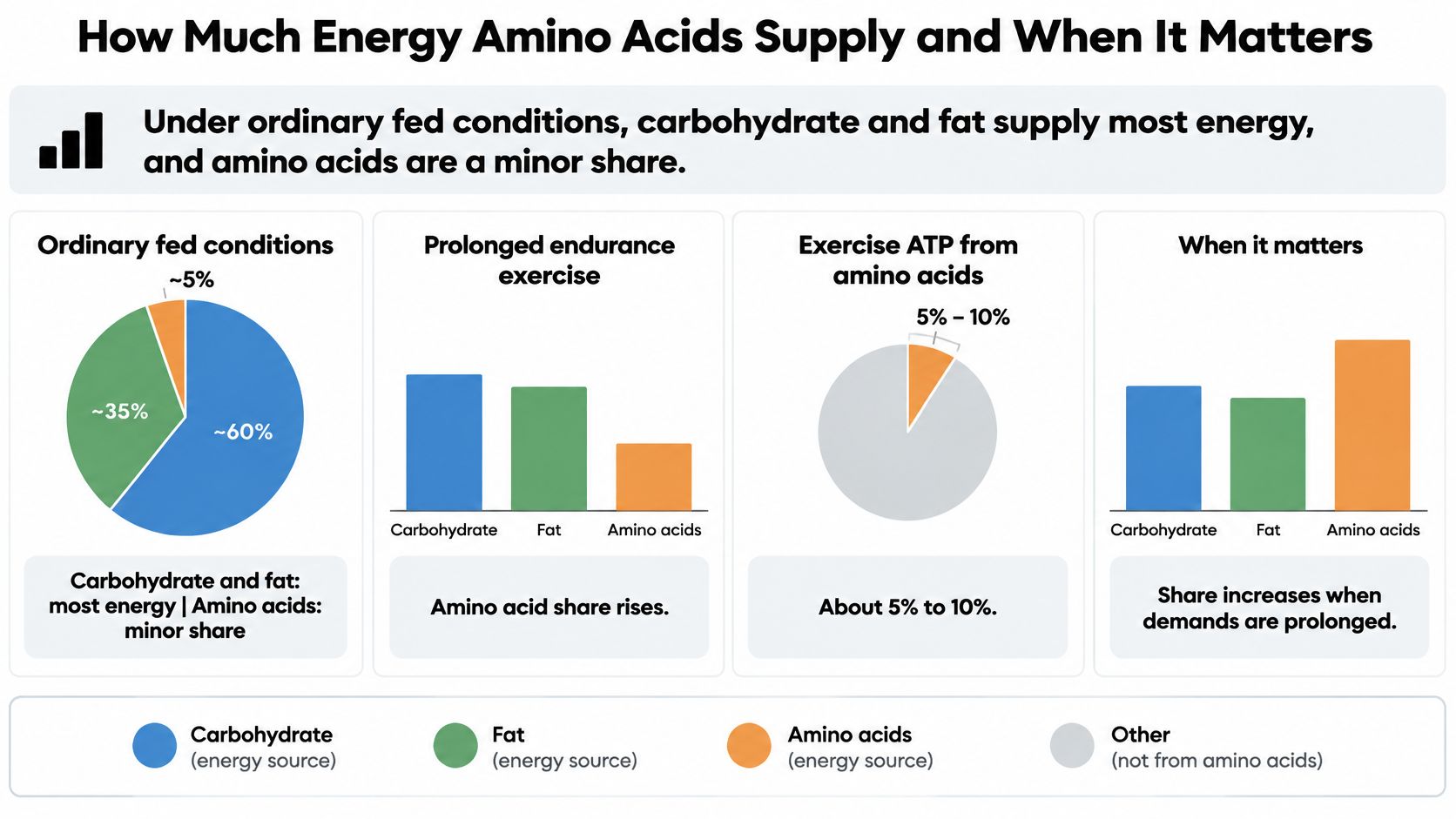
Under ordinary fed conditions, carbohydrate and fat supply most of the body's energy, while amino acids make a smaller contribution. Their share can rise during prolonged endurance exercise, particularly as glycogen availability declines, but the contribution remains modest.
| Condition | Share of energy from amino acids | What it means |
|---|---|---|
| Fed state with adequate carbohydrate | Minor share, while carbohydrate and fat supply most energy | Amino acids are a secondary fuel |
| Prolonged endurance exercise beyond two hours | About 6% of total exercise energy cost | BCAAs are oxidized preferentially |
| Prolonged endurance exercise, reported range | Up to about 10% of total ATP turnover | Estimates vary across reviews |
| Many exercise conditions | No more than about 5% of ATP provision | A lower estimate applies under many conditions |
| Fasting, illness or low carbohydrate intake | Oxidation rises, exact share not established | Muscle protein breakdown may also increase |
The review of amino-acid metabolism during exercise reports that amino-acid oxidation accounts for roughly 6% of exercise energy cost after exercise lasts more than two hours. Leucine, isoleucine and valine, the branched-chain amino acids, are preferentially oxidized in this context. Other amino acids may travel to the liver and contribute to glucose production.
Different amino acids also have different metabolic costs. One biochemical analysis estimated ATP production costs of about 91 kJ per ATP for glucose, 99 kJ for glutamate and 153 kJ for cysteine, including amino-acid breakdown and urea synthesis. That comparison shows why amino acids can supply fuel without matching glucose's efficiency.
Long exercise, low carbohydrate intake and insufficient energy availability can increase amino-acid oxidation. They may also increase muscle-protein breakdown, so using protein as fuel isn't automatically a benefit. For active adults, amino acids are better thought of as substrates for recovery and tissue maintenance than as replacements for sleep, adequate calories, hydration or carbohydrate fueling. If you're weighing a supplement against a complete protein food, this overview of amino-acid supplements versus protein powder can help clarify the difference in purpose.
For a visual overview of fuel use during exercise, see the video below.
Which Amino Acids Affect Energy and How
Amino acids can provide energy, but most do so gradually and in small amounts. None acts like a stimulant. The useful question is which amino acid fits the goal, rather than whether a product broadly promises “energy.”
| Amino acid | Main role in energy or fatigue | Strength of evidence | What it does not do |
|---|---|---|---|
| BCAAs (leucine, isoleucine, valine) | Oxidized in muscle, especially during prolonged exercise | Moderate for exercise fuel use, limited for everyday tiredness | Don't replace carbohydrate or sleep |
| Alanine | Can be converted to glucose in the liver | Mostly mechanistic, with little direct consumer evidence | Doesn't act as a quick energy boost |
| Glutamine | Fuel for gut and immune cells | Limited, mostly clinical settings | Doesn't raise alertness |
| Tyrosine | Precursor to dopamine and norepinephrine | Mostly stress and sleep-deprivation studies | Isn't a direct energy source |
| Tryptophan | Precursor to serotonin and melatonin | Mostly sleep and mood research | Affects sleep and mood rather than calories |
| Arginine | Precursor to nitric oxide | Evidence centers on circulation and blood flow | Isn't a major fuel |
BCAAs are the group most directly tied to exercise fuel use because working muscle can oxidize them. That doesn't make them a replacement for carbohydrate during a demanding session, or a reliable fix for everyday tiredness. Alanine has a different role: it can contribute to glucose production when carbohydrate is limited, but that pathway doesn't make alanine a quick pick-me-up.
Tyrosine and tryptophan are often misunderstood because they're associated with brain chemicals. They're precursors, not instant switches: tyrosine contributes to the production of dopamine and norepinephrine, while tryptophan is used to make serotonin and melatonin. Arginine is linked to nitric oxide and blood flow rather than being a major fuel.
For food-first options, this guide to foods with all nine essential amino acids may help you identify complete-protein sources. A product can also combine amino acids and other ingredients for a different purpose; for example, All Night + Nitric-OX at -50% is described as a bundle pairing a botanical formula with a nitric oxide support supplement. Neither type of product should be judged as a stimulant unless it contains an ingredient with that effect.
What the BCAA Fatigue Studies Actually Show
The common claim is that BCAAs reduce tiredness. The evidence is more specific: some findings concern exercise fuel selection or post-exercise fatigue in particular groups, not everyday energy for everyone.
A 2025 exercise study in active men reported that pre-exercise BCAAs altered fuel use. During continuous exercise, the supplement enhanced fat oxidation; during a later time-to-exhaustion test, it enhanced carbohydrate oxidation and exercise efficiency while reducing immediate post-exercise fatigue. The study also reported increased blood ammonia, which makes a simple “more energy” interpretation too confident.
A separate 2025 randomized pilot trial in 20 older adults with obesity found that BCAAs combined with an eight-week exercise program were associated with a 45% reduction in fatigue, plus modest strength and endurance gains compared with exercise alone. The review discussing these BCAA findings emphasizes the narrow populations, exercise settings and short follow-up. These results don't establish that BCAAs treat general fatigue.
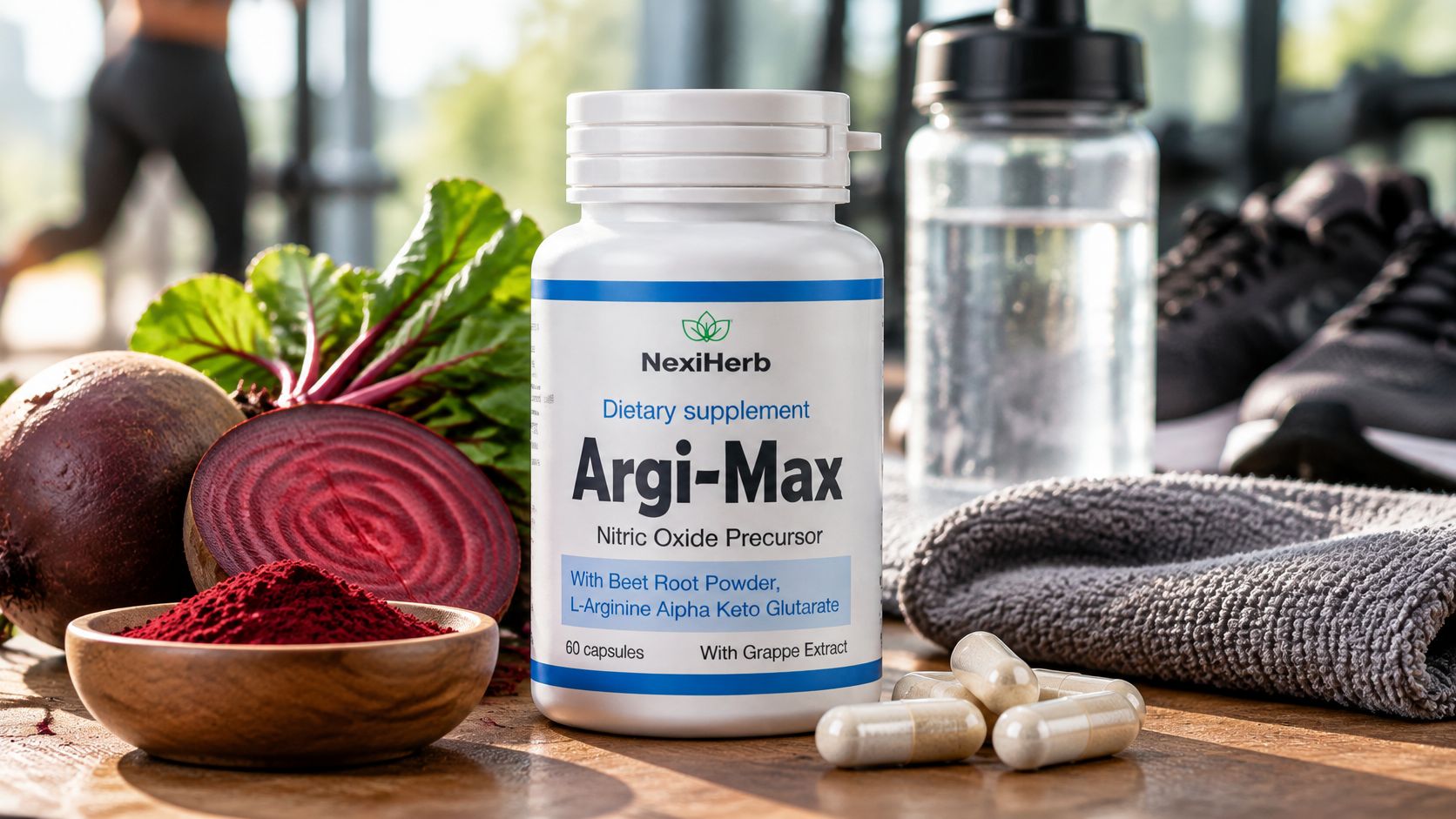
That distinction matters if you're considering Argi-Max NexiHerb L-Arginine, L-Citrulline-DL-Malate, and beet root powder. Its listed ingredients include L-Arginine, L-Citrulline-DL-Malate and beet root powder, so it's a different kind of formula from a BCAA product and shouldn't be treated as evidence for BCAA effects.
BCAAs aren't a universal remedy for sleep loss, anemia, under-fueling, or medical causes of fatigue. Their possible effects also need to be separated from adequate total protein and calories, which a person may already get from food. If tiredness persists, look for the cause rather than just adding an amino-acid supplement.
Tyrosine and Tryptophan for Alertness, Mood and Sleep
Tyrosine and tryptophan are raw materials, like lumber delivered to a workshop. Having the materials doesn't guarantee that the factory will produce a particular result; the body still has to process them under the right conditions.
Tyrosine is a precursor to dopamine and norepinephrine. Research on its potential effect on mental performance tends to focus on stress or sleep deprivation, when the body's demand for these messengers may be higher. It isn't a direct source of ATP, so an alertness claim is about how a person feels or performs, not calories.
Tryptophan is used to make serotonin and melatonin, which connects it more closely to mood and sleep timing than to immediate energy. It's not a wake-up ingredient, and taking it shouldn't be treated as a way to add fuel to a workout.
Results for these types of supplement claims are mixed and often come from small or short studies. If tiredness is persistent, ask a clinician about possible causes such as sleep problems, iron status, thyroid function or medication effects before trying to address it with amino acids.
Building Your Routine Before You Buy an Amino Acid Supplement
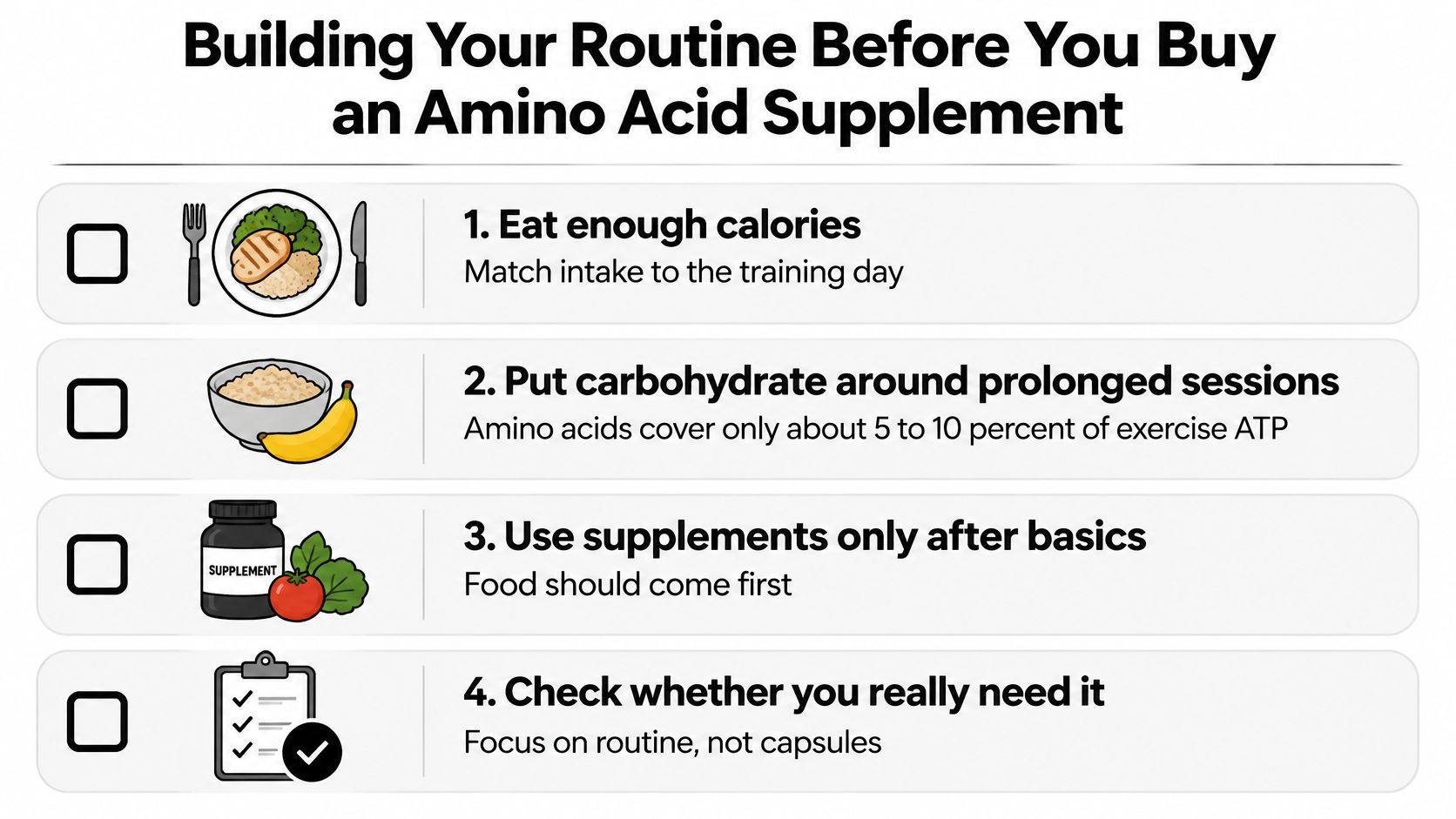
Before choosing a capsule, check the basics. A supplement can't make up for too few calories, too little carbohydrate during demanding exercise or inadequate sleep.
- Match calories to the training day. If you're under-fueled, address total intake first.
- Use carbohydrate around prolonged sessions. Amino acids provide only a modest share of exercise fuel, so don't use them in place of your usual carbohydrate strategy.
- Spread food protein across meals. For lifting and recovery, your overall protein intake matters more than a separate timing trick.
- Protect sleep. Tyrosine research often focuses on stress or sleep loss, while tryptophan relates to sleep and mood rather than a wake-up effect.
| Goal | Timing that fits | Practical note |
|---|---|---|
| Prolonged endurance sessions | Alongside carbohydrate fueling during the session | Carbohydrate remains the primary fuel |
| Resistance training and recovery | Spread total daily protein across meals | Total protein from food matters more than timing |
| Fasting or low-intake periods | With a meal, following label directions | Adequate calories come first |
| Sleep or mood goals | With an evening meal, not a supplement by default | Effects aren't established for most people |
For endurance exercise, take any amino-acid product alongside your carbohydrate plan, not instead of it. When lifting, prioritize adequate protein from food across the day. If you're fasting or eating too little, restore calories first; for a sleep or mood goal, start with routine and food rather than assuming a supplement will help. More practical guidance on when to take amino acids can help you think through timing, but there isn't one research dose that fits everyone.
Follow the product label and consult a clinician if you have health concerns or persistent fatigue. If you decide to trial a supplement, choose one goal and track one outcome, such as time to exhaustion, next-day soreness or sleep quality. That gives you a clearer answer than relying on a vague sense of “energy.”
NexiHerb LLC offers dietary supplements across categories including amino acids, herbal blends and wellness formulas, along with nutrition guides for practical decision-making. If you're comparing options, visit NexiHerb LLC and evaluate any product against your specific goal and the basics of your routine.