

The most popular advice about antioxidants is also the least accurate: free radicals are bad, antioxidants are good, and more antioxidants must be better. Biology doesn't work like a simple battle between villains and protectors. Reactive molecules help cells communicate, defend against microbes, respond to exercise, and adapt to changing demands. Antioxidants help regulate those reactions, but they aren't a universal eraser for every free radical.
A better explanation of antioxidants and free radicals starts with balance. The important question isn't how to eliminate every reactive molecule. It's whether your body can produce, control, recycle, and repair the effects of reactive chemistry in the right place and at the right time.
Table of Contents
- Why Free Radicals Are Not the Enemy You Were Told
- What Are Free Radicals and Oxidative Stress
- How Antioxidant Defense Works in the Body
- Food Sources, Supplements, and the Evidence Gap
- Antioxidant-Rich Foods and Practical Nutrient Roles
- Supplement Choices, Safety, and Realistic Expectations
- Exercise, Recovery, and the Redox Adaptation Question
- Daily Habits That Support Healthy Redox Balance
Why Free Radicals Are Not the Enemy You Were Told
Think of a lit candle. Its flame can provide light and warmth, but an uncontrolled flame can damage nearby material. The flame itself isn't automatically harmful. Its effect depends on where it is, how much of it is present, and whether the surrounding system can keep it under control. Reactive oxygen and nitrogen species work in a similarly context-dependent way.

Your cells deliberately generate reactive species during normal metabolism, immune defense, cellular communication, and adaptation to exercise. Immune cells use reactive chemistry as part of their defense activity. Muscle cells also experience a temporary rise in reactive species during physical activity, which can help trigger adaptations to training. Calling every one of these molecules an enemy confuses a normal biological signal with uncontrolled damage.
The historical shift matters. In 1969, Joe McCord and Irwin Fridovich identified superoxide dismutase, an enzyme that converts superoxide into less reactive products and showed that organisms possess specialized defenses against radicals. In 1985, Helmut Sies introduced the term oxidative stress to describe an imbalance favoring pro-oxidants over antioxidants, as described in this history of redox biology.
Practical rule: Support regulation and resilience, not total suppression.
That principle changes how you view supplements. A high-dose antioxidant may neutralize reactive molecules in a laboratory test, yet excessive suppression inside the body could interfere with useful signaling. Food variety, adequate protein, regular activity, sleep, and avoiding tobacco smoke support the broader system rather than targeting one reaction in isolation.
What Are Free Radicals and Oxidative Stress
A free radical is an atom, molecule, or ion with at least one unpaired electron. That electron makes the particle reactive, allowing it to interact with nearby lipids, proteins, nucleic acids, and carbohydrates. Important biological examples include reactive oxygen species, such as superoxide and hydroxyl radicals, and reactive nitrogen species derived from nitric oxide.
Cells produce these substances during mitochondrial respiration and immune-cell activation. Cigarette smoke, pollution, and radiation can also increase reactive chemistry. Their presence does not establish cellular injury. At controlled physiological concentrations, reactive oxygen and nitrogen species carry signals involved in immune defense, cell communication, and metabolic adaptation.
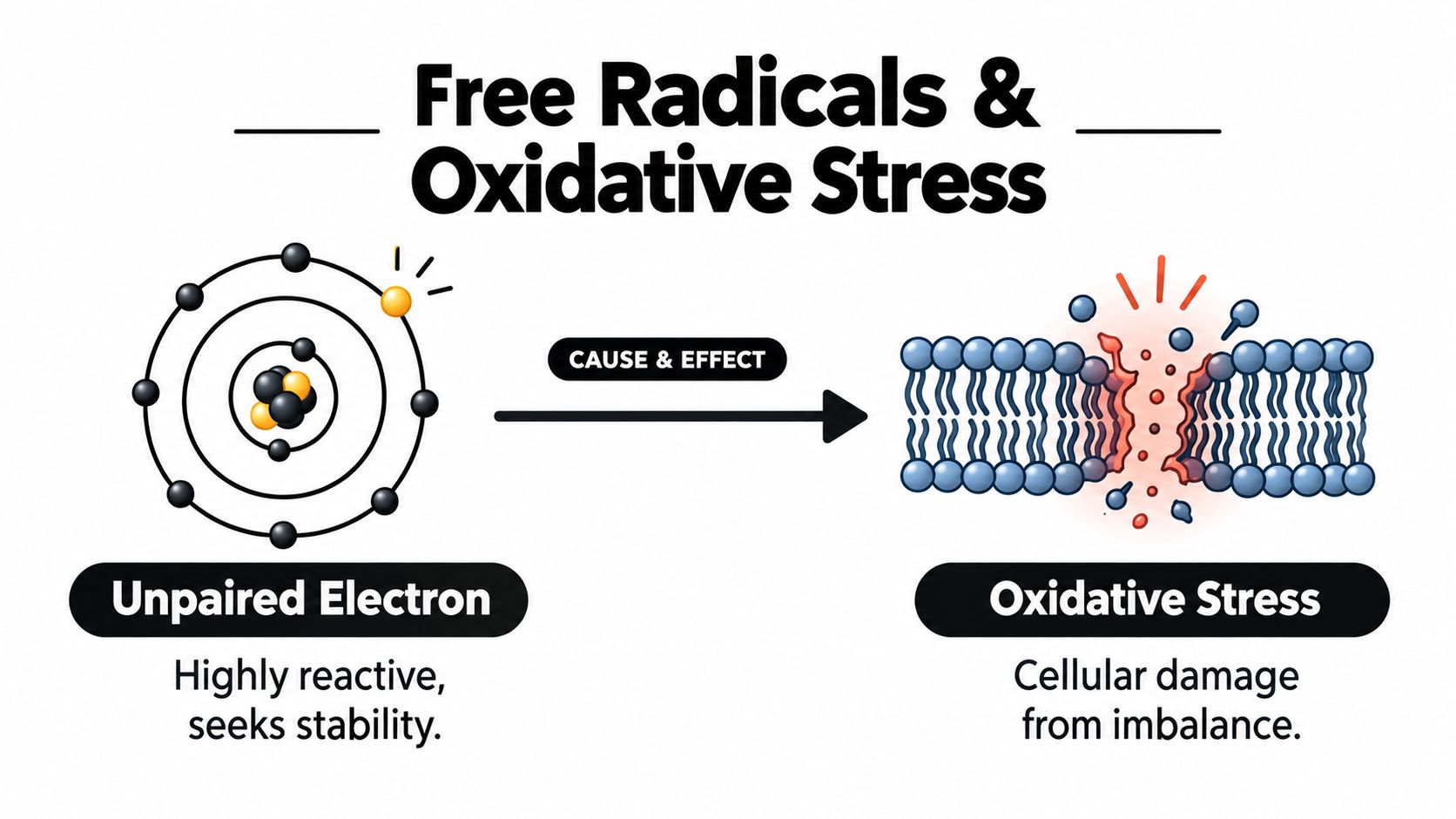
The balance that defines oxidative stress
Oxidative stress develops when reactive-species production exceeds the capacity of enzymatic and nonenzymatic antioxidant systems to control it. Regulation then becomes inadequate, and reactive chemistry can damage lipids, proteins, and DNA. Damage arises from imbalance, not from the mere presence of free radicals.
Redox biology follows a controlled sequence:
- Cells generate reactive molecules for useful functions.
- Antioxidant enzymes and compounds regulate their concentration and location.
- Repair systems address altered molecules.
- Persistent excess can disrupt signaling and damage cellular structures.
Removing every reactive molecule would also remove signals that help cells respond to infection, exercise, and metabolic stress. Healthy redox regulation therefore means preserving useful signaling while limiting persistent excess and cellular injury.
For a concise visual introduction to these mechanisms, the embedded explanation below provides additional context.
How Antioxidant Defense Works in the Body
Antioxidant defense is a coordinated network, not a single protective shield. Enzymes, small molecules, metal regulation, and repair processes work in different places and at different stages. The sequence begins with superoxide dismutase, which converts superoxide radicals into hydrogen peroxide. Hydrogen peroxide is less reactive in some settings, but it still requires control.
Catalase and glutathione peroxidase convert hydrogen peroxide into less reactive products. Glutathione peroxidase also reduces organic hydroperoxides. If iron or copper catalyzes Fenton chemistry, hydrogen peroxide can produce highly reactive hydroxyl radicals. These may initiate lipid-peroxidation chain reactions. A reactive molecule becomes more harmful when another part of the network cannot process it effectively.
Multiple defenses, different locations
Dietary antioxidants provide complementary support. Vitamin C, vitamin E, and carotenoids can interrupt oxidation chains by transferring electrons or hydrogen atoms. Other compounds may bind catalytic metals, reduce radical formation, or help restore an antioxidant after it reacts.
This system also explains why a laboratory antioxidant score cannot predict every human outcome. A compound may neutralize radicals in a test tube yet have limited effects in people if it is poorly absorbed, quickly metabolized, unable to reach the relevant tissue, or present in the wrong chemical form. Dose, location, absorption, regeneration, and interaction all influence its biological effect.
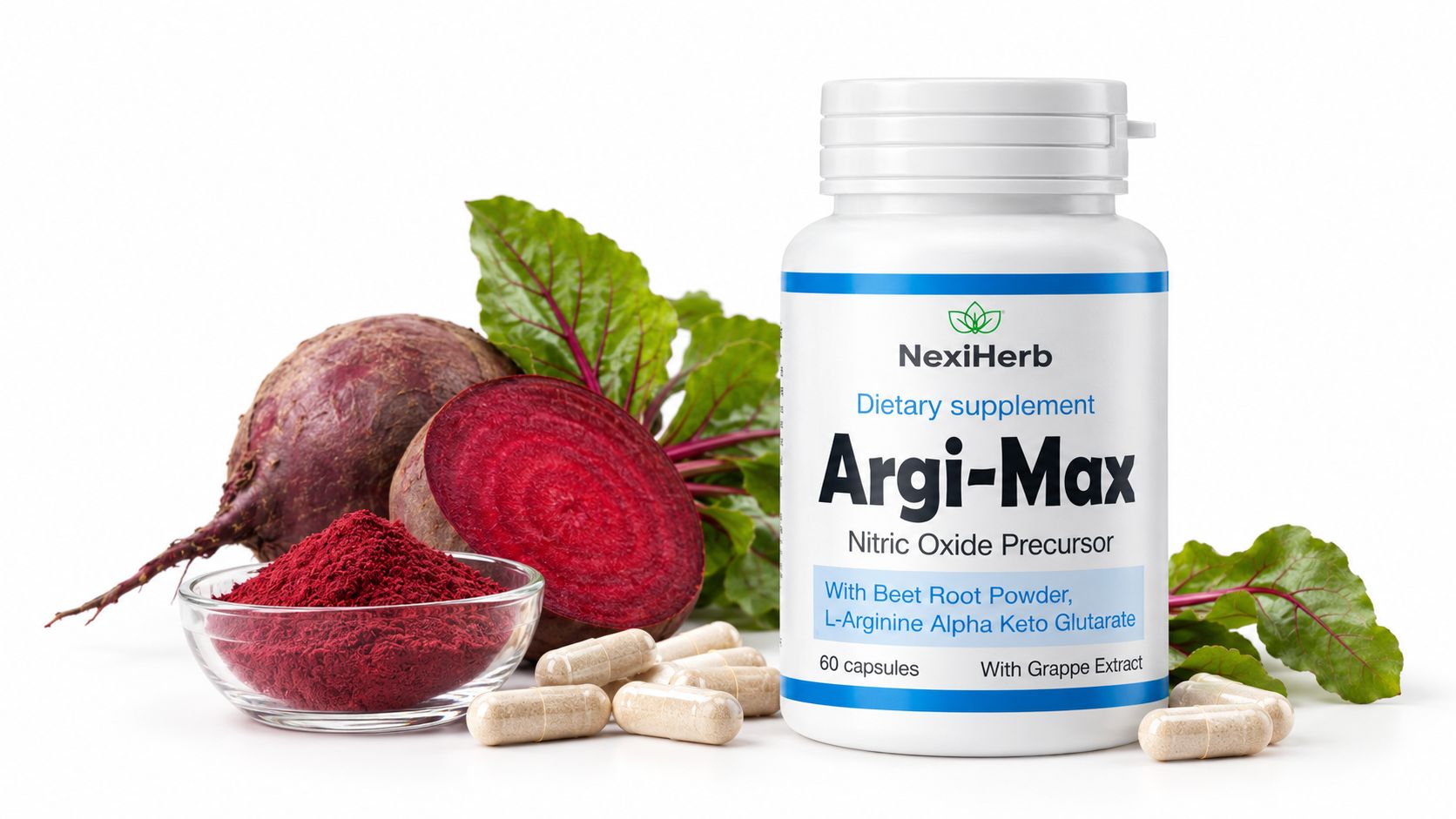
For example, Argi-Max NexiHerb L-Arginine, L-Citrulline-DL-Malate, and beet root powder is a dietary supplement formulated with amino acids and plant-based ingredients. Its listed serving is two capsules and includes L-Arginine HCL, L-Arginine Alpha Keto Glutarate, L-Citrulline-DL-Malate, and beet root powder. The ingredient list describes the formula; it is not clinical evidence of an antioxidant effect in the body.
The same distinction applies to topical products. Skin Perfection on antioxidant skincare discusses how antioxidant ingredients are used in face creams. Skin exposure, tissue distribution, and formulation differ from redox processes inside cells, so topical claims require their own evidence.
Food Sources, Supplements, and the Evidence Gap
Vitamin C and vitamin E show why chemical activity does not equal a health outcome. Vitamin C is water-soluble and associated with Albert Szent-Györgyi's research in the 1930s. Vitamin E was recognized for its role as an in-vivo lipid antioxidant in work published in 1931, as described in this review of antioxidant mechanisms and evidence.
Those discoveries describe what the compounds can do chemically. They do not show that a concentrated supplement improves every aspect of health. The result depends on the nutrient's form, dose, absorption, distribution, metabolic conversion, and the oxidative process involved. In redox biology, context determines whether a reactive molecule supports signaling or contributes to stress.
Why the test tube can mislead
A laboratory test may show that a substance donates electrons efficiently. Human biology adds digestion, metabolism, transport, tissue barriers, competing reactions, and clearance. A compound can appear impressive in vitro yet fail to reach the tissue where a meaningful effect would need to occur.
Astaxanthin illustrates this evidence gap. A systematic review and meta-analysis evaluated nine randomized trials and concluded that its antioxidant effect in humans remained unclear, according to the published review of astaxanthin supplementation. The finding does not settle whether astaxanthin has biochemical activity. It shows that biochemical plausibility alone cannot establish a clinically meaningful benefit.
Food provides a wider nutritional package than an isolated compound, including antioxidant molecules, fiber, minerals, protein, and structures that influence absorption and metabolism. A multivitamin serves a different role, such as helping adults complement their nutritional intake. Vita Mix NexiHerb Multivitamin & Mineral Dietary Supplement is listed as a once-daily capsule. Its product description states that it is intended for general wellness, not to diagnose, treat, cure, or prevent disease.
Antioxidant-Rich Foods and Practical Nutrient Roles
Food-first nutrition works because meals combine several biological inputs instead of asking one molecule to do everything. Colorful fruits and vegetables provide polyphenols, flavonoids, and carotenoids. Nuts, seeds, and plant oils contribute vitamin E and fats that can support the absorption of fat-soluble compounds.
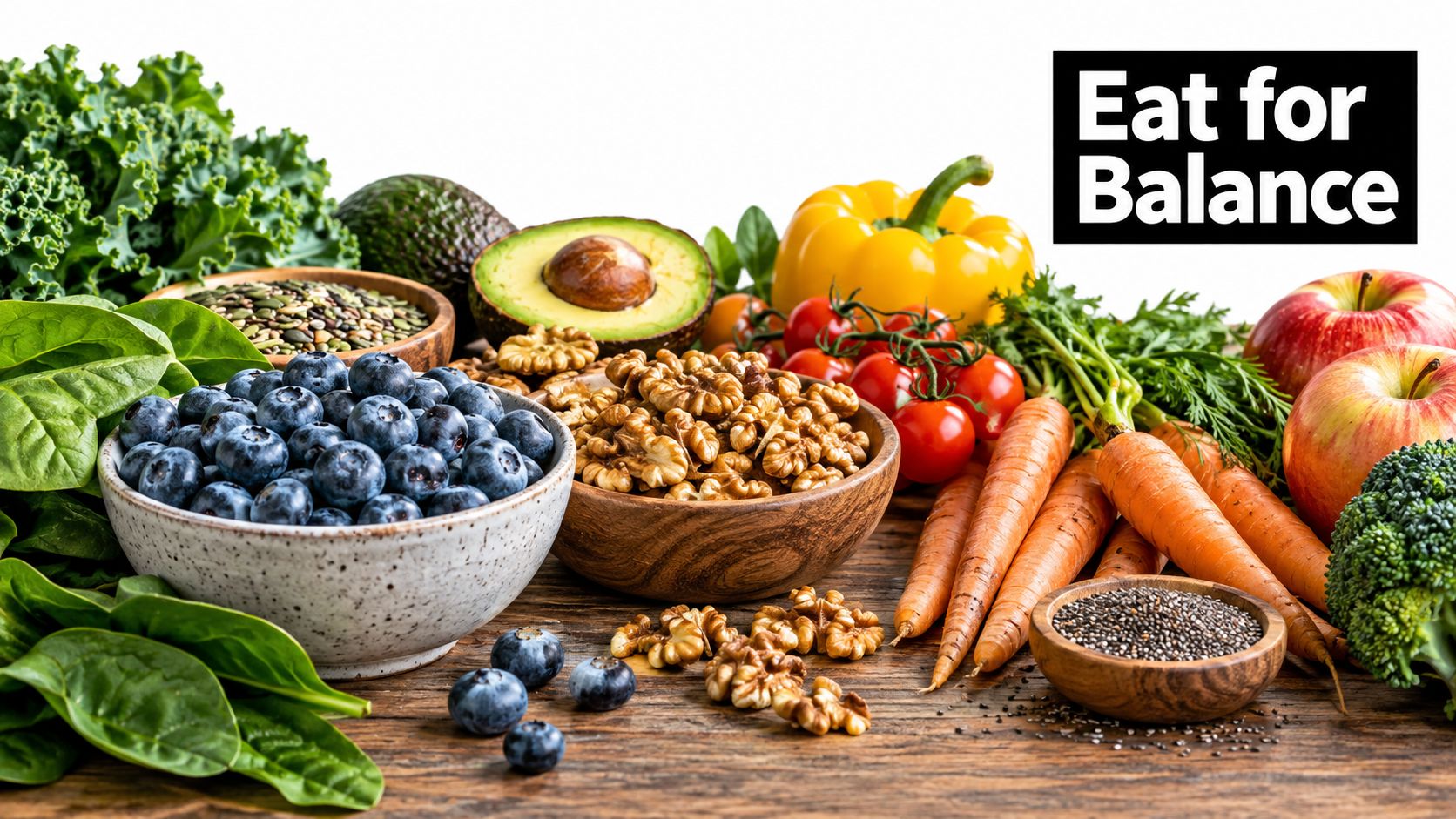
Build meals around variety
Berries, tea, and cocoa provide plant compounds that may fit into a pattern supporting recovery and vascular function, but they don't replace a varied diet. Protein-rich foods supply amino acids needed for the body's production of glutathione, an important intracellular antioxidant system. That makes adequate protein relevant to endogenous defense, not just muscle maintenance.
A practical plate might combine leafy greens with beans or fish, add tomatoes or peppers, and include nuts, seeds, or olive-based dressing. Another meal could pair whole grains with colorful vegetables and a protein source. The goal isn't to rank one “superfood” above all others. It's to create repeated exposure to different nutrients and compounds.
Variety beats the search for a single perfect antioxidant.
Targeted products can still have a place when they fit a person's diet, preferences, or professional guidance. Triple Mushroom Complex Nexiherb, Cordyceps, Reishi, and Lion's Mane, 90 caps contains those mushroom-derived ingredients in capsule form for adult use. Its label also states that the product isn't intended to diagnose, treat, cure, or prevent disease.
Readers who want a focused discussion of one plant compound can review NexiHerb's guide to resveratrol benefits, while keeping the same evidence standard: a compound's presence in a formula doesn't by itself establish a disease-prevention effect.
Supplement Choices, Safety, and Realistic Expectations
Many people assume that an antioxidant supplement must prevent disease because the underlying chemistry sounds protective. That conclusion goes too far. A systematic review found no evidence supporting antioxidant supplements for primary or secondary mortality prevention, and reported that vitamin A, beta-carotene, and vitamin E may increase mortality, as summarized in this review of antioxidant supplementation and mortality.
That finding doesn't mean antioxidant-containing foods are harmful, or that every antioxidant product has the same effect. It means that isolated, concentrated doses can't be judged by the reputation of the nutrient alone. Baseline nutritional status, dose, formulation, age, smoking status, medication use, and health conditions can change the risk and benefit profile.
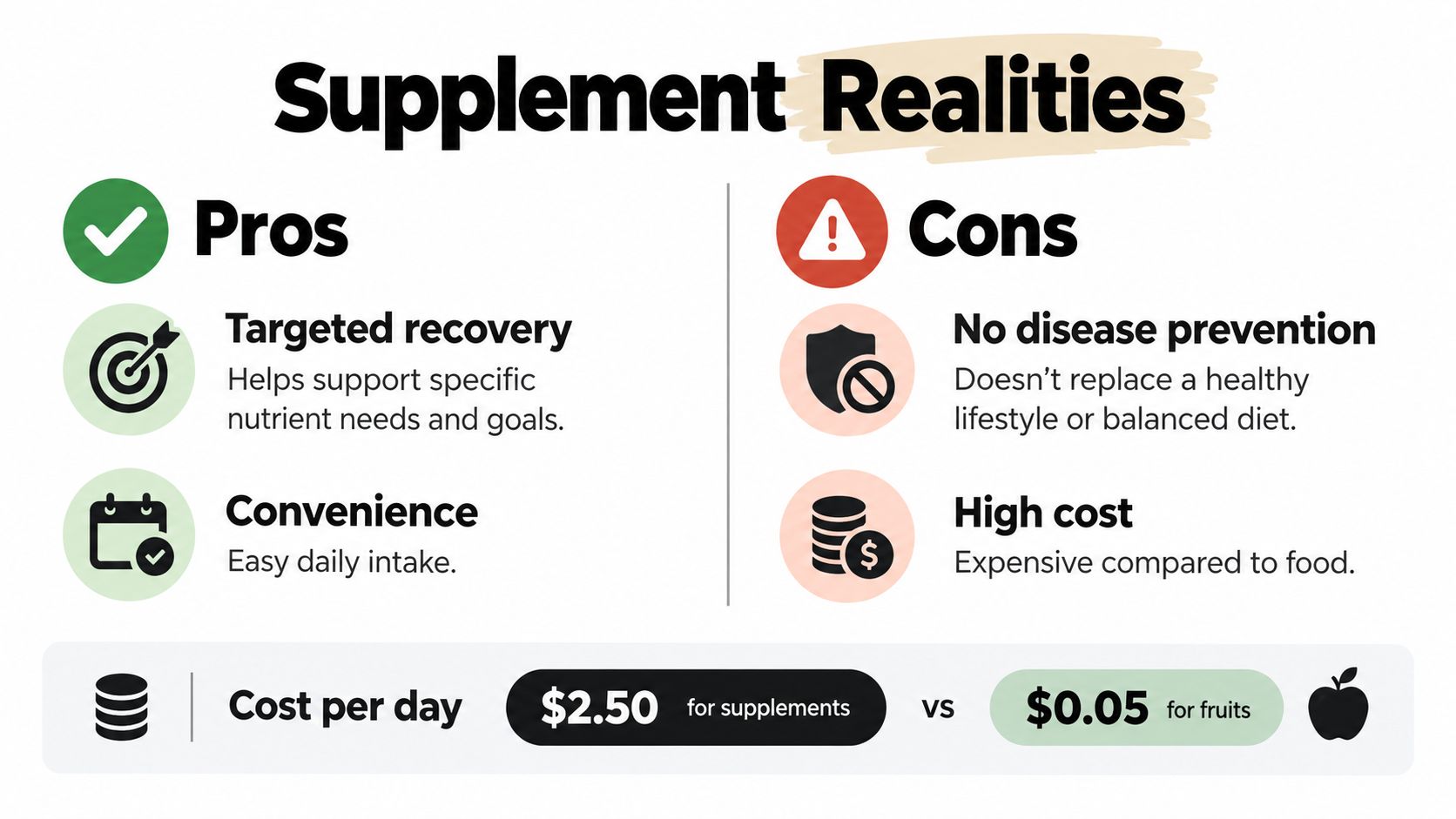
Use a supplement as a complement
Before choosing a high-dose product, ask what problem you're trying to solve. A clinician may recommend targeted supplementation for a documented deficiency, a restricted diet, or a specific circumstance. Without that context, more isn't automatically better, and a laboratory antioxidant score can't prove improved long-term health.
People comparing skin-related claims should also separate cosmetic goals from internal disease claims. A brightening guide for dark spots discusses astaxanthin in a skin-focused context, but that type of discussion shouldn't be treated as evidence that oral antioxidants extend life or prevent disease.
For a broader product-oriented overview, see NexiHerb's antioxidant-rich supplements guide. Whatever the product, discuss high doses and potential interactions with a qualified clinician, particularly if you take medication, manage a medical condition, are pregnant, or plan to use supplements around demanding training.
Exercise, Recovery, and the Redox Adaptation Question
Exercise challenges the idea that free radicals are only harmful. Physical activity can briefly raise reactive oxygen species, while also stimulating the body's antioxidant defenses and supporting mitochondrial efficiency over time. These molecules act less like invading enemies and more like messages in a training system. Their signals help cells detect demand and adjust to it.
That distinction raises a practical question for active adults: Can antioxidant supplements around workouts reduce the training benefit? A redox-focused review reports that chronic, high-dose vitamins C and E taken close to key training sessions are most consistently associated with weaker redox-sensitive adaptation signals. The same review describes food-based polyphenols and compounds such as tart cherry, pomegranate, and curcumin as possible recovery supports, without clear evidence that appropriately timed use impairs adaptation, as detailed in this review of exercise, antioxidants, and adaptation.
Separate adaptation from short-term recovery
The answer depends on the goal. Building training adaptations may not be well served by routinely taking high-dose isolated vitamins around key sessions. Short-term soreness or recovery demands involve a different decision, because timing, dose, training phase, and the specific antioxidant can change the balance.
A practical approach is:
- Routine training: Emphasize varied foods, adequate protein, hydration, sleep, and consistent programming.
- High-dose vitamins: Do not assume that more vitamin C or vitamin E will improve adaptation.
- Recovery products: Examine the ingredient, timing, and evidence rather than treating every antioxidant as interchangeable.
- Medical context: Ask a qualified clinician before combining supplements with medication or a complex training plan.
For readers considering recovery products, NexiHerb's guide to supplements for soreness offers a consumer-oriented starting point. All Night + Nitric-OX is listed as a bundle combining two dietary supplements. All Night contains botanical ingredients and amino acids, while Nitric-OX contains beet root extract, coenzyme Q10, and grape seed extract. The ingredient lists show what the products contain; they do not establish that the bundle protects training adaptations or prevents disease.
Daily Habits That Support Healthy Redox Balance
Redox health is built through ordinary behaviors that support the whole system. Eat a varied pattern of colorful plant foods, include enough protein to supply raw materials for endogenous defenses, and avoid treating a single powder or capsule as a substitute for meals.
Regular physical activity also matters because the body adapts to manageable challenges. The aim isn't to avoid every temporary rise in reactive species. It's to pair training with recovery so that the body has time and resources to respond.
A sustainable daily pattern
Sleep belongs in the same conversation. Rest supports normal regulation and recovery, while persistent sleep disruption can make healthy routines harder to maintain. Avoiding tobacco smoke is another direct way to reduce exposure to reactive chemistry. These choices are less dramatic than a high-dose supplement, but they support multiple systems at once.
Use supplements selectively rather than defensively. Check the label, follow the recommended intake, consider your total intake from food and other products, and ask a qualified clinician about interactions or high-dose use. Antioxidants are tools within a network, not a shield against every health risk.
The most useful mental model is a signaling system. Free radicals can carry information, antioxidants can regulate reactions, and oxidative stress appears when control no longer matches demand. Once you understand that relationship, food choices, training decisions, and supplement expectations become more realistic.
NexiHerb LLC offers science-inspired dietary supplements, including multivitamins, amino acid formulas, botanical blends, antioxidant products, and functional mushroom capsules, designed to complement everyday wellness routines. Explore the catalog and practical nutrition resources at NexiHerb LLC to choose products that fit your diet, training goals, and evidence-aware approach.