

If every product in your routine looks healthy on its own, why might taking them together cause a problem? A pre-workout before training, a multivitamin at breakfast, a botanical blend for vitality, and a prescription at night can overlap in ways their front labels don't explain.
Supplements and medications can affect the same processes, including blood pressure, clotting, liver enzymes, and mineral absorption. Combining them may amplify an effect, reduce a medicine's effectiveness, or change how much of an ingredient reaches your bloodstream. Potential interactions aren't automatically emergencies, but they deserve an ingredient-by-ingredient review rather than an assumption that natural means compatible.
The most useful approach to supplements not to take together separates combinations that need professional approval from absorption conflicts that timing may help resolve. These include circulation formulas, mood herbs, blood-thinning supplements, berberine, stimulants, yohimbine, and high-dose minerals. Supplements should complement a varied diet and healthy lifestyle, not replace medical care. This information is educational, not individualized medical advice.
Table of Contents
- 1. Nitric Oxide Boosters (L-Arginine or L-Citrulline) with PDE5 Inhibitors or Nitrates
- 2. St. John's Wort with Prescription Medications
- 3. Blood-Thinning Supplements with Warfarin, Aspirin, or Other Anticoagulants
- 4. Berberine with Diabetes Medications and Certain Prescription Drugs
- 5. Stacked Stimulants with Caffeine, Yohimbine, Synephrine, or Ephedra-Type Ingredients
- 6. Yohimbine with Antidepressants (SSRIs, SNRIs, or MAOIs)
- 7. High-Dose Mineral Combinations That Compete for Absorption (Iron, Calcium, Zinc, Magnesium)
- 7 Supplement Combinations to Avoid at a Glance
- Build a Safer Supplement Routine With Your Next Steps
1. Nitric Oxide Boosters (L-Arginine or L-Citrulline) with PDE5 Inhibitors or Nitrates
Taking sildenafil or tadalafil doesn't make a pre-workout automatically off-limits, but it makes the complete ingredient list important. L-arginine and L-citrulline support nitric oxide production, which helps blood vessels relax. Prescription nitrates and PDE5 inhibitors also affect vasodilation, so overlapping effects can lower blood pressure more than intended.
The mechanisms aren't identical. PDE5 inhibitors slow the breakdown of a signaling molecule involved in vessel relaxation, while prescription nitrates increase nitric oxide signaling. Prescription nitrates and PDE5 inhibitors must not be combined; adding circulation-focused supplements requires a separate medication review.
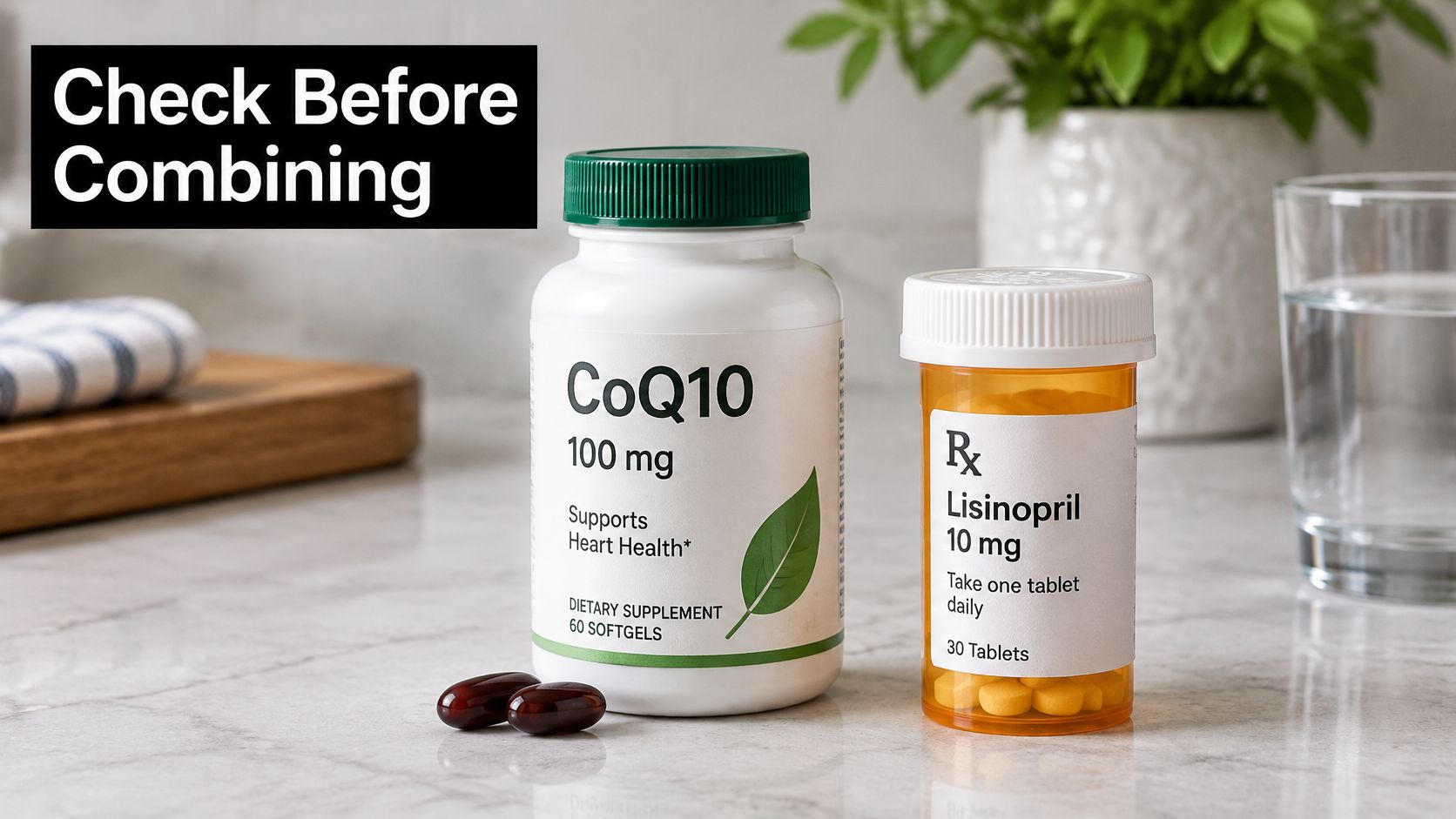
Don't invent a safe waiting period
Say you take tadalafil and want to use a citrulline-containing workout powder. Moving the powder to breakfast and the prescription to bedtime doesn't establish safety, because a medicine's effects can persist beyond the time you swallow it.
- Check every formula: Look for L-arginine, L-citrulline, and other circulation-focused ingredients across pre-workouts and vitality blends.
- Ask about the actual prescription: Give your pharmacist the medicine name, dose, and supplement label, not just the phrase nitric oxide booster.
- Don't rely on hydration: Drinking water and rising slowly don't make an unreviewed combination safe.
Our guide to nitric oxide supplement safety can help you prepare questions, but it doesn't replace approval from your prescriber. If a combination causes fainting, chest pain, or severe weakness, seek urgent medical care.
2. St. John's Wort with Prescription Medications
St. John's wort can make some medicines less effective, rather than intensifying their side effects. It induces CYP3A4, a drug-metabolizing enzyme, and P-glycoprotein, a transport protein that influences drug exposure, according to the American Academy of Family Physicians clinical review.
That combination can lower concentrations of medicines including cyclosporine, some HIV medicines, oral contraceptives, and certain heart drugs. With serotonergic antidepressants, there's a different concern: excessive serotonin activity rather than reduced drug exposure.
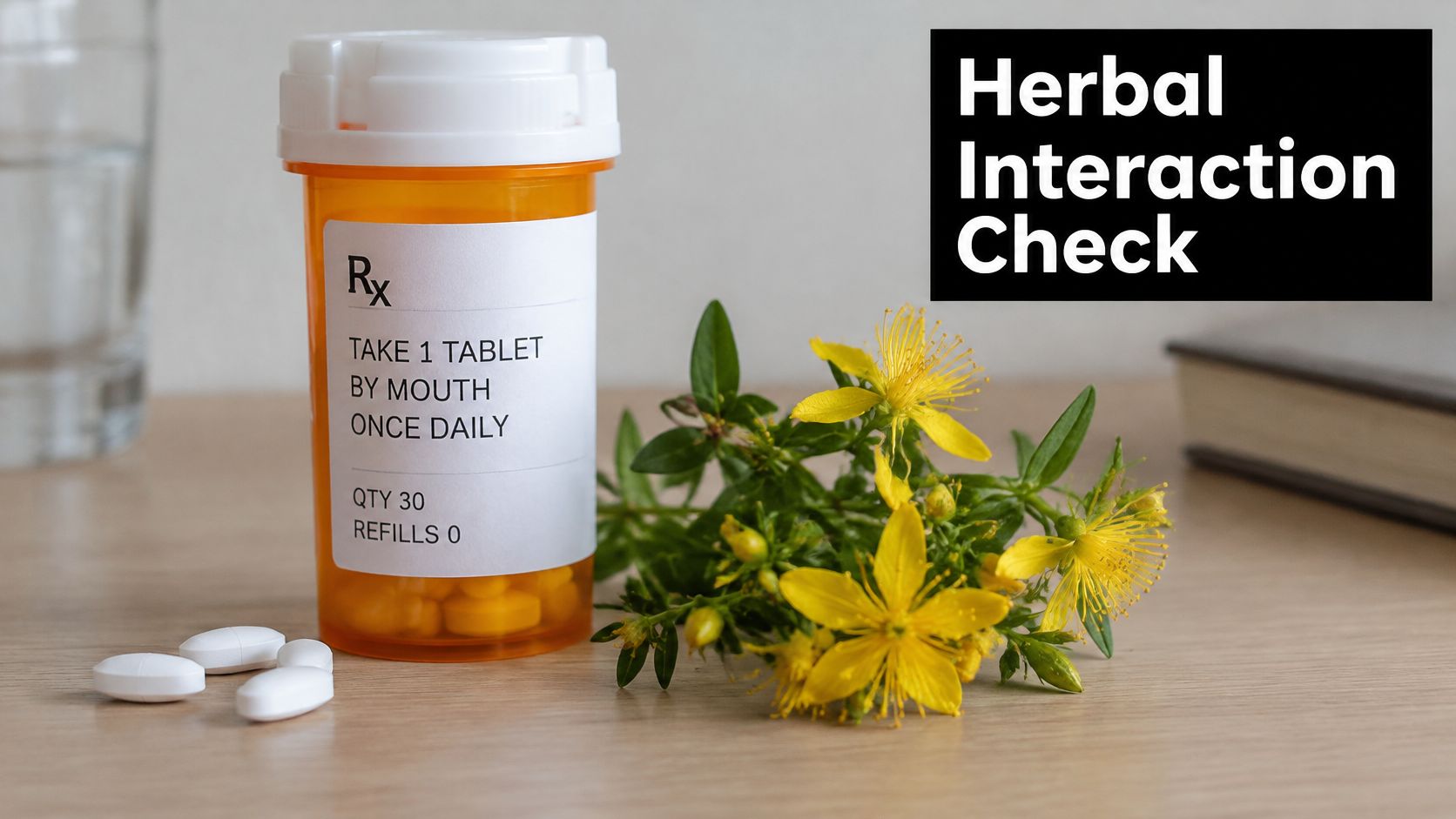
Separating doses doesn't solve enzyme induction
Suppose you take an oral contraceptive each evening and a herbal mood blend each morning. If that blend contains St. John's wort, separating the products across the day won't prevent its effects on drug metabolism and transport.
Read the full botanical list, including products marketed for mood, stress, relaxation, or emotional balance. Don't assume that an herb becomes irrelevant because it appears near the bottom of a blend's label.
Practical rule: Have St. John's wort reviewed before you start it, stop it, or change another medicine around it.
Stopping the herb can also change medication exposure as its enzyme-inducing effects wear off. A prescriber should decide whether you need monitoring, alternative contraception, or a medication-specific waiting period. Don't choose a universal washout interval from a supplement list, and don't stop your prescription to accommodate the herb.
3. Blood-Thinning Supplements with Warfarin, Aspirin, or Other Anticoagulants
The key distinction is additive bleeding risk versus interference with anticoagulation control. Ginkgo and concentrated garlic supplements can add bleeding concerns when taken with anticoagulant or antiplatelet medicines. Vitamin K is different: changing its intake can change warfarin's effect, so consistency matters more than blanket avoidance, as explained in this systematic review of supplement–drug interactions.
Aspirin is an antiplatelet medicine, while warfarin is an anticoagulant. They work differently, but both make a review of supplements affecting clotting important.

Say you take warfarin and add a memory supplement containing ginkgo. Taking one at breakfast and the other at dinner won't remove their overlapping effects on bleeding. Your anticoagulation team needs to know about the addition before you begin.
Review changes, not just your current list
- Flag concentrated extracts: Bring labels for garlic, ginkgo, vitamin E, fish oil, and turmeric products so your clinician can assess the dose and evidence for each.
- Keep vitamin K consistent: Don't abruptly remove leafy vegetables or introduce a vitamin K supplement because you're trying to improve your routine.
- Ask about monitoring: Your warfarin clinician can decide whether a supplement change warrants additional INR testing.
Don't assume every listed supplement carries the same risk at every dose. Seek prompt medical assessment for black stools, blood in urine, or prolonged bleeding, and urgent care for heavy bleeding or sudden severe symptoms.
4. Berberine with Diabetes Medications and Certain Prescription Drugs
Berberine deserves a medication review before a dosage decision. It can influence glucose regulation, and combining a glucose-lowering supplement with diabetes treatment can create overlapping effects. Insulin and sulfonylureas make avoiding low blood sugar particularly important.
Berberine can also affect drug-metabolizing enzymes and transport processes. That makes a simple instruction to take it away from prescriptions inadequate: spacing doesn't reliably prevent changes in drug exposure.
Make a monitoring plan before starting
Suppose you use insulin and want to add a berberine blend for metabolic wellness. Don't begin the supplement and then reduce insulin on your own if readings fall. Your diabetes clinician should decide whether the supplement fits your treatment and how you should respond to changing glucose readings.
- Record the complete blend: Include cinnamon, turmeric, black pepper extract, and any other botanicals, not just berberine.
- Bring your glucose information: Share recent readings and tell your clinician about previous episodes of low blood sugar.
- Agree on a response: Know whom to contact and follow your established hypoglycemia treatment plan if symptoms occur.
Our berberine dosage guide provides context for reading supplement instructions, but a label dose isn't personalized clearance to combine it with medicine.
A lower glucose reading isn't automatically a better result. The goal is control within your treatment target, without hypoglycemia.
Shakiness, sweating, confusion, or a racing heartbeat warrant checking glucose when possible and following your care plan. Severe confusion, inability to swallow safely, or loss of consciousness requires emergency help.
5. Stacked Stimulants with Caffeine, Yohimbine, Synephrine, or Ephedra-Type Ingredients
A coffee, an energy drink, and a pre-workout can become a stimulant stack before you add a fat-loss capsule. Caffeine plus yohimbine or synephrine adds another layer because these ingredients act through different mechanisms that can overlap in their cardiovascular and nervous-system effects.
Caffeine blocks adenosine receptors, reducing the perception of sleepiness. Yohimbine increases noradrenergic activity, while synephrine has adrenergic effects. Combining stimulating ingredients can increase the likelihood of palpitations, anxiety, blood-pressure changes, and poor sleep.
Audit the workout day, not just the powder
Say you drink coffee before work, take an energy capsule after lunch, and use pre-workout before evening training. Checking the powder alone misses the rest of your exposure, especially if a capsule contains bitter orange or yohimbe.
- Add up actual servings: Include coffee, tea, energy drinks, powders, capsules, and caffeinated medicines.
- Check alternate names: Bitter orange may signal synephrine; yohimbe indicates a botanical source associated with yohimbine.
- Question undisclosed amounts: If a blend doesn't disclose enough information to assess stimulant exposure, don't guess.
- Protect sleep: Moving a stimulant earlier may help sleep, but it doesn't eliminate an interaction with another stimulant.
The caffeine guidance for founders and CEOs offers additional context on caffeine and sleepiness. Don't use caffeine to repeatedly compensate for inadequate sleep, then add another stimulant when its effects feel less noticeable.
If you develop chest pain, fainting, or sustained rapid or irregular heartbeat, stop exercising and seek medical care.
6. Yohimbine with Antidepressants (SSRIs, SNRIs, or MAOIs)
A libido or performance supplement needs the same medication scrutiny as a mood supplement. Yohimbine blocks alpha-2 adrenergic receptors, which can increase norepinephrine release. That mechanism matters when another medicine also changes monoamine signaling.
MAOIs are a particularly concerning combination because they inhibit the breakdown of monoamines. SNRIs affect norepinephrine as well as serotonin, while SSRIs have a different interaction profile. Don't treat all antidepressants as interchangeable, or assume that a combination is acceptable because your medicine isn't an MAOI.
Taking yohimbine at a different meal doesn't remove its overlap with an antidepressant's effects.
Suppose you take an SNRI and consider a men's performance capsule containing yohimbe bark. The useful question isn't whether the capsule is herbal. It's whether the actual ingredients and their amounts are compatible with your prescription, blood pressure, and mental-health history.
Get an ingredient-specific decision
Bring a photograph of the Supplement Facts panel and the full ingredient list to your pharmacist. If the product lists yohimbe bark without clearly identifying active content, that uncertainty makes a safety assessment harder, not less necessary.
Don't skip or stop an antidepressant to make room for a supplement. Ask your clinician about alternatives that fit the reason you're seeking libido or performance support.
The overview of serotonin syndrome and bleeding risks explains why antidepressant interactions need individualized review. Yohimbine also raises adrenergic concerns, so serotonin isn't the only issue to discuss. Chest pain, a severe headache, marked agitation, confusion, or a racing heartbeat needs urgent assessment.
7. High-Dose Mineral Combinations That Compete for Absorption (Iron, Calcium, Zinc, Magnesium)
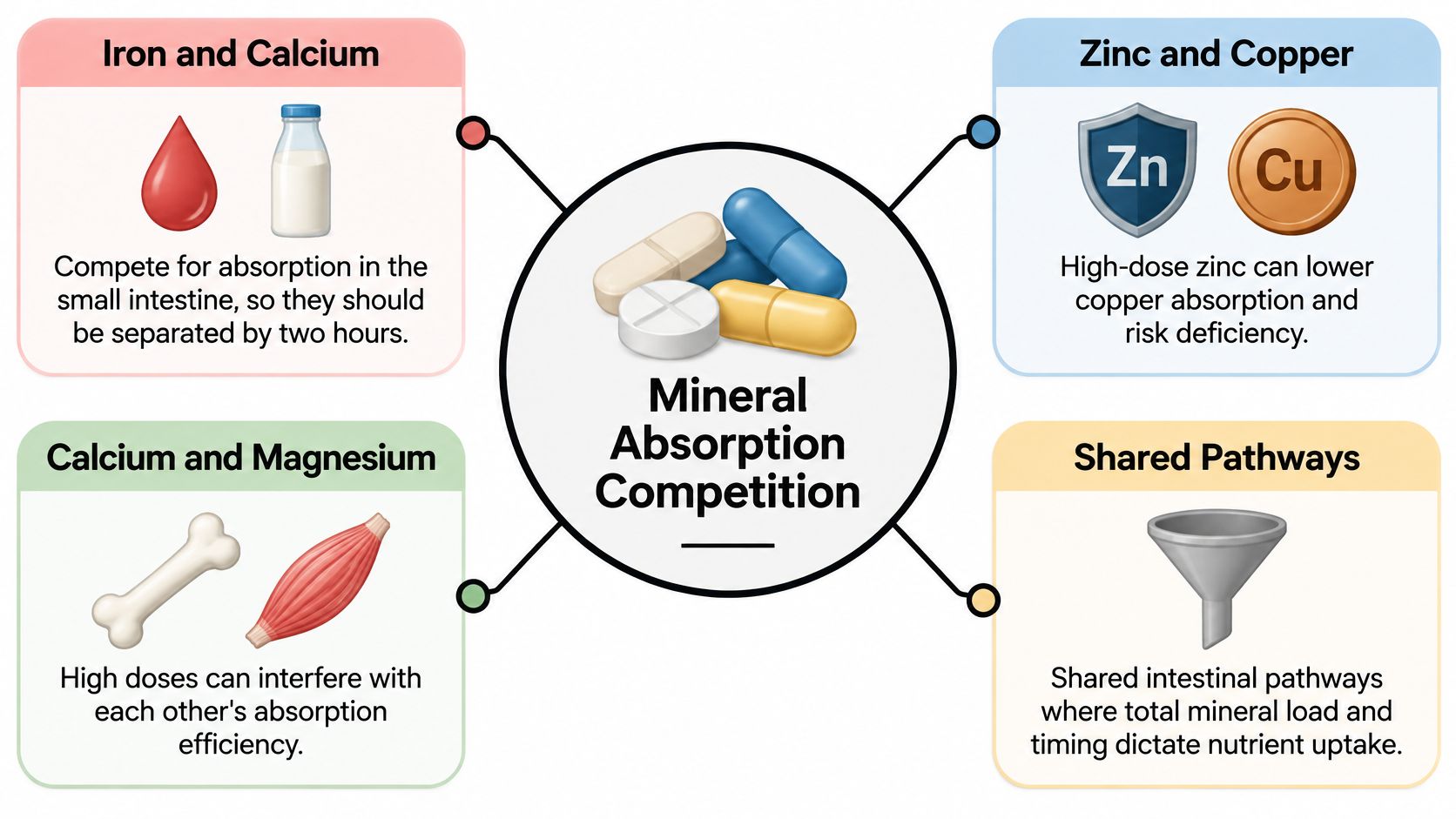
Mineral interactions are often absorption problems, not immediately dangerous reactions. Large supplemental doses can interfere with intestinal uptake, while some minerals bind medicines in the digestive tract. These aren't all the same mechanism, and not every mineral pair needs permanent separation.
For example, supplements containing at least 25 mg of iron can reduce zinc absorption when taken simultaneously, according to the NIH Office of Dietary Supplements guidance. That's a dose-specific concern, not a reason to assume every multivitamin containing both is unsuitable.
Start with medicines, then place minerals around them
Say you take an antibiotic and normally swallow magnesium with breakfast. For tetracycline or quinolone antibiotics, NIH guidance recommends taking the antibiotic at least two hours before or four to six hours after magnesium, according to its magnesium fact sheet. Your pharmacist should confirm the instructions for the specific medicine.
For a supplement-only routine, place separate iron and calcium products at different meals rather than swallowing both together. Avoid taking high-dose iron alongside zinc, and don't assume that spacing solves the long-term effects of excessive zinc on copper status.
Record elemental mineral amounts, including those in multivitamins and fortified powders. Our guide to improving nutrient absorption can help organize the discussion, but kidney disease requires additional caution with magnesium rather than a self-designed timing schedule.
7 Supplement Combinations to Avoid at a Glance
| Combination | Main Interaction Mechanism | Key Risk Signs | Best First Step |
|---|---|---|---|
| Nitric oxide boosters (L-arginine or L-citrulline) with PDE5 inhibitors or nitrates | Additive blood-vessel widening can sharply lower blood pressure | Dizziness, lightheadedness, fainting | Do not combine without approval from a doctor or pharmacist |
| St. John's wort with prescription medications | Speeds medication breakdown and may add to serotonin activity | Reduced medication effectiveness or serotonin syndrome symptoms | Tell your prescriber and pharmacist before starting or changing use |
| Blood-thinning supplements with warfarin, aspirin, or other anticoagulants | Can increase bleeding; vitamin K can counteract warfarin | Unusual bruising, nosebleeds, black stools, prolonged bleeding | Consult your clinician before adding supplements; keep vitamin K intake consistent with warfarin |
| Berberine with diabetes medications and certain prescription drugs | May further lower blood sugar and alter medication levels through enzyme effects | Shakiness, sweating, confusion, rapid heartbeat | Check with a healthcare provider and monitor blood glucose |
| Stacked stimulants: caffeine with yohimbine, synephrine, or ephedra-type ingredients | Additive stimulation of heart rate and blood pressure | Palpitations, anxiety, insomnia, blood pressure spikes | Check product labels and avoid combining stimulants without medical advice |
| Yohimbine with antidepressants (SSRIs, SNRIs, or MAOIs) | Increases sympathetic activity and may intensify blood pressure or nervous-system effects | Severe headache, rapid heartbeat, anxiety, chest pain | Do not combine without explicit medical supervision |
| High-dose mineral combinations that compete for absorption (iron, calcium, zinc, magnesium) | Competition for intestinal absorption can reduce nutrient uptake | Possible anemia or copper deficiency with sustained imbalance; stomach discomfort | Separate iron and calcium and avoid stacking high-dose minerals without guidance |
Build a Safer Supplement Routine With Your Next Steps
The most useful list of supplements not to take together is your own complete ingredient inventory. Write down every prescription, nonprescription medicine, capsule, powder, fortified drink, and botanical blend you use. Include the serving you take, its timing, and why you're taking it.
Then compare ingredients across labels. A multivitamin plus targeted products and fortified foods can increase the chance of excessive intake of nutrients including iron, vitamin A, zinc, niacin, and folic acid, according to the NIH multivitamin and mineral supplement guidance. Separating those products across the day won't fix an excessive daily total.
Turn the inventory into a usable plan
- Put prescriptions first: Keep their required timing and ask your pharmacist to place supplements around them.
- Separate the right conflicts: Use spacing for relevant absorption problems, not as a workaround for enzyme induction, bleeding risk, or overlapping cardiovascular effects.
- Make deliberate changes: Avoid starting several blends together, because you'll have more difficulty identifying which ingredient caused a problem.
- Keep the plan current: Bring updated labels when you receive a new prescription or prepare for a procedure.
You don't need to abandon every supplement because a potential interaction exists. You need to distinguish a manageable timing issue from a combination that requires avoidance, monitoring, or a different product.
At NexiHerb LLC, we ask customers who are pregnant, breastfeeding, taking medication, or managing a medical condition to consult a healthcare professional before use. Our supplements are intended to complement a varied diet and healthy lifestyle, not replace balanced nutrition or diagnose, treat, cure, or prevent disease.
Before adding your next supplement, take photographs of your current labels and book a pharmacist review. Ask for a written schedule and clear instructions about what to avoid. The safest stack is one a clinician has seen.
We offer vitamins, minerals, amino acids, and herbal supplements for adult wellness routines. Visit NexiHerb LLC to review ingredient information and nutrition guides, then bring any product you're considering to your pharmacist before adding it to your stack.